First Solo Trip Anxiety: How Women Can Overcome It
Nervous about your first solo trip? Practical tools to manage pre-travel anxiety, build real confidence, and actually enjoy traveling alone for the first time.
This post may contain affiliate links. Disclosure
You have been thinking about it for months. Maybe years. The solo trip. The one where you finally book the flight, pack the bag, and go somewhere entirely on your own. No partner, no friends, no organized tour group. Just you. And you are terrified.
Good. That means you are taking it seriously. The women who breeze into solo travel without any anxiety are either lying or are genuinely unusual. For the rest of us, the prospect of navigating an unfamiliar place entirely alone triggers every protective instinct our brains possess. What if something goes wrong? What if I get lost? What if I am lonely? What if I make a mistake?
Here is what experienced solo women travelers know that first-timers do not: the anxiety is always worse than the trip. Always. Research published in 2025 found that solo travelers experience 40 percent lower anxiety levels after their trips, and that mood improvements persist for months after returning home. The anticipatory dread that keeps you refreshing flight prices at 2 AM is not an accurate preview of how the trip will feel. It is your brain’s threat-detection system running worst-case simulations on a loop, because that is what brains do when they encounter uncertainty.
This guide is not going to tell you to stop being anxious. That does not work. Instead, it gives you practical tools to manage the anxiety, make decisions despite it, and build the confidence that transforms first-trip terror into a skill you carry for life.
Understanding Your Anxiety
Pre-travel anxiety for solo women typically clusters around five themes. Identifying which ones dominate your experience helps you address them specifically.
Safety Anxiety
“What if something bad happens and I am alone?” This is the most common fear, and it is the one that other people — family, friends, coworkers — feed most aggressively. Well-meaning loved ones will share horror stories, express concern about your “reckless” decision, and project their own fears onto your plans.
The reality: Solo female travel in well-chosen destinations is statistically very safe. According to the Global Peace Index, you face more danger driving to work each day than you do traveling solo in Iceland, Japan, Portugal, or dozens of other countries. Safety is a function of preparation and awareness, not the presence of a companion.
The strategy: Prepare thoroughly. Research your destination’s safety profile. Download safety apps. Share your itinerary with trusted people. Each preparation step converts vague fear into concrete readiness, and readiness is the antidote to anxiety. Our guide to solo female travel safety apps covers the essential toolkit.
Loneliness Anxiety
“What if I am miserable and alone the entire time?” This fear assumes that solo travel is lonely travel. It can be, at moments. But the vast majority of solo women travelers report the opposite: they meet more people traveling alone than they ever do traveling with a companion, because being alone makes you approachable and motivated to connect.
The strategy: Choose social accommodation (hostels, guesthouses with common areas). Book group activities (walking tours, cooking classes, day trips). Download community apps like NomadHer and Tourlina. Loneliness is most likely during the first 48 hours. Plan those hours with structured social activities, and the initial discomfort usually dissolves. Our guide to meeting people while traveling solo has specific tactics that actually work.
Competence Anxiety
“What if I cannot figure things out?” Navigating foreign transit systems, communicating without shared language, finding your accommodation in an unfamiliar city, managing currency exchange — these logistical challenges feel overwhelming in the abstract.
The strategy: Remember that millions of people significantly less resourceful than you navigate these same systems every day. Tourists with no preparation, limited budgets, and zero language skills manage to eat, sleep, and get around in foreign countries constantly. You, with your smartphone, your research, and your intelligence, are going to be fine.
Social Judgment Anxiety
“What will people think of me eating alone, traveling alone, doing things alone?” Women are disproportionately conditioned to feel that doing things alone signals social failure. The “just one?” question at a restaurant, the pitying looks from couples, the questions from family about when you are going to find someone to travel with — these external pressures create internal discomfort.
The strategy: This anxiety fades with exposure. After your first solo meal, the second is easier. After your third, you do not think about it. The truth is that other people think about you far less than you imagine. Our solo dining guide for women travelers reframes eating alone as one of the best parts of solo travel — because it genuinely is.
Decision Fatigue Anxiety
“What if I make the wrong choice about where to go, where to stay, what to do?” Solo travel means making every decision yourself, from major (destination, accommodation) to minor (what to eat for lunch, which route to walk). For women who share decision-making with partners, friends, or family, this sudden autonomy can feel paralyzing.
The strategy: Pre-make as many decisions as possible before the trip. Book your first two nights of accommodation. Plan your first day’s activities. Have a restaurant picked for your first dinner. Reduce the decision load for day one, and by day two your confidence will have caught up.
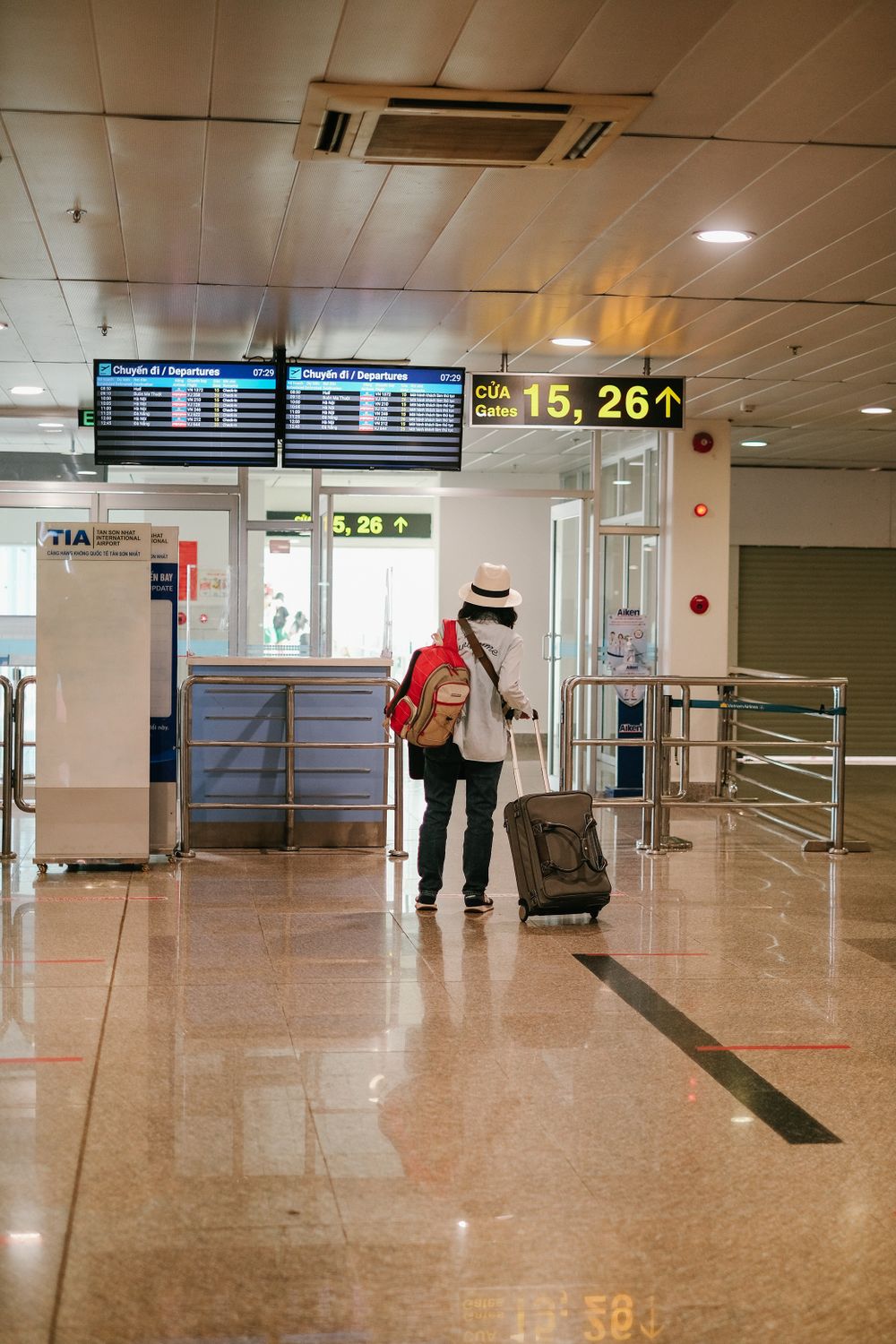
 Photo credit on Pexels
Your First Solo Trip: Step-by-Step
Step 1: Choose the Right Destination
Your first solo trip should not be the most challenging destination on your list. Save that for trip three or four. For your first time, optimize for comfort, safety, and ease.
Ideal first solo trip destinations for women:
- Lisbon, Portugal: Safe, affordable, walkable, English-friendly, beautiful
- Tokyo, Japan: Incredibly safe, efficient transit, solo-dining culture
- Copenhagen, Denmark: Safe, clean, bike-friendly, everyone speaks English
- Reykjavik, Iceland: Safest country on earth, stunning natural beauty
- Melbourne, Australia: English-speaking, safe, excellent food and culture
- Dublin, Ireland: English-speaking, friendly locals, compact city center
Start small if needed. Your first solo trip does not have to be international. A weekend alone in a domestic city you have never visited achieves the same psychological objective: proving to yourself that you can do it. Our first solo international trip guide walks through the full planning process once you are ready for that step.
Step 2: Book the Essentials in Advance
For your first trip, book more in advance than an experienced solo traveler might. This reduces on-the-ground decision-making and provides a safety net of certainty.
Book before departure:
- Round-trip flights (having a return date reduces open-ended anxiety)
- Accommodation for every night (you can always change later, but having a guaranteed bed eliminates a major stress point)
- Airport transfer for arrival (knowing exactly how you will get from the airport to your accommodation eliminates the most anxious moment of any trip)
- One or two activities for the first two days
Leave unbooked:
- Most activities and day trips (book on the ground once you have your bearings)
- Restaurant reservations (eat where your wandering takes you)
- The specifics of each day’s schedule (have ideas, not commitments)
Step 3: Prepare Your Safety Net
Share your itinerary with at least two trusted people. Include accommodation addresses, flight details, and a copy of your passport. Use a shared Google Doc or a tracking app so they always know where you are.
Set up your phone. Download offline maps, translation apps, your accommodation’s contact information, local emergency numbers, and the safety apps recommended in our solo female travel safety apps guide. Having everything accessible on your phone, even without Wi-Fi, eliminates a huge category of anxiety.
Arrange communication. Get an international SIM card or eSIM (providers like Airalo or Holafly) before departure so you have data access from the moment you land. Being able to call, text, and navigate immediately upon arrival is a significant anxiety reducer.
Buy travel insurance. Not because something is likely to go wrong, but because knowing you are covered transforms catastrophic worry into manageable risk. The peace of mind alone is worth the cost.
Step 4: Pack With Intention
Over-packing is a common anxiety response: the more you bring, the more prepared you feel. Resist this impulse. A heavy, unwieldy bag creates physical stress that amplifies emotional stress. Pack one carry-on-sized bag if possible. You can do laundry on the road. The freedom of moving quickly and easily through airports, train stations, and streets with a single bag is worth the minor inconvenience of wearing the same outfit twice. For day exploring, a Pacsafe GO Anti-Theft Crossbody Bag with its slash-proof straps and lockable zipper means you can focus on the experience rather than watching your bag — which is a genuine anxiety reducer when navigating crowded markets and transit stations alone.
Anxiety-specific packing additions:
- A comfort item (a book you love, a pillowcase from home, a familiar scent)
- A journal (for processing experiences and emotions)
- Headphones (for creating private space in shared environments)
- A portable battery pack — the Anker Nano Power Bank 10000mAh has a built-in USB-C cable so you can top up your phone anywhere, eliminating one of the most common anxiety triggers on the road
- A personal safety alarm — the She’s Birdie Personal Safety Alarm clips to your keychain and emits a 130dB siren that is loud enough to summon help from a block away; carrying it transforms vague safety anxiety into a concrete, actionable tool
- A doorstop alarm (for hotel room security and peace of mind — our best portable door locks for solo travelers includes models that double as a 120dB alarm)
 The right gear can convert pre-travel anxiety into genuine readiness. Photo credit on Pexels
Step 5: Manage Your First Day
Your first day sets the emotional tone for the entire trip. Plan it carefully.
Morning: Arrive at your accommodation, settle in, freshen up. Explore your immediate neighborhood on foot. Find the nearest pharmacy, grocery store, and cafe. This reconnaissance mission transforms “unfamiliar” into “my neighborhood.”
Afternoon: Do one specific activity that gets you out and engaged: a free walking tour, a museum visit, a cooking class, a food market. Structured activities provide a frame for your day and natural opportunities for social interaction.
Evening: Eat at a restaurant you identified during your morning walk. If eating alone feels daunting, choose a place with bar seating or communal tables. Or eat at a food market where solo dining is the norm.
Night: Return to your accommodation early on night one. Do not pressure yourself to explore nightlife. Read, journal, message home, and rest. You have an entire trip ahead of you.
 Photo credit on Pexels
What to Do When Anxiety Hits During the Trip
Even with perfect preparation, anxiety will surface during your trip. Here is how to handle it in real time.
The Grounding Technique (5-4-3-2-1)
When anxiety spikes, use this sensory grounding exercise:
- Name 5 things you can see
- Name 4 things you can touch
- Name 3 things you can hear
- Name 2 things you can smell
- Name 1 thing you can taste
This technique works by pulling your attention out of the anxious narrative in your head and into the physical reality of the present moment. It takes less than a minute and can be done anywhere.
The “Worst Case” Exercise
When you are spiraling about what could go wrong, write down the absolute worst-case scenario. Then write down what you would do about it. Then write down the most likely scenario. The most likely scenario is almost always manageable, and knowing you have a plan for the worst case reduces its emotional power.
The 24-Hour Rule
If you are having a terrible day and considering cutting your trip short, give yourself 24 hours. Bad days happen at home too; they are not a sign that solo travel was a mistake. Sleep, eat well, and reassess in the morning. The overwhelming majority of “I want to go home” moments pass within a day.
Call Someone
You are not weak for calling a friend or family member when you feel overwhelmed. Having a five-minute conversation with someone who knows you can reset your emotional state entirely. This is why setting up reliable communication before departure matters.
Common First-Trip Mistakes to Avoid
Knowing what typically goes wrong on first solo trips helps you sidestep these issues entirely.
Over-scheduling. The temptation to fill every hour with activities is strong on a first trip, driven by the fear that you will waste time or feel bored. In reality, the most meaningful solo travel moments happen in the unplanned spaces: the cafe where you linger for an extra hour, the unexpected street musician, the conversation with a stranger at a viewpoint. Build free time into your itinerary. At least one-third of your trip should be unstructured.
Comparing to other travelers. At the hostel, you will meet women who seem more confident, more adventurous, more relaxed than you. They have stories of hitchhiking through Patagonia and sleeping on beaches in Thailand. Do not compare your day three to their year three. Every experienced solo traveler was once exactly where you are.
Neglecting basic needs. In the excitement of a new place, it is easy to forget to eat properly, hydrate, sleep enough, and rest. Your body and mind need these basics to function well, and neglecting them leads to the kind of exhaustion and emotional fragility that makes everything feel harder than it is. Eat real meals. Drink water. Sleep seven to eight hours. These are not optional.
Staying connected to home constantly. Checking in with family and friends is important, but spending your evenings on FaceTime with people at home prevents you from fully arriving in your destination. Set specific check-in times (once or twice daily) and spend the rest of your time present where you are.
Not asking for help. Solo does not mean completely independent. Asking your hostel staff for restaurant recommendations, asking a local for directions, asking a fellow traveler if they want to explore together — these are not failures of independence. They are normal human interactions that make travel richer.
What Experienced Solo Women Wish They Had Known
“The first two days are the hardest. It gets dramatically easier.” Almost every experienced solo traveler says this. The initial discomfort is not representative of the overall experience.
“I was worried about being lonely. I ended up craving alone time.” The social opportunities in solo travel are so abundant that many women find themselves needing to protect their solitude rather than seeking companionship.
“Nobody cares that you are alone. Literally nobody.” The social judgment you fear is almost entirely imagined. Other people are absorbed in their own lives.
“I learned more about myself in one week alone than in years at home.” The self-knowledge that solo travel generates is unlike anything available in your daily routine. Research from Harvard Business School found that 85 percent of solo travelers return home with clearer life goals and improved self-confidence.
“I came home a different person. A better one.” This is not hyperbole. Solo travel, particularly the first trip, rewrites your self-concept. You discover that you are braver, more capable, and more adaptable than you believed.
What to Know Before You Go
Your anxiety is not a sign that you should not go. It is a sign that you are about to do something genuinely challenging. Challenge and growth are inseparable. The woman who returns from her first solo trip is not the same woman who boarded the plane. She is someone who knows, with the certainty of lived experience rather than motivational quotes, that she can handle whatever comes.
For more on the emotional benefits of solo travel, read our guide on solo travel and mental health. And when you are ready to take the practical steps, our safest countries for solo women guide helps you choose the right first destination.
Book the flight. Feel the fear. Go anyway. The rest will take care of itself.
Related Reading
Get the best HerTripGuide tips in your inbox
Weekly guides, deals, and insider tips. No spam, unsubscribe anytime.