Portugal Solo Female Travel Guide: Cities, Safety & Tips
Your complete guide to solo travel in Portugal as a woman — Lisbon's cobblestones, Porto's wine cellars, the Algarve cliffs, and practical 2026 safety tips.
This post may contain affiliate links. Disclosure
Portugal has quietly become one of the most popular solo female travel destinations in Europe, and the reasons are immediately obvious once you arrive. The safety is exceptional, the cost of living is the lowest in Western Europe, the food is world-class, the weather is sunny for most of the year, and the Portuguese people have a warmth and openness that makes even first-time solo travelers feel welcome.
In 2026, Portugal also offers one of Europe’s most accessible digital nomad visas, a thriving startup and creative scene, and a quality of life that regularly places it in the top ten globally. From Lisbon’s electric energy to Porto’s soulful beauty to the Algarve’s dramatic coastline, Portugal rewards slow, independent exploration in ways that few European destinations can match.
Why Portugal Is Perfect for Solo Women
Safety. Portugal consistently ranks among the safest countries in the world, typically placing in the top five of the Global Peace Index. Violent crime rates are extremely low, and crimes against tourists are rare. Women walk alone at night in Lisbon and Porto with a level of comfort that is unusual for European capitals. It is one of the reasons Portugal appears on every list of the safest countries for solo female travelers.
Affordability. A comfortable day in Lisbon costs roughly half of what you would spend in Paris or London. Budget travelers can eat, sleep, and explore on $50 to $70 per day. Mid-range travelers spending $100 to $150 per day will experience genuine luxury.
Connectivity. Portugal’s Wi-Fi infrastructure is excellent, with fast connections in cafes, accommodations, and public spaces. For digital nomads and remote workers, this is a critical feature.
English proficiency. Portugal has one of the highest rates of English proficiency in Southern Europe. In tourist areas, virtually everyone speaks conversational English. A few Portuguese phrases go a long way with older residents outside tourist zones.
Solo travel culture. Portugal attracts a disproportionate number of solo travelers, which means accommodations, restaurants, and activities are calibrated for independent visitors. You will meet other solo women travelers everywhere you go.
 Photo credit on Pexels
Lisbon: 4–5 Days
What to See and Do
Alfama. Lisbon’s oldest neighborhood is a labyrinth of narrow cobblestone streets, tiled facades, Fado music drifting from open doorways, and viewpoints (miradouros) that offer panoramic views of the city and the Tagus River. Get lost here deliberately. The beauty of Alfama is in the wandering.
Belem. Home to the iconic Belem Tower, Jeronimos Monastery (a UNESCO World Heritage site), and the legendary Pasteis de Belem bakery, where the original pastel de nata recipe has been guarded since 1837. Arrive early to avoid lines.
LX Factory. A converted industrial complex that now houses creative businesses, independent shops, excellent restaurants, and a fabulous bookstore built inside a former printing warehouse. This is where Lisbon’s creative community gathers, and it is a perfect solo activity.
Time Out Market. Lisbon’s food hall brings together the city’s best chefs under one roof. For solo diners, the communal seating and individual portion sizes make it ideal.
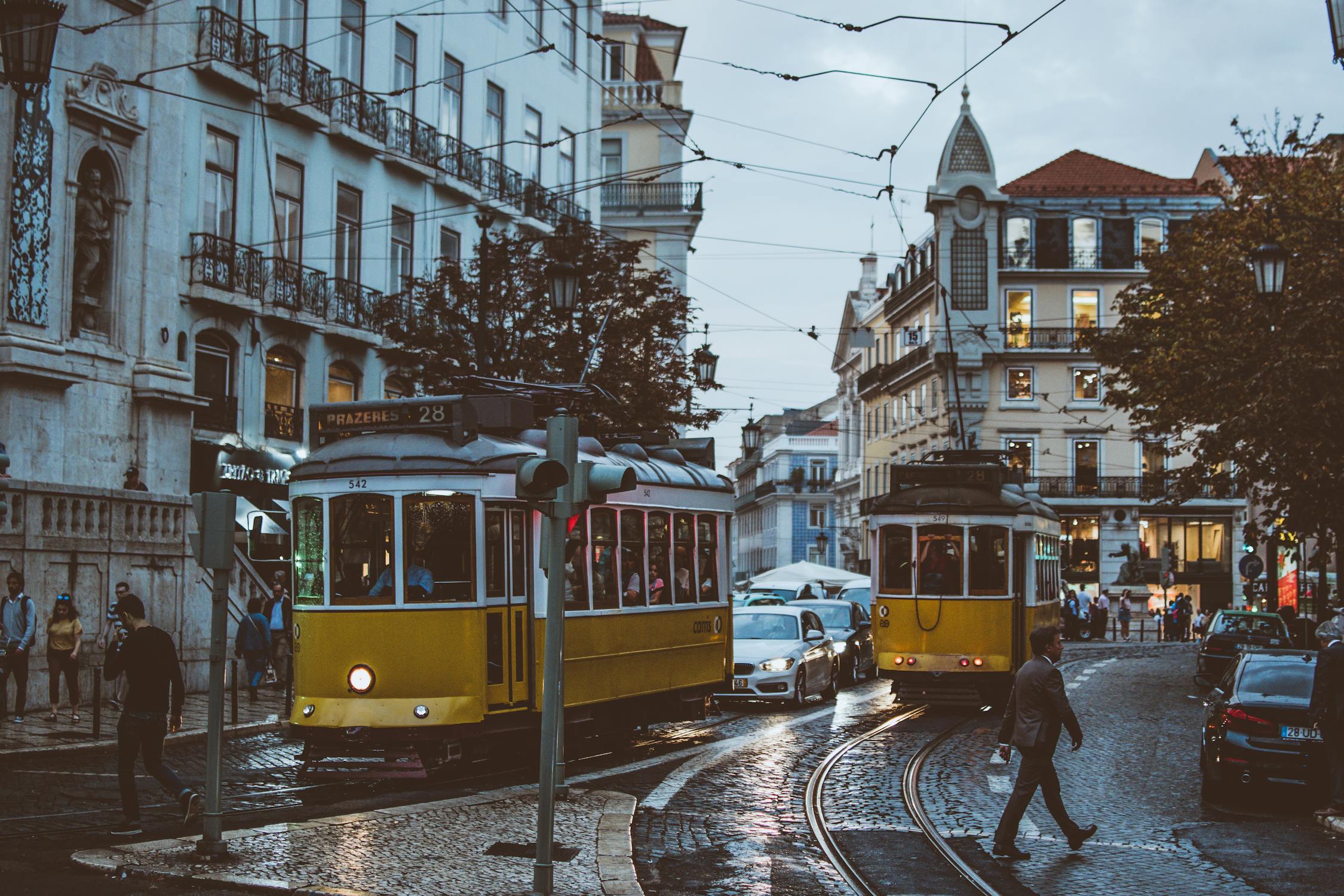
Tram 28. The iconic yellow tram winds through Lisbon’s most historic neighborhoods. Take it in the morning before 10 AM to avoid the worst crowds, or simply walk the route through Alfama, Graca, and Baixa.
Sintra (day trip). Thirty minutes by train from Lisbon, Sintra is a fairy-tale landscape of colorful palaces, lush forests, and dramatic views. Visit Pena Palace, Quinta da Regaleira, and the Moorish Castle. Start early and buy tickets online to avoid lines that can exceed an hour during peak season.
Where to Stay in Lisbon
Budget: Yes! Lisbon Hostel (from $20/night), Home Lisbon Hostel (from $22/night) Mid-range: Czar Lisbon Hotel (from $80/night), Browns Central Hotel (from $100/night) Best neighborhoods for solo women: Baixa-Chiado (central, walkable), Principe Real (trendy, safe), Alfama (atmospheric, hilly)
Neighborhoods to be more alert in at night: Intendente, Mouraria, and Anjos areas in the northwest of the city. While incidents are rare, these are lower-income neighborhoods that tourists rarely need to visit after dark.
Where to Eat Solo
Cervejaria Ramiro: Legendary seafood. Sit at the bar and order prawns, percebes (barnacles), and vinho verde. Eating alone at the bar here feels better than having a table.
Tascas (traditional taverns): Small, family-run restaurants serving simple Portuguese food at low prices. Look for places with handwritten menus and local clientele.
Mercado da Ribeira/Time Out Market: Perfect for solo meals. Order from multiple vendors and eat at communal tables.
Porto: 3–4 Days
What to See and Do
Ribeira District. The colorful waterfront district along the Douro River is a UNESCO World Heritage site. Walk along the riverside, cross the iconic Dom Luis I Bridge on foot, and settle into a riverside cafe to watch the rabelo boats drift by.
Port Wine Cellars in Vila Nova de Gaia. Cross the bridge to Gaia and tour the famous port wine cellars: Taylor’s, Graham’s, Croft, and Sandeman all offer tours and tastings. Solo visitors are warmly welcomed, and tastings run $10 to $25.
Livraria Lello. One of the world’s most beautiful bookstores and supposedly an inspiration for J.K. Rowling’s Hogwarts library. You need a ticket to enter (which counts as a credit toward a book purchase). Arrive early to avoid crowds.
Sao Bento Train Station. Even if you are not catching a train, visit the station’s stunning azulejo (blue tile) panels that depict scenes from Portuguese history. It is one of the most beautiful public spaces in Europe.
Douro Valley (day trip). The terraced vineyards of the Douro Valley are spectacular. Take a train to Pinhao (about 2.5 hours from Porto) for wine tastings, river cruises, and some of Portugal’s most dramatic scenery. Solo travelers can easily arrange tastings independently.
Where to Stay in Porto
Budget: Gallery Hostel (from $18/night), Pilot Design Hostel (from $20/night) Mid-range: Hotel Carris Porto Ribeira (from $75/night), Pestana Porto (from $90/night) Best neighborhoods for solo women: Ribeira (scenic, touristy), Cedofeita (local, artsy), Boavista (residential, safe)
Porto Food Highlights
Francesinha. Porto’s signature dish: a meat sandwich covered in melted cheese and a spicy tomato-beer sauce, served with french fries. It is absurdly indulgent and essential eating. Cafe Santiago is the classic destination.
Mercado do Bolhao. Porto’s historic market reopened after restoration and is a feast for the senses. Fresh fish, cheeses, flowers, and prepared foods. Grab a meal at one of the market’s food stalls.
 Photo credit on Pexels
The Algarve: 3–5 Days
What to See and Do
Portugal’s southern coast offers dramatic cliffs, hidden caves, golden beaches, and charming fishing towns. The Algarve is best explored with a rental car, but bus connections between major towns are reliable.
Lagos. A lively town with stunning beaches, dramatic sea caves accessible by kayak or boat tour, and a vibrant nightlife scene welcoming to solo travelers. Ponta da Piedade is one of the most photographed coastal formations in Europe.
Tavira. A quieter, more authentic Algarvean town with Roman bridges, a castle, and access to the sandbar islands of the Ria Formosa nature reserve. Perfect for solo travelers seeking tranquility over nightlife.
Benagil Cave. One of Portugal’s most famous natural attractions, accessible only by kayak, SUP, or boat tour. Book a kayak tour for the most active experience. Solo spots are readily available.
Faro. The Algarve’s capital is often overlooked by tourists, but its old town, cathedral, and proximity to the Ria Formosa lagoon make it worth a day. It also has the region’s airport.
Budget Tip
The Algarve is more expensive than Lisbon and Porto during summer (June to September). Visit in spring (April to May) or fall (September to October) for lower prices, fewer crowds, and still-warm weather.
The Azores: 3–5 Days
The Azores reflect the 2026 travel trend of remote, volcanic, uncrowded destinations. This Portuguese archipelago in the mid-Atlantic offers dramatic landscapes, hot springs, whale watching, and a pace of life that makes the mainland feel hectic.
Sao Miguel is the largest and most accessible island, with direct flights from Lisbon and several European cities. Highlights include Sete Cidades (twin lakes in a volcanic crater), Furnas (geothermal hot springs where food is cooked underground), and whale watching tours that have a 95% sighting rate.
The Azores are exceptionally safe and uncrowded. Solo women will find a welcoming, peaceful environment perfect for nature lovers and those seeking solitude without isolation.
Budget Breakdown for Two Weeks
| Category | Budget | Mid-Range |
|---|---|---|
| Accommodation (13 nights) | $260 (hostels) | $910 (mix of hotels/guesthouses) |
| Food (14 days) | $280 ($20/day) | $490 ($35/day) |
| Transportation | $100 (buses/trains) | $200 (trains plus some taxis) |
| Activities | $80 | $200 |
| SIM Card | $15 | $25 |
| Total | $735 | $1,825 |
See our best travel credit cards for women in 2026 to earn points on every euro you spend in Portugal.
Safety Considerations for Solo Women in Portugal
Portugal’s safety record is excellent, but standard precautions apply.
Pickpocketing is the most common crime affecting tourists, particularly on Tram 28, near the Rossio train station, and in crowded tourist zones. Wear a crossbody bag, keep it zipped and in front of you, and be aware in crowds. The Pacsafe GO Anti-Theft Crossbody Bag with its slash-resistant construction and lockable zipper is specifically designed for pickpocket-heavy environments like Lisbon’s trams. Be especially alert around Santa Apolonia train station as well.
 A slash-resistant crossbody bag is ideal for Lisbon’s famous Tram 28, one of Europe’s pickpocket hotspots. Photo credit on Pexels
Walking at night is generally safe in both Lisbon and Porto, particularly in central neighborhoods. Stick to well-lit, well-trafficked streets — the same judgment you would apply in any European city.
Nightlife in Lisbon’s Bairro Alto and Cais do Sodre is vibrant and generally safe for solo women. The bar-hopping culture means streets are full of people until late. Standard precautions apply: watch your drink, do not leave with strangers, and trust your instincts. Our full nightlife safety guide for solo women covers every scenario.
Practical Tips for Solo Women in Portugal
Learn basic Portuguese. “Obrigada” (thank you, feminine form), “por favor” (please), “fala ingles?” (do you speak English?), and “a conta, por favor” (the check, please) cover most situations. Portuguese people genuinely appreciate the effort.
Watch for cobblestones. Lisbon and Porto are built on hills paved with beautiful but treacherous cobblestones. Wear comfortable shoes with good grip — Allbirds Wool Runners are a popular choice for the combination of cushioning, style, and all-day walkability that Lisbon’s hills demand. If you’re still choosing footwear, our best travel shoes for women walking guide tested dozens of pairs on exactly these kinds of cobblestone streets.
Ride the trains. Portuguese trains are clean, punctual, and affordable. The Lisbon-Porto route takes about 3 hours by Alfa Pendular (high-speed) train and costs $25 to $40.
Try the pasteis de nata. Portugal’s iconic custard tarts are available at every bakery in the country. The best are warm from the oven, dusted with cinnamon. You will develop an addiction.
Explore beyond the big two. While Lisbon and Porto get the attention, smaller cities like Coimbra (a beautiful university town), Evora (a UNESCO-listed medieval city in the Alentejo), and Aveiro (the “Venice of Portugal”) are equally rewarding and less crowded.
Best Day Trips From Lisbon and Porto
From Lisbon
Sintra (30 min by train, $3 each way): Fairy-tale palaces, lush forests, and dramatic cliffs. Arrive before 10 AM and buy tickets online.
Cascais (40 min by train, $3 each way): A charming seaside town with beautiful beaches, a pedestrian center, and excellent seafood restaurants.
Setubal and Arrabida (45 min by bus or car): The Arrabida Natural Park offers pristine beaches, coastal hiking trails, and outstanding seafood.
Obidos (1 hour by bus): A perfectly preserved medieval walled town with cobblestone streets and the famous ginjinha (cherry liqueur) served in chocolate cups.
From Porto
Douro Valley (2.5 hours by train to Pinhao): Terraced vineyards lining the Douro River, wine tastings at historic quintas, and some of Portugal’s most dramatic landscape.
Guimaraes (1 hour by train): The birthplace of Portugal and a UNESCO World Heritage site with a well-preserved medieval center.
Braga (1 hour by train): Portugal’s religious capital, home to the spectacular Bom Jesus do Monte sanctuary with its baroque staircase.
 Photo credit on Pexels
Portuguese Culture Tips for Solo Women
Fado music. Attending a Fado performance is a quintessential Portuguese experience. These soulful, melancholic songs are performed in small, intimate venues throughout Lisbon and Coimbra. In Lisbon, the Alfama and Mouraria neighborhoods have the most authentic Fado houses. Expect to pay a minimum consumption charge of $15 to $30, which includes a drink and sometimes light food. Attending alone allows you to absorb the music without distraction.
Coffee culture. The Portuguese take their coffee seriously, and the cafe culture is inherently solo-friendly. Order a “bica” (espresso) in Lisbon or a “cimbalino” in Porto. Standing at the counter is traditional and cheaper than sitting at a table. A coffee costs $0.70 to $1.50 at most local cafes.
Tile appreciation. Portugal’s azulejo tiles are a national art form spanning centuries. Lisbon’s National Tile Museum offers a comprehensive history. The real joy is simply noticing tiles as you walk through any Portuguese city — an urban art appreciation that solo travelers are uniquely positioned to enjoy, because you can stop, look, and photograph without anyone waiting for you to move on.
Meal timing. The Portuguese eat lunch between 12:30 and 2:00 PM and dinner between 8:00 and 10:00 PM. Restaurants outside tourist areas may not serve food between these windows. Adjust your schedule for the best dining experience and the most authentic atmosphere.
Beach culture. Portuguese beaches are beautiful but the Atlantic water is cold, even in summer — water temperatures of 15 to 20 degrees Celsius (59 to 68 Fahrenheit). Beach culture is relaxed, and solo women on Portuguese beaches are completely normal and will not attract unwanted attention.
What to Know Before You Go
Portugal offers the rare combination of safety, beauty, affordability, and cultural depth that makes it an ideal destination for any solo woman, whether you are taking your first independent trip or your fiftieth. The country has a way of making you feel both excited and at ease — a quality the Portuguese might call “saudade,” a gentle, sweet melancholy that colors everything from the Fado music to the sunset light over the Tagus.
Take your time here. Walk the hills. Eat the tarts. Drink the wine. Let the tiles and the light and the music work their quiet magic.
Related Reading
Get the best HerTripGuide tips in your inbox
Weekly guides, deals, and insider tips. No spam, unsubscribe anytime.