Renting a Car in New Zealand: Solo Female Guide 2026
A warm guide for solo women traveling New Zealand in 2026, covering rental requirements, costs, insurance, road tips, safety advice, and packing essentials.

This post may contain affiliate links. Disclosure
Traveling New Zealand solo as a woman is a chance to soak in dramatic coastlines, emerald valleys, and sky-wide horizons—all on your own schedule. The freedom of having a car means you can chase sunrise at Lake Tekapo, pop into a hidden café in the Catlins, and still feel safe and in control. The good news? Renting a car here is straightforward once you know the paperwork, the price ranges, and the little habits that keep you comfortable on winding alpine roads. Below is the practical, sister-to-you guide that turns the rental process from “what-if” into “let’s go” for 2026.
What do you need to rent a car in New Zealand as a solo woman? Every firm wants a full, current licence — plus an International Driving Permit or official translation if it is not in English. Learner and temporary licences are refused. The baseline age is 21, though a few companies rent to 18- to 20-year-olds. Economy compacts run about NZ$40-70 daily.
Requirements & Documentation
Before you even think about which vehicle to click, you need the right paperwork in hand. All rental firms in New Zealand demand a full, current driver’s licence from your home country. If the licence isn’t in English, you’ll need an International Driving Permit (IDP) or an official translation—no temporary or learner licences are accepted. This rule is confirmed by ApoliCar’s requirements guide.
Age is another gatekeeper. The baseline is 21 years for most companies, but a handful will let 18- to 20-year-olds rent if you’re willing to pay a surcharge. Premium or 4WD models often require you to be 25 or older. Bring a credit or debit card in the main driver’s name; the card secures the bond and any excess payment. Debit cards are widely accepted, though policies differ between providers, so double-check when you book. Finally, keep your passport or government ID handy for the verification step at the counter, and take a photo of every document before you leave home in case anything gets misplaced along the way.
None of this paperwork is meant to slow you down—think of it as the five-minute ritual that buys you weeks of open-road freedom. Agencies process it quickly once you arrive with everything in order, so the real trick is simply not forgetting a piece at home. If you’re flying in after a long-haul flight, resist the urge to rush the counter process half-asleep—read the agreement, confirm the fuel policy in writing, and ask any question that’s nagging at you before you sign, since it’s much harder to sort out a misunderstanding once you’re already on the road.
Choosing the Right Vehicle & Cost Bands
New Zealand’s landscape is a patchwork of city streets, coastal highways, and rugged mountain passes. Your vehicle choice should match the routes you plan to explore.
| Class | Typical Daily Rate (NZ$) | When It Makes Sense |
|---|---|---|
| Economy (compact) | 40-70 | Urban cruising, short day trips, budget-focused itineraries |
| Standard (mid-size) | 70-100 | Mixed city-and-rural travel, extra luggage space |
| SUV/People-mover | 100-150 | Family-style road trips, longer drives with gear |
| Premium/4WD | 150-200 | Alpine passes (Arthur’s Pass, Haast Pass) in winter, off-road adventures |
These bands line up with the latest pricing data from RentalCars247, which notes daily rates ranging from NZ$40 for economy cars up to NZ$120 for SUVs, depending on season and location. If you’re heading to the South Island’s snow-capped routes between Queenstown, Wanaka, and Mt Cook during the winter months, a 4WD or AWD is strongly recommended—chains or AutoSocks may be mandatory on certain passes, as ApoliCar advises.
When you compare options, a single, trusted aggregator can save you time and reveal hidden fees. I like to start with DiscoverCars; it pulls rates from all the major providers (Apex, JUCY, Budget, Hertz, Europcar, Thrifty, Avis, Ezi Car Rentals, Go Rentals, and ApoliCar) so you can see the full picture before you commit. Even a five-minute comparison across a couple of these names can shift your total trip cost meaningfully, especially if you’re renting for two weeks or more.
It’s worth knowing that not every name on that list is a household brand—Ezi Car Rentals and Go Rentals, for instance, are smaller New Zealand-based operators that often undercut the international chains on price for the same economy or standard car. They won’t always have a desk at every regional airport, so if your itinerary includes a smaller town, double-check pickup locations before you lock in a booking with a boutique provider over a big name like Hertz or Avis.

Insurance Made Simple
The base rental price already includes third-party liability—the legal minimum coverage that protects you if you damage someone else’s property or vehicle. However, this comes with an excess (the amount you’d pay out-of-pocket after a claim) that typically sits between NZ$1,000 and NZ$2,000.
You have two main ways to lower that risk:
- Excess reducer - a modest add-on that trims the excess down to a smaller, agency-set amount, giving you a middle-ground option between the base policy and full coverage.
- Full-cover protection - a more expensive option that brings the excess to $0, giving you peace of mind on remote roads.
Both the Collision Damage Waiver (CDW) and Theft Protection are usually bundled into the base rate, but each may have its own limits, so read the fine print. According to ApoliCar, purchasing the full-cover package is especially wise if you plan to drive on unsealed roads where gravel can chip paint or if you’ll be parked in isolated spots overnight. Solo travelers in particular tend to favor the peace-of-mind option, since there’s no co-driver to split an unexpected repair bill with.
Before you drive off the lot, walk a full circle around the car with your phone camera and photograph every panel, plus the fuel gauge and odometer. It only takes a minute, but it’s the single best habit for avoiding a dispute over a scratch you didn’t cause. If you already carry a travel credit card that bundles rental-car insurance, call the issuer ahead of your trip to confirm New Zealand is covered and that the coverage matches or beats what the counter is offering—some cards exclude 4WD or off-road use, which matters if you’re heading toward the alpine passes.
Road Realities & Driving Tips
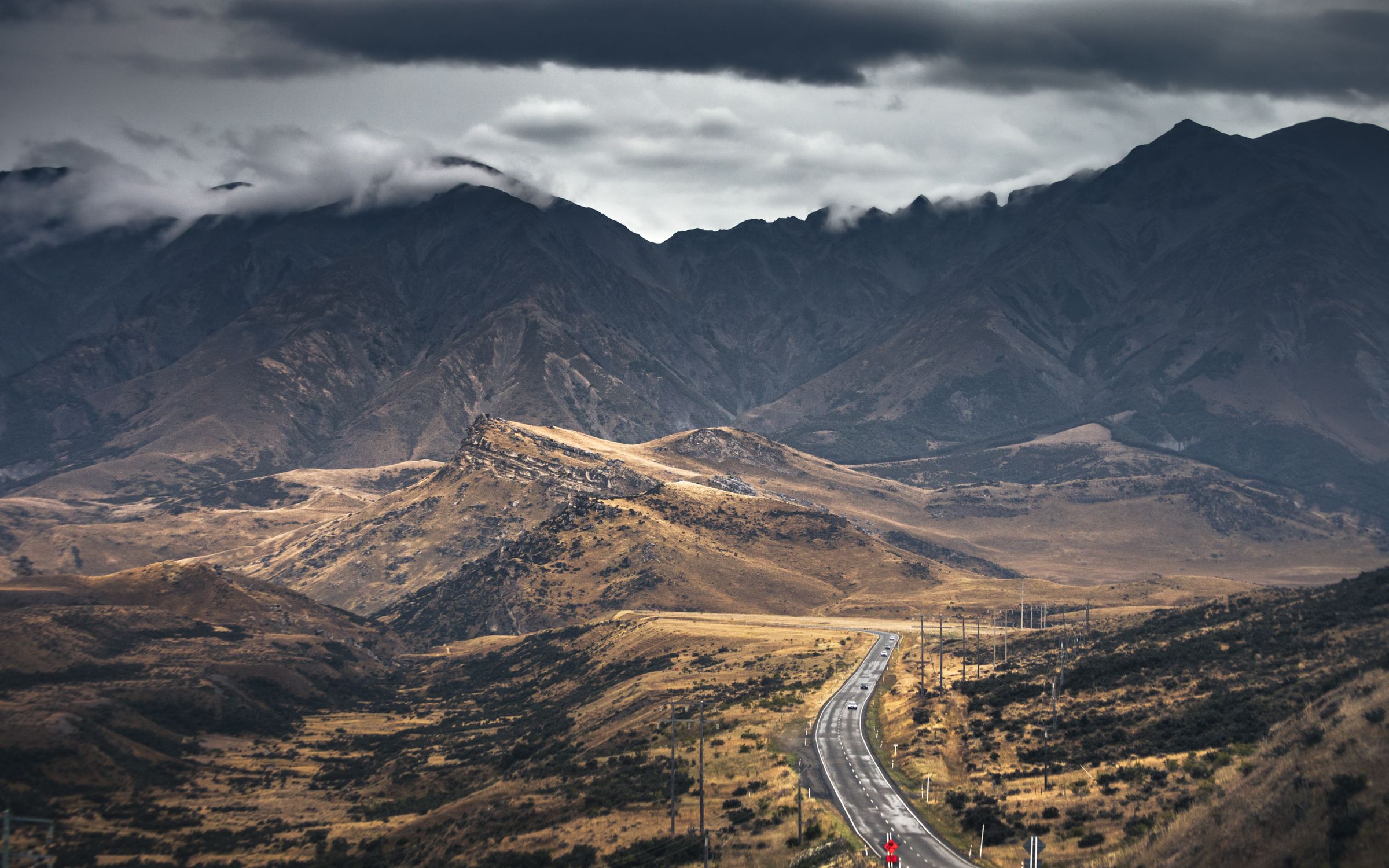
New Zealand drives on the left-hand side, and roundabouts give way to traffic coming from the right. This can feel odd if you’re used to right-hand traffic, but a quick pause at the entry point usually clears any confusion.
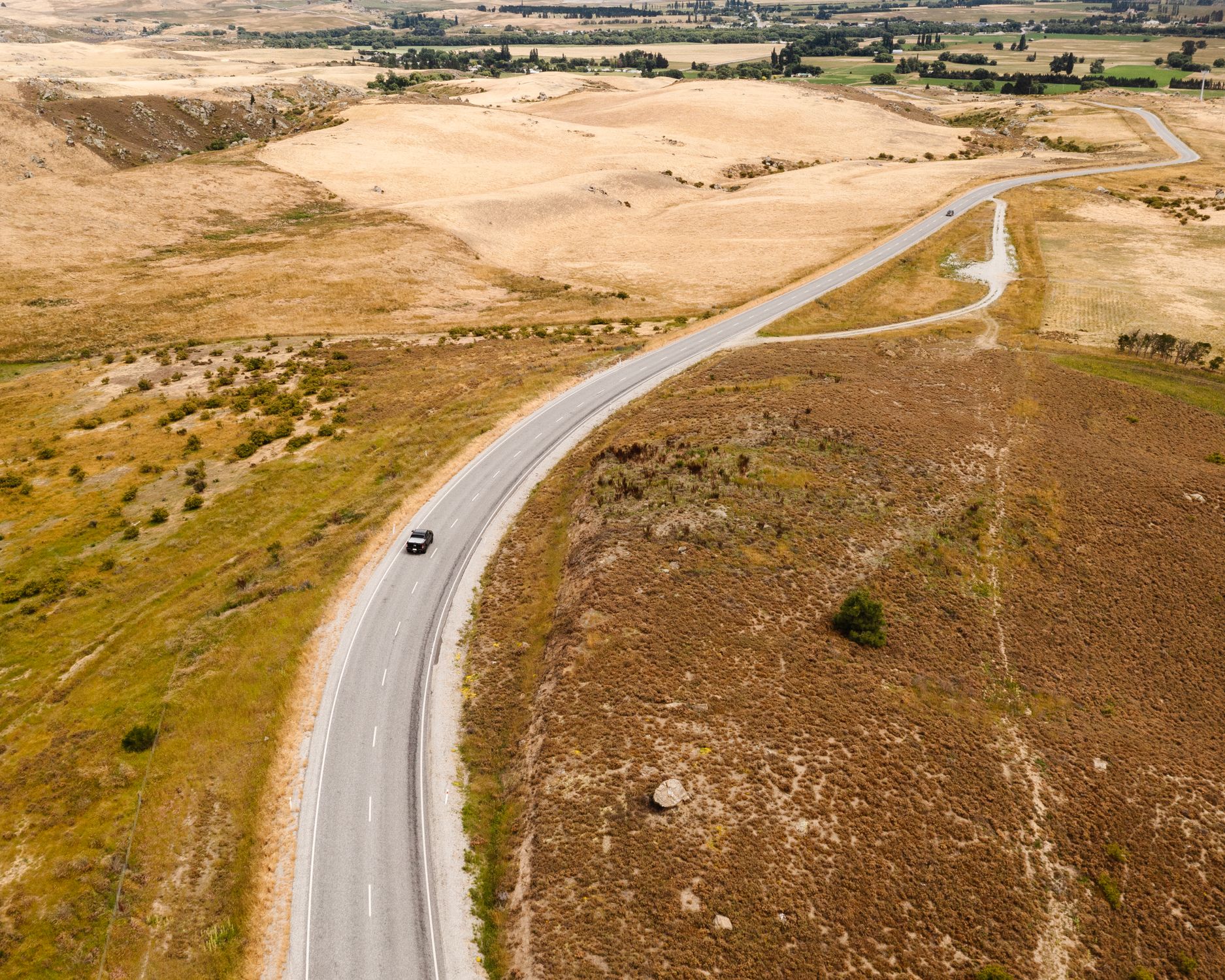
Rural roads can be narrow, unsealed, and subject to sudden weather shifts—rain can turn a gravel stretch into a slick sheet of mud in minutes. Alpine passes may close without warning; the NZ Transport Agency (NZTA) offers real-time traffic and road-condition maps via its app, which is indispensable for checking closures after heavy rain or snow.
State Highway 1 is the main north-south artery threading the whole country together, and several sections—like the Waikato Expressway—operate as toll roads requiring electronic payment. Most rental cars are equipped with a transponder, but it’s worth confirming at pick-up to avoid surprise invoices later.
Mobile signal can drop out entirely once you’re deep in a valley or over a mountain pass, so don’t rely on a live map for your whole route. Screenshot or download your directions before you leave any town with reception, and treat the NZTA road-condition check as a habit every morning you’re driving somewhere remote—five minutes with your coffee can save you from turning back halfway up a closed pass.
Practical driving etiquette
- Keep a safe following distance—gravel can kick up stones, and wildlife (especially in the South Island) may dart onto the road.
- Use daytime running lights on narrow, winding sections; they improve visibility for on-coming traffic.
- Plan fuel stops ahead of time; stations can be far apart in remote areas, and many accept only cash or card.
- Carry a basic emergency kit (spare tyre, reflective vest, first-aid)—most rentals include a tyre repair kit, but a personal set adds confidence.
Packing Essentials for the Solo Road-Trip
Your car is a mobile base, so the way you pack can make or break comfort. Below are three jewelry organizers that keep your accessories tidy, tangle-free, and easy to reach when you stop for a coffee break.
BAGSMART Travel Jewelry Organizer Roll Foldable Jewelry Case - Quilted cotton exterior with five compartments; perfect for everyday pieces and fits neatly in any carry-on. It also comes with a hanging loop, so it doubles as a compact display case in whatever motel or lodge you land in for the night.
Vlando Small Travel Jewelry Box Organizer Display Case - Compact faux-leather box with removable crossing board; ideal for minimalist travelers on a budget who only carry a handful of everyday pieces.
Teamoy Double Layer Jewelry Organizer Travel Case - Double-layer design with detachable earring holders; great for medium-to-large collections without bulk, so you’re not digging through a tangle of chains at a rest stop.
Beyond jewelry, consider these road-trip staples: a reusable water bottle, a sturdy daypack for hikes, a portable charger, and a set of zip-lock bags for wet clothing or snacks. Layered clothing is key—New Zealand’s weather can swing from sunny to rainy in a single afternoon, sometimes within the same drive.
A few more items earn their space in the boot: a paper map as backup for the stretches without signal, a pair of warm gloves if you’re driving any alpine route outside of summer, and a small cash stash for the rare rural fuel station or farm-stand honesty box that doesn’t take cards. None of this needs to be fancy—the goal is simply never being caught without an option when the plan changes.
One-Way Rentals & Savings Strategies
Back-tracking across the North Island can eat up both time and fuel. Many companies—Apex, Budget, Hertz, and others—allow one-way rentals (e.g., pick up in Auckland, drop off in Wellington) for an additional fee. The extra cost often pays for itself when you factor in the saved mileage and the chance to see more of the country without retracing steps.
When you book, ask about fuel-policy options. “Full-to-full” (pick up full, return full) is usually the cheapest, while “pre-pay” can lock in a lower price but leaves you stuck with any leftover fuel.
If you’re traveling in the shoulder season (late autumn or early spring), you’ll often find lower daily rates and fewer crowds at popular spots like Rotorua or the Bay of Islands. Combine this timing with a mid-size standard vehicle to strike a balance between comfort and cost, and you’ll likely spend less overall than a summer trip in a smaller car.
One-way isn’t the right call for every trip, though. If your itinerary is more of a loop—say, starting and ending in Auckland—a standard return rental almost always beats paying the one-way surcharge, since you’d be covering similar total distance either way. The math only tips in favor of one-way when you’re genuinely traveling point-to-point across the country and would otherwise burn days retracing the same roads.
Common Mistakes to Avoid (FAQ)
Q: Can I use my debit card for the security bond? A: Yes, most providers accept debit cards, but policies vary. Verify with the rental desk and be prepared for a larger hold amount than with a credit card.
Q: Do I need an IDP if my licence is in English? A: No. An English-language licence is sufficient; the IDP is only required for non-English licences (ApoliCar).
Q: Is it safe to drive at night in rural areas? A: Generally yes, but wildlife is most active at dusk and dawn. Keep headlights on, reduce speed, and use high-beam only when there’s no on-coming traffic.
Q: Will I be charged for toll roads automatically? A: Most rental cars have an electronic transponder linked to the rental agreement. The tolls are billed to the rental company and passed on to you at the end of the hire.
Q: Should I rent a 4WD for all South Island trips? A: Not always. If you’re staying on paved highways and major tourist routes, a standard SUV is fine. Reserve a 4WD if you plan to tackle alpine passes in winter or explore unsealed tracks.
Q: What if an alpine pass is closed when I arrive? A: Check the NZTA app before you set out each day—road-condition alerts are updated in real time, and rerouting around a closure is far easier when you’ve planned for it rather than discovering it at the barrier.
Avoiding these pitfalls keeps your budget intact and your journey stress-free.

Related Reading
Get price-drop alerts and new guides from HerTripGuide
One email a week: price drops on the gear we recommend, new guides, and what changed. No spam, unsubscribe anytime.