Solo Female Travel in Peru 2026: Beyond Machu Picchu
Complete 2026 guide to solo female travel in Peru covering Lima, Cusco, the Amazon, Rainbow Mountain, altitude tips, safety advice, and real costs for women.
This post may contain affiliate links. Disclosure
Updated for 2026 — Accurate as of February 2026.
Peru is one of the most visited countries in South America, and for good reason. Machu Picchu alone draws over 1.5 million visitors annually, and it fully deserves every superlative thrown at it. But Peru is so much more than its most famous ruin. It is a country of staggering biodiversity, where the Amazon rainforest meets the Andes mountains meets the Pacific coast. It has one of the world’s most exciting food scenes, centered on Lima’s restaurants that regularly appear on the World’s 50 Best list. It has ancient civilizations beyond the Inca, vibrant indigenous cultures that remain vital and visible, and landscapes that range from sand-dune deserts to glacial lakes at 5,000 meters.
I traveled solo through Peru for three weeks, and it challenged me in ways I did not expect while rewarding me with experiences I will never forget. Peru is not always easy, especially for solo women, but it is overwhelmingly worth it. The key is honest preparation and realistic expectations.
Peru received approximately 4.4 million international visitors in 2025, with tourism infrastructure continuing to improve across the country. As of early 2026, Peru has returned to a state of relative stability in tourist zones. The government has prioritized protection of the “Southern Tourist Corridor” — Cusco, Arequipa, Puno, and Machu Picchu — and trains are running on schedule. Solo female travelers represent an increasingly significant demographic, and the travel industry has responded with better-organized tours, improved hostel standards, and more reliable transportation options.
Safety: What Solo Women Need to Know
Peru requires moderate caution for solo female travelers. It is not as safe as Chile or Uruguay, but it is manageable with awareness and preparation. Overall, Peru ranks as one of South America’s safer destinations for women, with excellent tourist infrastructure in the key travel zones.
Lima
Lima is a city of contrasts. The tourist districts of Miraflores, Barranco, and San Isidro are well-policed, walkable, and feel safe day and night. I walked the Malecon (coastal promenade) in Miraflores at 10 PM and felt completely comfortable. Outside these areas, safety decreases. The centro historico is worth visiting during daylight hours but avoid wandering into unfamiliar neighborhoods.
Stick to ride-hailing apps like Uber or InDriver in Lima. Both are reliable and significantly safer than flagging random taxis, especially at night.
Cusco
Cusco is generally safe for tourists. The main square (Plaza de Armas) and surrounding streets are well-lit and patrolled. The San Blas neighborhood is artsy and popular with backpackers. The main risks are petty theft (watch your belongings at markets and in crowded areas) and drink spiking in nightlife areas. Stick to reputable establishments and watch your drink.
Important for 2026: A licensed guide is now required to enter Machu Picchu — solo, unguided exploration of the site is no longer permitted. Book your guide through a reputable Cusco-based agency.
Elsewhere in Peru
Arequipa, Huaraz, and the Sacred Valley are generally safe. Bus travel is common and generally reliable for major routes. Avoid overnight travel on remote mountain roads due to accident risk. Domestic flights (LATAM, Sky Airline, and Viva Air Peru) are affordable and time-efficient for long distances.
Common Concerns for Women
Catcalling (piropos): Common in Peru, especially in smaller cities and towns. It ranges from complimentary comments to aggressive remarks. The best strategy is to ignore it completely and keep walking. Engaging, even to express displeasure, can escalate the situation.
Tour guide behavior: The vast majority of guides are professional. Book tours through reputable agencies with established online reviews. If a guide makes you uncomfortable, speak up and request a different guide — reputable operators will accommodate this without question.
Taxi safety: Use registered taxis or ride-hailing apps (Uber and InDriver work in Lima, Cusco, and Arequipa). Avoid unmarked taxis, especially at night.
For a full overview of how to handle difficult moments on the road, our self-defense tips for women travelers covers practical strategies that work in South America and beyond.
Beyond Machu Picchu: The Full Peru Experience
Lima: The Food Capital of South America
Lima is the gastronomic capital of South America, and some would argue the entire Western Hemisphere. The city has three restaurants on the World’s 50 Best list (Central, Maido, and Kjolle), but the real magic is in the everyday food: ceviche eaten at a beachside stand, anticuchos (grilled beef heart) from a street vendor, and lomo saltado (stir-fried beef with fries) from a family restaurant in Barranco.
Must-eat experiences:
- Ceviche at a cevicheria in Miraflores. La Mar and Punto Azul are excellent.
- A food tour through Barranco or Surquillo Market. Lima Food Adventures runs small-group tours that are perfect for solo travelers.
- Pisco sour at the Hotel Maury or Gran Hotel Bolivar, both claiming to be the drink’s birthplace.
- Central by Virgilio Martinez, if you can get a reservation (book months in advance). It is one of the most innovative dining experiences on earth, using ingredients from every altitude zone in Peru.
The Lima food scene is extraordinary for solo diners. The city’s restaurant culture is relaxed and welcoming, and sitting alone at a great restaurant here never feels awkward. Our solo dining guide for women travelers has tips for making the most of eating alone everywhere.
Cusco and the Sacred Valley
Cusco was the capital of the Inca Empire, and its historical significance is everywhere. Inca stonework forms the foundations of colonial buildings. The massive fortress of Sacsayhuaman overlooks the city. The San Pedro Market is a kaleidoscope of colors, sounds, and flavors.
Altitude acclimatization is critical. Cusco sits at 3,400 meters. Many travelers experience some level of altitude sickness. Spend at least two full days in Cusco before attempting any strenuous activities. Drink coca tea (mate de coca), stay hydrated, avoid alcohol on your first day, and eat lightly. I ignored this advice on my first day and spent the evening lying in my hotel room with a splitting headache. Learn from my mistake.
Sacred Valley day trips from Cusco:
- Ollantaytambo: Impressive Inca ruins and a charming town.
- Pisac: Sunday market and terraced ruins above the town.
- Moray: Circular agricultural terraces that the Inca used as a crop laboratory.
- Maras Salt Mines: Thousands of salt pans cascading down a mountainside, still in use today.
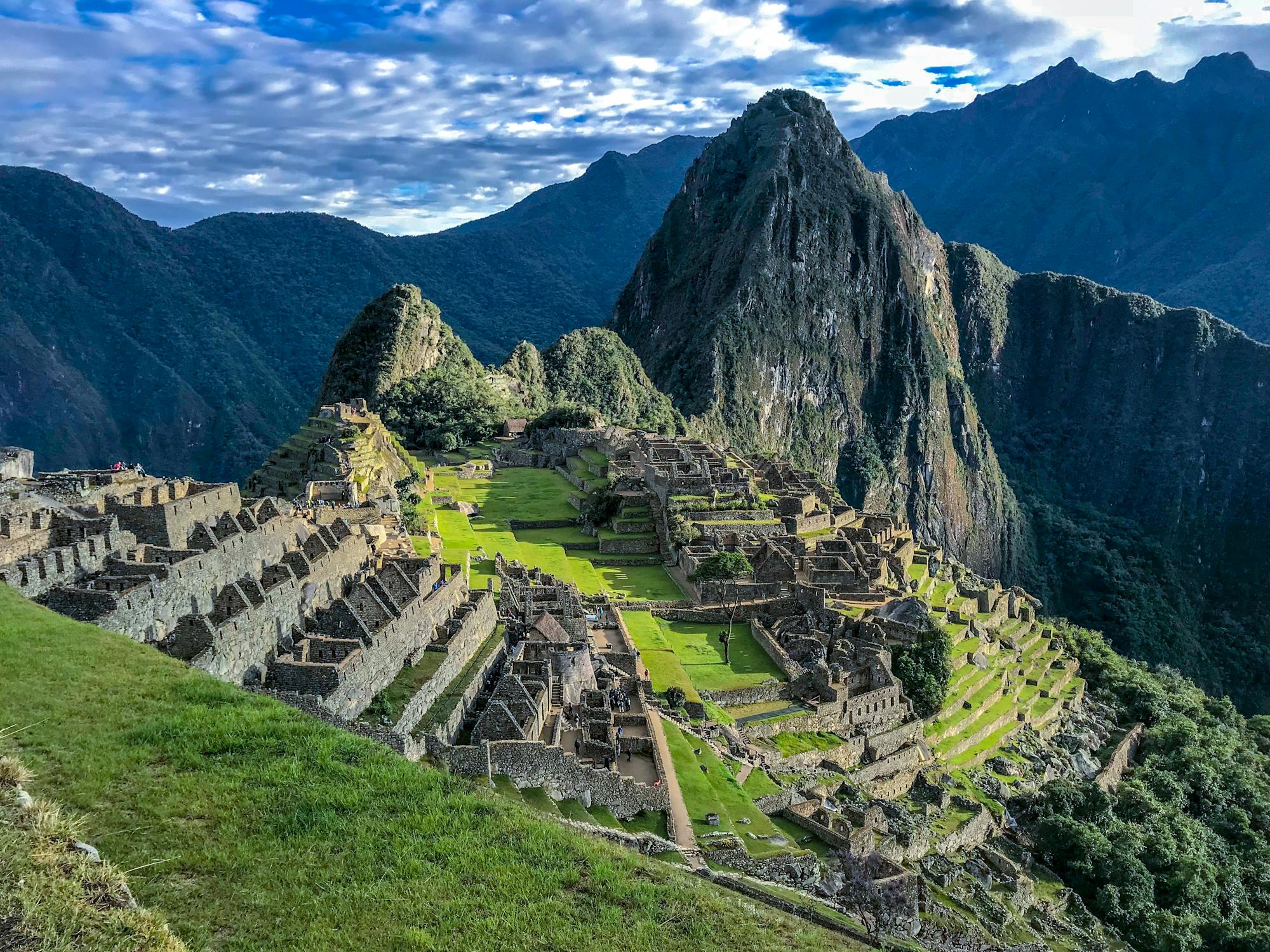
Machu Picchu: The Practical Details
Machu Picchu implemented a ticketing system that divides the site into circuits and time slots. You must choose a specific circuit and enter during your assigned window. This has reduced crowding significantly but requires advance planning.
How to get there:
- By train: PeruRail and Inca Rail operate from Ollantaytambo or Poroy (near Cusco) to Aguas Calientes (the town below Machu Picchu). Round-trip tickets cost $60–150 depending on class. The train ride through the Urubamba Valley is spectacular.
- The Inca Trail: A 4-day, 43-kilometer trek. Requires booking with a licensed operator 4–6 months in advance. Permits are limited to 500 people per day (including guides and porters). Cost: $600–900 per person for a group tour.
- Alternative treks: The Salkantay Trek (5 days), Lares Trek (4 days), and Inca Jungle Trek (4 days) are alternatives that do not require Inca Trail permits and are often cheaper ($300–500). The Salkantay Trek is increasingly popular with solo female travelers for its stunning scenery and well-organized group departures.
Tickets: Purchase at the official government website. Circuit 1 and Circuit 2 are the most popular and include views of the classic postcard image. Book 2–3 months in advance for peak season (June–August). The best times for solo travel are shoulder months: April, May, September, or October — smaller crowds and more manageable conditions.
Rainbow Mountain (Vinicunca)
Rainbow Mountain exploded in popularity over the past decade, and its striped layers of red, yellow, and turquoise sedimentary rock are genuinely as impressive in person as in photos. The hike is approximately 5 kilometers each way, but the altitude (5,200 meters at the summit) makes it demanding. I was gasping for breath every few steps on the final ascent, and I consider myself reasonably fit.
Practical tips:
- Only attempt this after at least 3–4 days of altitude acclimatization in Cusco.
- Day tours from Cusco cost $25–40 and include transport, breakfast, and lunch.
- Start as early as possible (most tours depart at 3–4 AM) to avoid afternoon clouds and crowds.
- Bring warm layers. It can be below freezing at the top, even in summer.
The Amazon: Tambopata and Manu
Peru’s Amazon region offers some of the most biodiverse ecosystems on the planet. Puerto Maldonado is the gateway to the Tambopata National Reserve, where lodges deep in the jungle offer 3–5 day programs including wildlife spotting, night hikes, and visits to oxbow lakes.
I spent three nights at a jungle lodge in Tambopata and saw macaws at a clay lick, caiman on night boat rides, and more species of birds and insects than I could count. The night hike was one of the most thrilling experiences of my trip, walking through pitch-dark rainforest with a headlamp and a guide who could identify every sound.

Solo women in the Amazon: Lodge-based tours are completely safe and inherently social. You join other guests for meals and excursions. A 3-night lodge stay costs $200–400 including all meals, transport from Puerto Maldonado, and guided activities.
Cost Breakdown: Peru in 2026
Peru is excellent value for solo travelers, with costs significantly lower than Chile or Argentina.
| Expense | Budget | Mid-Range | Comfort |
|---|---|---|---|
| Accommodation/night | $8-15 (hostel) | $25-55 (hotel) | $60-180 (boutique/luxury) |
| Meals/day | $6-12 | $15-30 | $30-70 |
| Transport/day | $5-12 | $15-30 | $35-80 |
| Activities/day | $10-25 | $25-50 | $60-200 |
| Daily total | $29-64 | $80-165 | $185-530 |
Note: Machu Picchu tickets ($45–65 depending on circuit), Inca Trail permits, and Amazon lodge packages are significant one-off costs that should be budgeted separately.
Health and Altitude
Altitude is the single biggest health concern in Peru. Cusco (3,400m), Lake Titicaca (3,800m), and Rainbow Mountain (5,200m) all pose altitude sickness risks.
Symptoms: Headache, nausea, fatigue, shortness of breath, dizziness. Most people experience mild symptoms that resolve within 24–48 hours with rest and hydration.
Prevention: Acclimatize gradually. Coca tea helps. Some travelers take Diamox (acetazolamide) as a preventive — consult your doctor before traveling. Avoid alcohol for the first 24–48 hours at altitude.
Packing cubes are essential for Peru’s multiple climate zones — Amazon lodge, Andean highlands, and Lima’s coast all require different layers, and a compression system makes it manageable in a single carry-on. Our best packing cubes for women travelers covers compression options that work well across hot-and-cold itineraries.
Period and altitude: Anecdotally, many women report that high altitude affects their menstrual cycle, causing early or late periods, heavier flow, or increased cramps. Bring extra supplies and pain medication. Our guide on solo travel health for periods and prescriptions covers exactly this.
Visa and Practical Information
Most nationalities receive a free 183-day tourist visa on arrival. No advance application needed. Your passport must be valid for at least 6 months.
Currency: Peruvian Sol (PEN). Approximately 3.7 PEN = 1 USD. ATMs are widely available in cities. Many businesses accept USD, but you will get a better rate using soles.
Language: Spanish. Quechua is spoken in highland areas. English is limited to tourist-facing businesses. Download Google Translate’s Spanish and Quechua packs offline.
SIM card: Claro and Movistar offer tourist SIM cards for approximately $3–5 with several gigabytes of data. Coverage is good in cities and tourist areas, limited in rural and jungle areas.
Best Time to Visit
The dry season (May to September) is the best time for Cusco, Machu Picchu, and trekking. June to August is peak season with the best weather but highest prices and largest crowds. April–May and September–October are excellent shoulder months with fewer tourists and reasonable prices.
Lima and the coast are best visited December to April when skies are clear and temperatures are warm. The rest of the year, Lima is often overcast with garua (coastal fog) — still pleasant, just grey.
Final Thoughts
Peru is not a country that lets you be passive. It demands your physical effort on mountain trails, your emotional engagement with its history, your culinary curiosity at every meal, and your patience when things do not go according to plan. For solo women, it is a destination that builds confidence through challenge. The first time you summit a pass at 4,600 meters, or navigate a bus station in a city where no one speaks your language, or eat a dish you cannot identify and discover it is delicious, you learn something about your own capability that no comfortable destination could teach you.
Peru is not always comfortable. It is always extraordinary.
You Might Also Like
Get the best HerTripGuide tips in your inbox
Weekly guides, deals, and insider tips. No spam, unsubscribe anytime.