Solo Female Travel in Slovenia 2026: Alpine & Coast Guide
Empowering solo female travelers with safety tips, transport hacks, and itineraries for Slovenia's Alps, Lake Bled, Ljubljana, and the Adriatic coast in 2026.

This post may contain affiliate links. Disclosure
Traveling alone as a woman can feel like stepping onto a stage where you’re both the star and the director. Slovenia, tucked between the Julian Alps and the Adriatic Sea, offers a backstage pass to safety, natural beauty, and affordable charm — perfect for the confident solo explorer. In 2026 the country shines as one of Europe’s safest spots, ranked 9th on the Global Peace Index with a score of 1.409, and its capital, Ljubljana, lands among the ten safest European capitals on the Numbeo Safety Index. With mild shoulder-season weather, a well-connected bus network, and a welcoming local vibe, you’ll find the freedom to wander from misty mountain trails to sun-kissed coastal lanes without compromising comfort or security. Let’s map out the practical logistics first, then dive into the wonder that awaits.
Is Slovenia safe for solo female travelers? Slovenia ranks 9th on the Global Peace Index with a score of 1.409, and Ljubljana lands among the ten safest European capitals on the Numbeo Safety Index. The guide splits into Alpine Lake Bled and Triglav, coastal Piran and the Adriatic, and Ljubljana, plus accommodation registration rules.
Getting There and Entry Requirements
- Visa-free for U.S. citizens — You can stay up to 90 days in any 180-day window as part of the Schengen Area; just make sure your passport is valid at least three months beyond your departure date.
- ETIAS rollout — Starting Q4 2026, all visa-exempt travelers (including Americans) must apply for a three-year electronic travel authorization. The fee is 20 euros for adults aged 18-70. Apply online at the official EU ETIAS portal.
- Travel advisory — The U.S. State Department rates Slovenia at Level 1 (its safest rating) and advises only normal precautions. The main risk is petty theft in tourist hotspots. See the full advisory at the U.S. State Department Slovenia page.
Quick tip: Download your ETIAS approval to your phone and keep a printed copy just in case you need to show it at the border.
Getting Around: Transport Basics
Slovenia’s compact size means you can cover most highlights without a car. The public-transport network is reliable, affordable, and easy to navigate.
- Ljubljana city buses run on the Urbana card system. A 90-minute ride with unlimited transfers costs 1.30 euros, and a monthly pass is 37 euros. You can also tap a contactless bank card for the same fare. Details at Ljubljana Public Transport.
- Bus to Lake Bled — The Arriva line from Ljubljana to Bled costs 6-7 euros one-way, takes about 1.5 hours, and offers a 25% discount on weekends and public holidays. Timetables and tickets are available at ap-ljubljana.si.
- Coastal connections — Regular buses link Ljubljana to the Adriatic towns of Koper and Piran; the journey is roughly 2 hours. For more flexibility, consider a regional train (tickets start at 9 euros).
Safety note: Keep your ticket handy and store valuables out of sight. Public transport staff are generally helpful, and most drivers speak basic English.
Safe Stays: Accommodation and Registration
Finding a welcoming place to rest your head is part of the adventure.
- Hostels — Dorm beds start at 21 euros per night in central Ljubljana and Bled, often including a lockable locker.
- Private rentals — If you stay longer than three days in a private apartment (Airbnb-type), you must register with the local police within 72 hours. Hotels and most hostels handle this automatically, but for independent rentals, ask your host for the registration form.
- Budget tip — A daily budget of 50-70 euros comfortably covers a dorm, two meals, and local transport. A coffee costs 1.50-2 euros, and a pint of beer 2-3 euros.
For a deeper dive into budgeting across the Balkans, see our sister guide: Balkans Solo Female Budget Guide.
Alpine Adventures: Lake Bled and Triglav National Park
Lake Bled
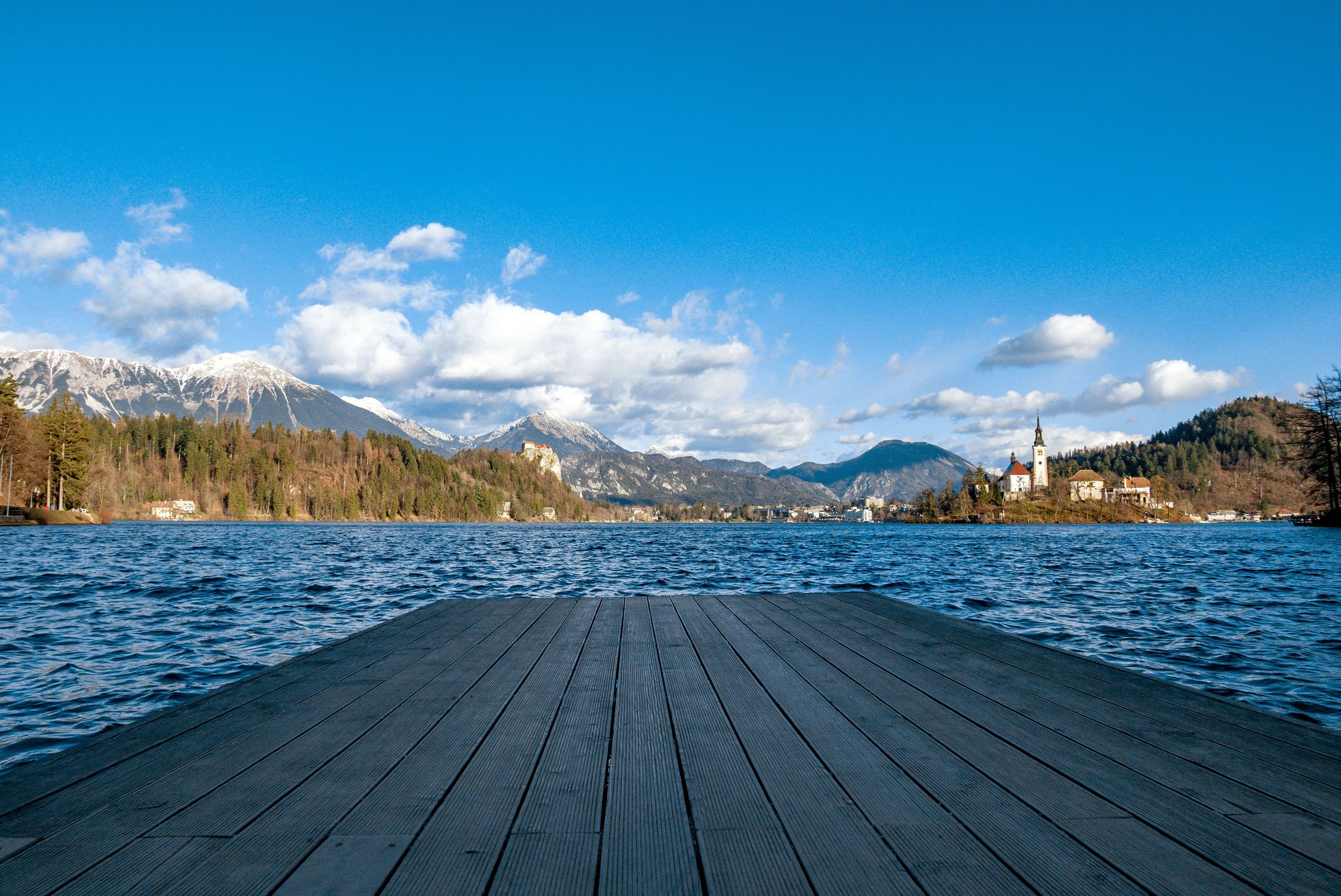
Lake Bled is the postcard-perfect blend of alpine lake and fairy-tale island church. Arrive early in May-June or September-October to avoid the July-August crowds that push temperatures above 35 degrees C.
- Getting there — The 1.5-hour bus from Ljubljana drops you at the lake’s edge. From the station, a short walk leads to the iconic pier.
- Things to do — Row to the island, climb the 99-step bell tower, and try the traditional Bled cream cake. For a sunset view, hike up to Bled Castle; the panorama of the Julian Alps is worth the climb.

Triglav National Park
Triglav, Slovenia’s only national park, spans 880 km2 of rugged peaks, emerald valleys, and crystal streams. While the park is a magnet for hikers, solo women should follow a few safety basics:
- Tell someone your route — Register your planned trail with your accommodation or the local tourist office.
- Stick to marked trails — The U.S. Embassy warns that unmarked routes have claimed multiple foreign lives each year.
- Carry essentials — Pack a map, a fully charged phone, a lightweight rain jacket, and at least 1.5 L of water per person.
Popular day-hikes include the Vintgar Gorge (easy, well-signposted) and the ascent to Mount Triglav’s summit for seasoned trekkers (requires a guide if you’re alone).
Coastal Charms: Piran and the Adriatic
The tiny Venetian-style town of Piran feels like a Mediterranean secret tucked into the northern Adriatic. Its pastel facades and narrow alleys are perfect for leisurely strolls, especially in the shoulder seasons when the heat is gentle and the streets are less crowded.
- How to get there — Buses from Ljubljana to Koper run hourly; from Koper, a short local bus or a 15-minute taxi reaches Piran.
- What to see — Wander Tartini Square, climb the city walls for a sea view, and sample fresh seafood at a family-run konoba (tavern).
- Sunset spot — The pier at the far end of the town offers an unobstructed view of the sun sinking behind the Adriatic horizon.

Safety tip: Keep an eye on your belongings on the bustling waterfront, especially during the evening when street performers attract crowds.
City Vibes: Ljubljana — The Green Heart of Slovenia
Ljubljana scores 78.6 on the 2026 Numbeo Safety Index, placing it among Europe’s ten safest capitals. Its compact, pedestrian-friendly center makes it ideal for solo exploration.
- Getting around — The city’s bus network (Urbana card) covers the entire urban area, and many attractions are within walking distance.
- Must-see spots — The Triple Bridge, Tivoli Park, and the vibrant Central Market. Don’t miss the dragon statues that guard the city’s iconic bridges.
- Nightlife — The Metelkova district offers a bohemian vibe with bars and live music; it’s lively yet safe, especially if you stick to well-lit streets.

For official tourism ideas, visit Visit Ljubljana.
Practical Tips for Solo Female Travelers
| Topic | Advice |
|---|---|
| Money | Carry a mix of cash (euros) and a contactless debit/credit card. ATMs are plentiful, but a small cash reserve helps in rural areas. |
| Language | Slovene is the official language, but English is widely spoken in tourism hubs. Learning a few greetings (“Dober dan,” “Hvala”) earns smiles. |
| Health | No mandatory vaccinations. Travel insurance is recommended; EU health coverage (EHIC) applies to EU citizens only. |
| Connectivity | Free Wi-Fi is common in cafes and hostels. For remote hikes, consider a local SIM (around 10 euros for 5 GB). |
| Scams | Pickpocketing can occur near bus stations and crowded attractions. Use a zip-up bag, avoid flashing valuables, and stay aware of your surroundings. |
| Rail Passes | If you plan to hop between neighboring countries, a Eurail Global Pass is a solid option. See our Best Europe Rail Passes for Solo Women 2026 guide. |
| Cultural etiquette | Dress modestly when visiting churches (cover shoulders and knees). Tipping 10% in restaurants is customary but not mandatory. |
| Emergency numbers | Dial 112 for any emergency (EU-wide). Local police are responsive and often speak English. |
Body-positive reminder: Slovenia’s outdoor activities celebrate all body types. Whether you’re trekking a gentle valley or strolling the cobblestones of Piran in a sundress, the country’s relaxed vibe encourages you to move at your own pace.
Best Times to Visit and Weather Guide
Timing your trip well is one of the smartest moves a solo female traveler can make. May-June and September-October are the undisputed sweet spots for Slovenia. Temperatures during those months sit between 18-25 degrees C — comfortable for hiking, cycling, and exploring coastal towns without the punishing heat of July-August that regularly pushes above 35 degrees C at Lake Bled. Shoulder season also means leaner crowds: boat queues for the island church are manageable, and Piran’s narrow streets feel like a local town rather than a tourist corridor.
July and August are peak season throughout the country. If you must travel then, book accommodation months in advance, arrive at Bled before 8 am for photos without crowds, and consider the quieter side of the park — the Soča Valley, for instance, draws far fewer visitors than Bled while delivering equally dramatic scenery of emerald water and limestone gorges.
Winter travel (November-March) suits skiers; the Krvavec and Kranjska Gora resorts offer day-trip skiing from Ljubljana on a budget. The city itself takes on a festive charm in December with an award-winning Christmas market along the Ljubljanica River.
Hidden Gems Beyond the Obvious
Most itineraries start and end with Lake Bled, Ljubljana, and Piran — all excellent. But Slovenia’s less-visited corners reward solo travelers who venture off the main circuit.
Postojna Cave and Predjama Castle — Europe’s most-visited show cave boasts over 700 years of documented human exploration and 24 kilometers of passageways. Postojna is home to the olm (Proteus anguinus), a blind cave-dwelling salamander endemic to the Dinaric karst. Direct buses from Ljubljana reach the cave entrance; the trip pairs naturally with Predjama Castle, a medieval fortress built into a cliff face just 9 km away. Official site: Postojna Cave.
The Soča Valley — Translucent turquoise water cutting through limestone gorges makes the Soča one of the most photogenic rivers in Europe. Bovec is the adventure hub — kayaking, rafting, and via ferrata all launch from here. The valley is reachable by bus from Ljubljana via Nova Gorica.
Škocjan Caves UNESCO Site — A UNESCO World Heritage Site and one of the world’s largest underground canyons. Unlike the more commercialized Postojna, Škocjan feels wilder and more dramatic; it’s a short drive or bus from Piran.
For the full range of experiences across the country, the Slovenia Tourism Official Board maintains an up-to-date activity and event calendar worth checking before you depart.
Avoiding Scams and Staying Street-Smart
Slovenia is genuinely one of Europe’s safest countries, but awareness goes a long way. The most common issues solo female travelers encounter are opportunistic pickpocketing near train stations and “friendly locals” who offer overpriced tours. A few habits that help: keep your phone in a front-facing zipped pocket, book accommodation and transport in advance through official apps, and trust your instincts if a situation feels off. For a deeper look at staying safe on the road, see our guide on avoiding scams as a solo woman.
Building Your Slovenia Itinerary: Sample 7-Day Route
Here is a practical week-long framework for solo female travelers that balances the Alps, the capital, and the coast without over-scheduling:
Day 1-2 — Ljubljana: Arrive, get your Urbana card, and walk the compact city center. Visit the Central Market in the morning, climb Ljubljana Castle in the afternoon, and explore Metelkova in the evening. Day 2: day trip to Postojna Cave and Predjama Castle (direct bus from Ljubljana, roughly 1 hour each way).
Day 3-4 — Lake Bled and Triglav foothills: Bus from Ljubljana (1.5 hours). Day 3: row to the island, hike up to Bled Castle for the sunset panorama. Day 4: take the Vintgar Gorge trail in the morning (easy, 1.6 km boardwalk through a dramatic canyon) then return to Ljubljana for the night.
Day 5-6 — Piran and the Adriatic coast: Bus to Koper, then local bus to Piran (total around 2.5 hours). Walk the city walls, explore Tartini Square, and eat fresh seafood at the harbor. Day 6: slow morning in Piran, then connect back to Ljubljana via Koper.
Day 7 — Departure buffer in Ljubljana: Use the final day for any museums you missed (the Museum of Modern History is excellent), last-minute shopping at the BTC City mall, or a relaxed breakfast at one of the Prule neighborhood coffee shops before heading to Ljubljana Airport (LJU), which is 25 km from the city center and easily reached by shuttle bus.
Related Reading
Get price-drop alerts and new guides from HerTripGuide
One email a week: price drops on the gear we recommend, new guides, and what changed. No spam, unsubscribe anytime.