Solo Travel Photography: Stunning Self-Portraits Guide
Master solo travel photography in 2026: AI autofocus cameras, tripods, timers, and techniques for stunning self-portraits as a solo female traveler. Start now.

This post may contain affiliate links. Disclosure
One of the quiet frustrations of solo travel is the photo problem. You are standing in front of the Colosseum, watching the sunset over Santorini, or hiking through a jungle in Costa Rica, and you want a photo of yourself in this moment. Not a selfie with half your face and a fraction of the view, but a real photograph that captures you in the place, at the scale, in the light. The kind of photo that your future self will look at and remember exactly how it felt to be there.
Traveling with a companion solves this effortlessly. Traveling solo requires strategy, equipment, and a willingness to push past the initial awkwardness of setting up a tripod in a public place or asking a stranger for a favor. The good news is that the tools and techniques available in 2026 make solo travel photography easier, more creative, and more accessible than ever. AI-powered autofocus systems now track subjects with extraordinary accuracy, newer flagship phones produce near-professional image quality, and the tripod market has evolved to offer genuinely packable options that weigh under a pound.
This guide covers everything from the gear you need to the techniques that work to the mindset shifts that transform your approach to capturing your solo adventures.
Essential Gear for Solo Travel Photography
Your Camera
You do not need professional equipment to take great travel photos, but the gap between a smartphone and a dedicated camera is still meaningful, especially in challenging light conditions.
Smartphone (iPhone 16 Pro, Samsung Galaxy S25 Ultra, or similar 2026 flagship): Modern flagship phones produce excellent photos in good light, offer built-in timer functions, and are the most convenient option. The latest AI scene-detection modes automatically optimize settings for backlit portraits, architecture, and golden-hour landscapes. If photography is not your primary focus and you want to travel light, a recent smartphone is perfectly sufficient.
Mirrorless camera with AI autofocus (Sony a7V, Sony a6700, Fujifilm X-T5): If you want significantly better image quality, particularly in low light, a compact mirrorless with subject-tracking AI is the sweet spot between quality and portability. Sony’s a7V features an AI autofocus system that tracks subjects with incredible accuracy across an entire scene — meaning it locks onto you the moment you step into frame, even if you are moving. These cameras produce images that are dramatically superior to phones in challenging conditions.
Action camera (GoPro Hero 13 or DJI Osmo Action 5 Pro): For adventure activities, water sports, hiking, and situations where a larger camera is impractical, an action camera is invaluable. The wide-angle lens captures both you and your environment in a single frame. The DJI Osmo Action 5 Pro added AI tracking in its 2025 firmware that follows your face as you move in front of the lens.
The Tripod: Your Solo Travel Companion
A tripod transforms solo travel photography from an exercise in frustration to a creative practice. It is the single most important piece of gear for taking photos of yourself.
Full-size travel tripod (Peak Design Travel Tripod, Manfrotto BeFree, Vanguard VEO 3+): These weigh around 2.5 to 3.5 pounds, extend to full height, and are stable enough for long exposures and video. The Vanguard VEO 3+ uses carbon fiber to cut weight without sacrificing stability. If you are serious about photography, this is the category to invest in.
Tabletop tripod (Joby GorillaPod Mobile Mini, Manfrotto PIXI): These flexible mini-tripods weigh under a pound and can be wrapped around railings, placed on walls, or set on tables. They are not as stable or tall as full-size tripods, but their portability means you will actually carry them everywhere.
Selfie stick/tripod hybrid: Several products now combine a selfie stick with tripod legs, giving you both handheld reach and a freestanding option. These are the most versatile budget choice and often include Bluetooth remote triggers.
Remote Shutter Options
Most tripod setups require a way to trigger the camera from a distance. Options include:
Bluetooth remote shutter: Small, inexpensive, and compatible with most phones and many cameras. Clip it to your pocket or palm and press the button when you are in position.
Apple Watch or smartwatch: If you have an Apple Watch or compatible smartwatch, you can use it to see a live preview of the camera frame and trigger the shutter. This is genuinely game-changing for solo photography because you can see exactly how you look and adjust your position before taking the shot.
AI subject tracking (no remote needed): The newest cameras and phone apps can detect when a person enters the frame and fire a burst automatically. Google’s Pixel 9 and Sony’s latest mirrorless bodies both offer this. You set the camera, walk away, and it fires when you appear. No remote required.
Camera app with timer: Both iPhone and Android cameras include built-in timers. Set the timer, press the shutter, walk into frame, and hold your pose. Simple but effective.
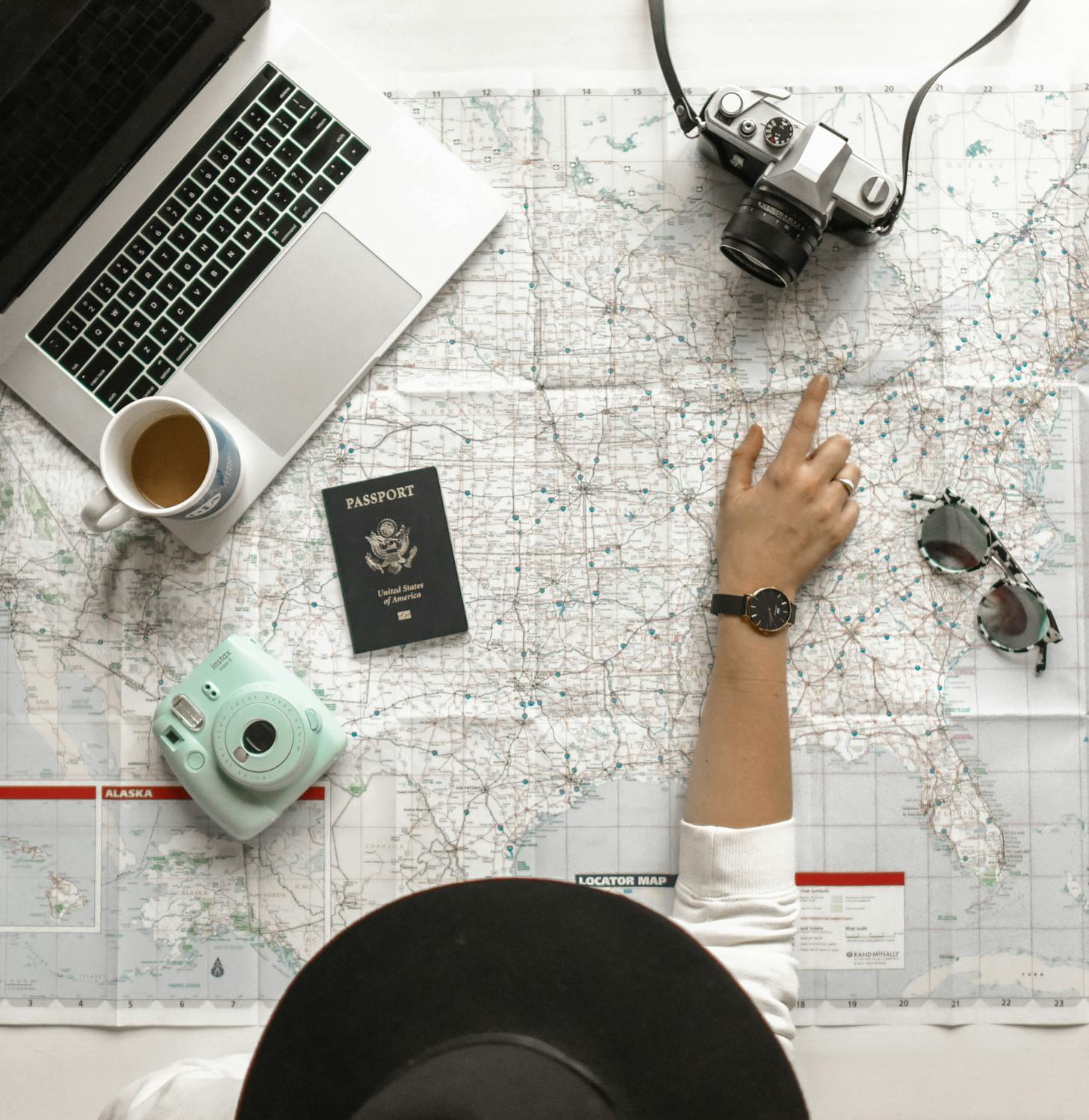 Photo credit on Pexels
Techniques for Taking Photos of Yourself
The Video-to-Screenshot Method
This technique is the easiest entry point for solo travel photography and requires no special equipment. Set your phone or camera to record video in 4K resolution. Start recording, then walk into frame and move naturally: look around, walk toward the camera, turn to admire the view, adjust your hair, laugh. After 30 to 60 seconds, stop recording. Then scrub through the video frame by frame and screenshot the moments that look natural and well-composed.
The advantage of this method is that it captures genuinely candid moments. You are not holding a forced smile for a timer; you are moving naturally and selecting the best frames afterward. At 4K resolution, screenshots are high enough quality for social media and even prints. Some newer phones let you extract full-resolution still frames directly from video — check your camera app settings.
The Tripod and Timer Method
This is the most versatile technique and produces the highest quality results.
Setup: Place your tripod at the desired angle. Frame your shot using a stand-in object (your bag, a water bottle) placed where you will stand. Set focus on that spot. Set your timer or connect your Bluetooth remote.
Composition: Use the rule of thirds. You do not need to be centered in every frame. Placing yourself in the left or right third of the image, with the landscape or architecture filling the rest, creates more dynamic compositions that feel editorial rather than touristy.
Burst mode: Set your camera to take a burst of 5 to 10 shots rather than a single frame. This gives you options for body position, expression, and the exact moment when your dress catches the wind or the light hits your face perfectly.
The walk-away technique: Start close to the camera, trigger it, and walk away into the scene. The resulting sequence shows you at various distances, and the “walking into the landscape” pose is one of the most popular and visually compelling in travel photography.
Asking Strangers
Sometimes the simplest solution is the best one. Asking a stranger to take your photo is quick, social, and often yields surprisingly good results.
Who to ask: Look for someone who appears to be a photographer themselves, perhaps someone carrying a proper camera or carefully composing their own shots. They are more likely to understand composition, less likely to cut off your feet, and statistically much less likely to run off with your phone.
How to ask: Be specific about what you want. Instead of handing over your phone and saying “can you take my photo?” try: “Could you take a photo of me with the sunset in the background? I would love to be in the left side of the frame with the temple visible behind me.” Most people are happy to help and appreciate clear direction.
Reciprocity: Offer to take their photo in return. This creates a mini-interaction that is enjoyable for both parties and often leads to better photos because the photographer feels more invested.
The safety concern: The most common anxiety about handing your phone to a stranger is theft. This is exceptionally rare in tourist settings, but if you are concerned, choose someone who is with a group (harder to run), someone who is also photographing the same spot, or use a wrist strap on your phone.
The Selfie Evolution
Selfies have a bad reputation in photography circles, but the front-facing cameras on modern phones produce excellent images. The key is to avoid the arm’s-length cliche and use techniques that make selfies look intentional and composed.
Use a selfie stick extended fully. The additional distance creates a more flattering perspective and includes more background.
Look at the camera lens, not the screen. This creates the illusion of eye contact in the resulting photo.
Use portrait mode. The background blur (bokeh) creates a professional look that separates you from the environment.
Shoot from slightly above. Holding the camera slightly above your eye level is consistently more flattering than shooting from below.
 Photo credit on Pexels
Composition Tips for Solo Travel Photos
Tell a Story
The best travel photos are not just pretty; they tell a story. Instead of standing and smiling at the camera, create a narrative in each frame.
- Reading a map at a crossroads tells a story of exploration
- Looking over a railing at a city view tells a story of contemplation
- Walking down a narrow alley tells a story of discovery
- Sitting at a cafe with a coffee tells a story of presence
Think about what story you want each photo to tell, and pose accordingly.
Use Natural Frames
Doorways, archways, windows, tree branches, and tunnels create natural frames around your subject (you). Position yourself within these frames for photos that have depth and visual interest beyond the typical “person standing in front of landmark” composition.
Play With Scale
Position yourself to emphasize the scale of your environment. Standing at the base of a giant redwood, walking across a vast desert, or sitting on a tiny bench in an enormous cathedral creates dramatic visual contrast that communicates the grandeur of your experience.
Embrace Negative Space
Not every photo needs to be packed with detail. A composition that is two-thirds sky and one-third you standing on a cliff creates a mood that a tightly cropped portrait cannot. Negative space communicates solitude, freedom, and the vastness of the world you are exploring.
Shoot During Golden Hour
The hour after sunrise and the hour before sunset produce warm, soft, directional light that makes everything and everyone look extraordinary. If you have one chance to photograph a location, make it during golden hour. The difference in quality is dramatic.
Editing Your Photos
A few minutes of editing can transform a good photo into a stunning one. You do not need to be a Photoshop expert.
Mobile editing apps:
- Lightroom Mobile (free with premium option): The industry standard for photo editing. Offers powerful tools in an intuitive interface. The preset system lets you develop a consistent look across all your photos. In 2025, Adobe added AI-powered background removal and subject masking that works exceptionally well on travel portraits.
- VSCO: Known for its film-like presets that give photos a warm, vintage aesthetic popular in travel photography.
- Snapseed: Google’s free editing app with professional-grade tools including selective adjustments, healing, and HDR.
Basic editing workflow:
- Crop and straighten to improve composition
- Adjust exposure (brightness) if needed
- Increase contrast slightly for visual punch
- Warm up the color temperature slightly (travel photos look better warm)
- Increase vibrance (not saturation) to make colors pop naturally
- Add a subtle vignette to draw the eye toward the center
Consistency is key. If you are posting to Instagram or a travel blog, developing a consistent editing style makes your feed look cohesive and professional. Choose a preset or a set of adjustments you like and apply them to all your photos with minor tweaks.
Protecting Your Gear While Traveling Solo
When you carry camera equipment alone, you are responsible for its security at all times.
Use a camera bag that does not look like a camera bag. Dedicated camera bags with visible brand logos advertise that you are carrying expensive equipment. A plain backpack with padded inserts is less conspicuous.
Insure your gear. If you are traveling with equipment worth more than $1,000, add it to your travel insurance or your homeowner’s/renter’s insurance. Keep serial numbers and photos of your gear in a cloud document accessible from any device. Check our travel insurance guide for solo women for policies that cover camera gear specifically.
Back up daily. Use a portable SSD or upload to cloud storage every evening. Losing a camera is painful but replaceable. Losing irreplaceable photos from a once-in-a-lifetime trip is devastating.
Keep your gear charged. Camera batteries and phones drain fast on full travel days. A compact power bank charges both your phone and most mirrorless cameras via USB-C — see our best travel power banks for women for options that fit in a jacket pocket and weigh under 200 grams, making them the one piece of gear that consistently saves the last shot of the day.
 A compact power bank is as essential as your tripod for a full day of solo travel photography. Photo credit on Pexels
Be aware of your surroundings. When setting up a tripod, be mindful of who is around you. In busy tourist areas, keep one eye on your equipment. Never leave your camera bag unattended, even for a moment. The solo female travel safety apps guide lists several apps that help monitor your surroundings while you shoot.
 Photo credit on Pexels
Getting Over the Awkwardness
The biggest obstacle to solo travel photography is not technical. It is emotional. Setting up a tripod in a public place and posing for photos feels deeply self-conscious the first few times. Here is how to push through that discomfort.
Remember that no one cares. The people around you are absorbed in their own experiences. They will glance at you, think “tourist taking photos,” and move on. You will never see them again.
Start in less crowded locations. Practice your tripod setup and posing techniques in quieter spots before attempting them at major tourist attractions. A quiet beach at sunrise or an empty park bench is a low-pressure practice ground.
Watch what other solo travelers do. You are not the only person taking photos alone. Once you start noticing other solo travelers setting up tripods, asking strangers, and doing the self-timer sprint, you will realize how normal it is.
Think of your future self. In ten years, you will not remember the thirty seconds of awkwardness while setting up a tripod. You will have the photo. That is what matters.
Channel your inner content creator. In 2026, creating content for social media, blogs, and personal portfolios is so widespread that setting up a tripod barely registers as unusual behavior. You are not doing anything weird. You are doing what millions of people do every day.
Building a Travel Photography Portfolio
If you want your travel photos to be more than casual snapshots, consider approaching your solo trip as a photography project.
Choose a theme. Decide before your trip what unifying concept will tie your photos together. Themes might include: doorways and entrances, local markets, golden hour portraits, street food, reflections, or color stories. A theme focuses your attention and creates a cohesive collection.
Shoot daily. Treat photography as a daily practice, not just an activity reserved for major sights. The ordinary moments — your morning coffee, the view from your bus window, the texture of a wall you walked past — often produce the most evocative images.
Review and cull nightly. Spend 15 minutes each evening reviewing the day’s photos. Delete the obvious failures, star the best shots, and identify patterns in what is working and what is not. This nightly review improves your shooting the next day.
Create a visual diary. Pair your best daily photo with a journal entry. The combination of image and text creates a record that is richer than either alone. Our travel journaling guide covers how to build this habit effectively.
Share intentionally. If you post to social media, curate what you share rather than dumping everything. Three strong images from a day tell a better story than thirty mediocre ones. And remember that delayed posting (sharing yesterday’s images rather than today’s) protects your real-time location privacy.
Using AI Trip Planning Tools for Photography Scouting
One underutilized strategy for solo travel photographers is using AI tools to pre-scout shooting locations before you arrive. Tools like Google Lens and various AI trip planners can identify the best angles at famous landmarks, the optimal time of day for lighting, and lesser-known spots that the Instagram crowds have not yet overrun. Pair your photographic planning with our AI trip planning guide for a full pre-trip research workflow.
What to Know Before You Go
Solo travel photography is not about producing perfect images for Instagram. It is about documenting your experience in a way that future you will appreciate. The photo of you grinning in front of a viewpoint with slightly off composition and imperfect lighting will mean more to you in twenty years than the most technically perfect landscape shot.
Take the photos. Set up the tripod. Ask the stranger. Make sure your camera gear is on your packing checklist. Try the video method. Experiment with the golden hour. Edit with intention. And most importantly, also put the camera down sometimes and simply be present in the moment. Capture your inner experience through travel journaling alongside your photos. The best travel memories are the ones that live in your body, not just in your camera roll.
Related Reading
Get the best HerTripGuide tips in your inbox
Weekly guides, deals, and insider tips. No spam, unsubscribe anytime.