Where to Stay in Berlin: Solo Female Safety-First Guide 2026
A warm, older-sister guide for solo women traveling to Berlin in 2026: safe neighborhoods, transport tips, packing gear, budget food, and top boutique stays.

This post may contain affiliate links. Disclosure
Traveling alone as a woman can feel like stepping into a new world, but Berlin in 2026 welcomes you with open arms, well-lit streets, and a public-transport system that runs like clockwork. From the historic charm of Mitte to the artistic buzz of Kreuzberg, the city’s neighborhoods are designed for easy navigation, and the locals are accustomed to solo explorers. You’ll find boutique hotels that respect your privacy, kitchens that let you cook your comfort food, and green spaces where you can unwind after a day of museums. Below is a practical, sister-to-sister guide that balances safety, comfort, and a dash of style—so you can focus on the excitement of Berlin rather than the logistics.
Getting Around Safely
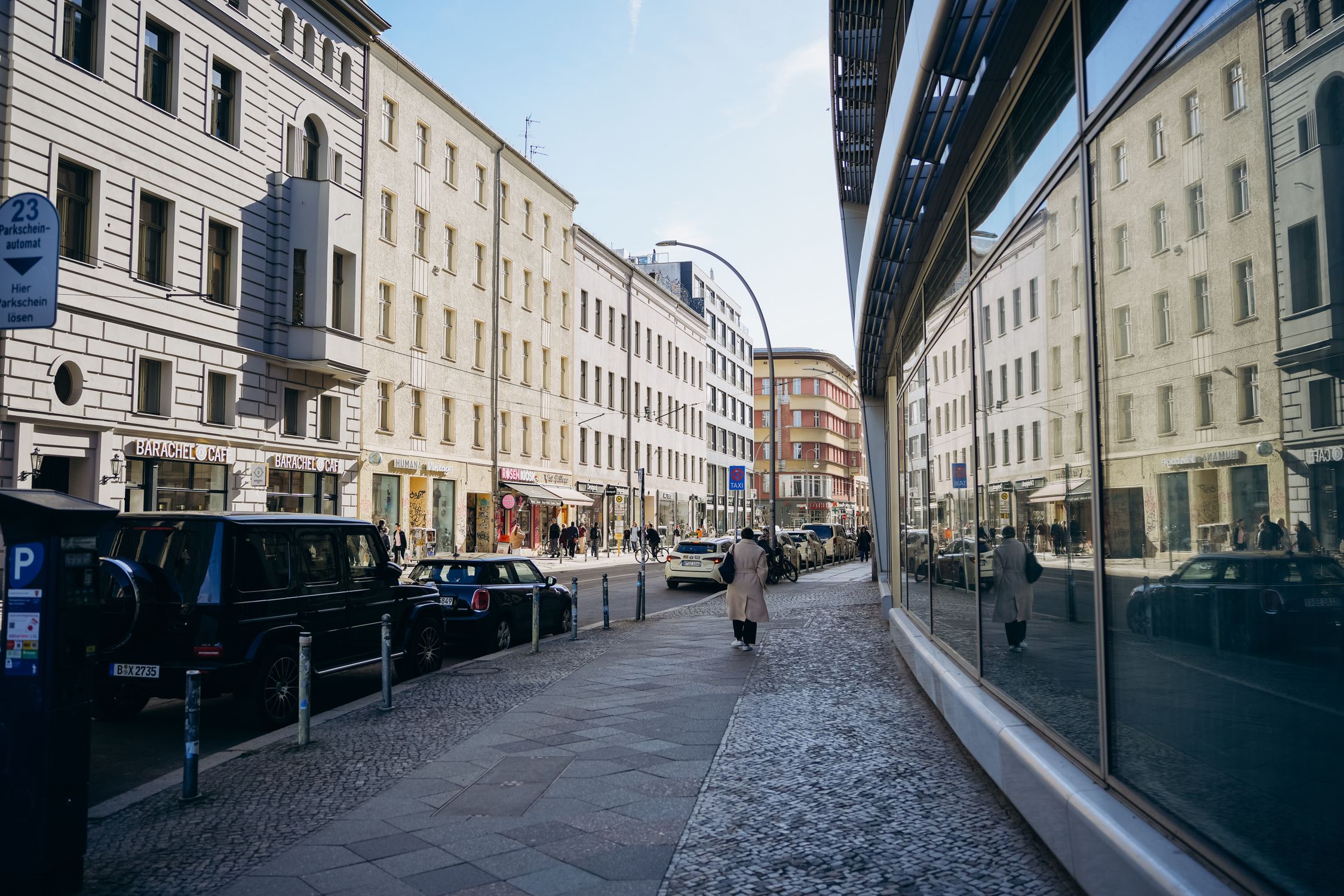
Berlin’s public-transport network (U-bahn, S-bahn, and buses) is the backbone of solo travel. According to Family Travel Path, the system runs 24 hours on weekends and is well-lit and staffed, making late-night journeys feel secure. A single ride costs €3 (≈$3.30) and a day ticket €8.80 (≈$9.70), so you can hop between neighborhoods without breaking the bank. When you’re heading back from a night out in Kreuzberg or Friedrichshain, the night-time U-bahn keeps the city moving, reducing the need for taxis after dark. For real-time updates, the official BVG site offers an English-language journey planner that flags any service interruptions.
The streets themselves reward walking, too. Wide sidewalks, clearly marked crosswalks, and a steady flow of pedestrians even in the evening are part of why Berlin reads as an easy city to navigate solo—the bustling architecture-lined avenues pictured above are typical of the main routes you’ll use to move between sights, rather than the quieter side streets tucked behind them.
Berlin is also one of Europe’s most bike-friendly cities, with extensive cycling lanes threading between neighborhoods and several hotels on this list offering bike-hire directly at reception. If you’re comfortable cycling in city traffic, it’s often the fastest way to cover ground between Mitte and Kreuzberg without waiting on a train. If you’d rather stick to rails, download the BVG app before you land—having your ticket and route already loaded means one less thing to sort out at an unfamiliar station with your luggage in tow.
When to Visit
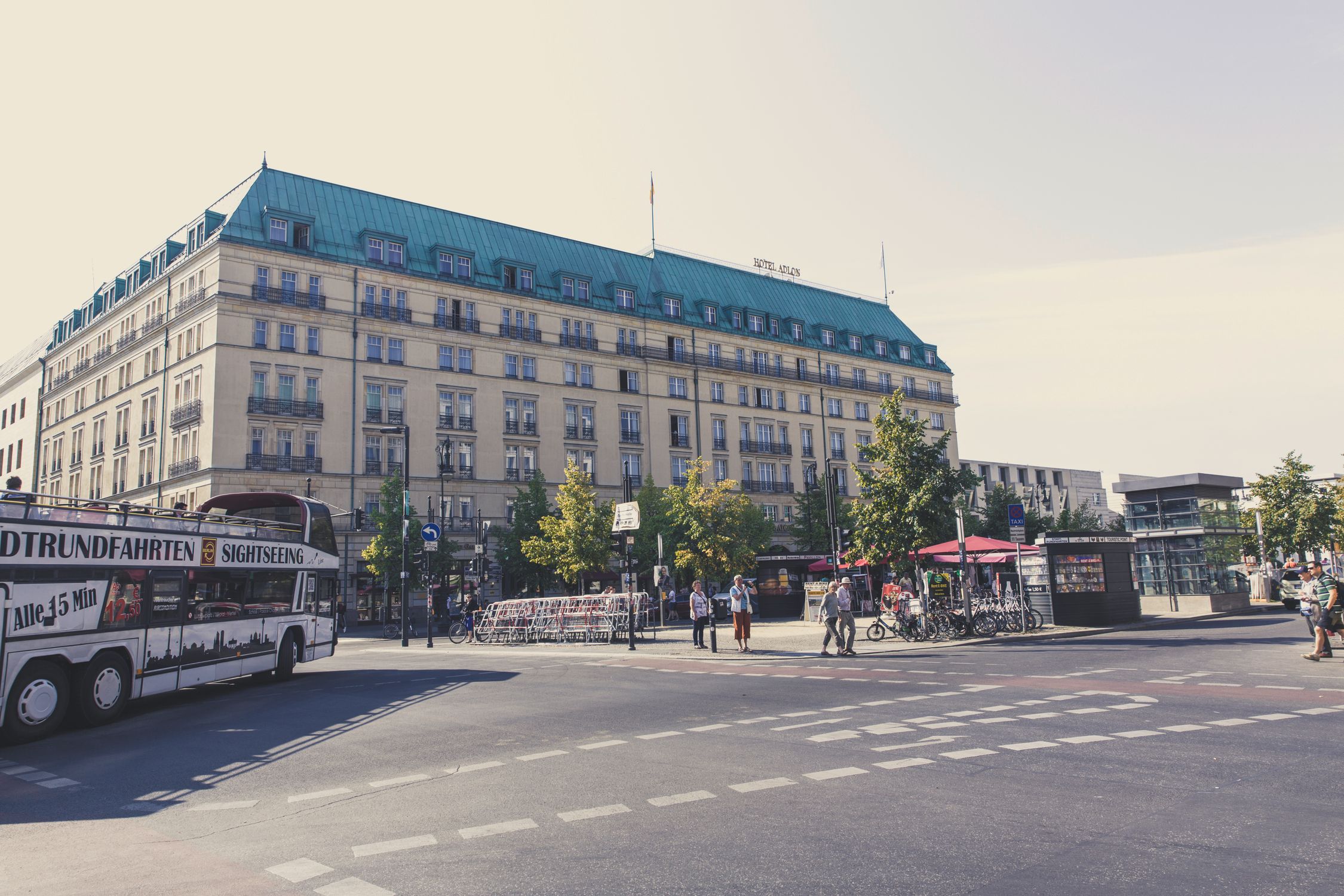
Berlin shines in every season, but the vibe shifts. Summer (June-August) is peak tourist time; HoteliersChoice notes that hotel rates typically rise 20-30% and attractions become crowded—the kind of bustling city life pictured above, with sidewalks full and every café terrace occupied. If you prefer quieter streets and lower prices, consider winter (December-February). The city’s festive Christmas markets light up the evenings, and accommodation costs dip, while safety remains high and streets stay well-lit. Spring offers blooming parks and moderate crowds, making it a sweet spot for those who love outdoor cafés without the summer swarm.
Booking a few weeks ahead matters more in summer than in the shoulder seasons, since the boutique hotels covered later in this guide tend to sell out their smaller room counts first. If flexibility is on your side, shifting your trip even two or three weeks outside of peak summer can noticeably widen your choice of rooms.
Whatever season you land in, pack for layers rather than one fixed look—Berlin’s weather can shift within a single day, and a boutique hotel with a small room won’t have much space for a suitcase full of season-specific outfits you end up not wearing anyway.
Food & Budget Tips
Eating in Berlin won’t drain your wallet if you know where to look. A typical lunch costs €10-15, while dinner at a mid-range restaurant runs €20-30 (HoteliersChoice). Street food markets, especially around Markthalle Neun, serve generous portions of currywurst or falafel for under €10. For a quick, healthy bite, many boutique hotels—like Art Apartments—offer complimentary coffee and a small breakfast selection, saving you a morning café bill. Don’t forget to grab a pretzel from a bakery; it’s a cheap, satisfying snack that fuels your museum-hopping days.
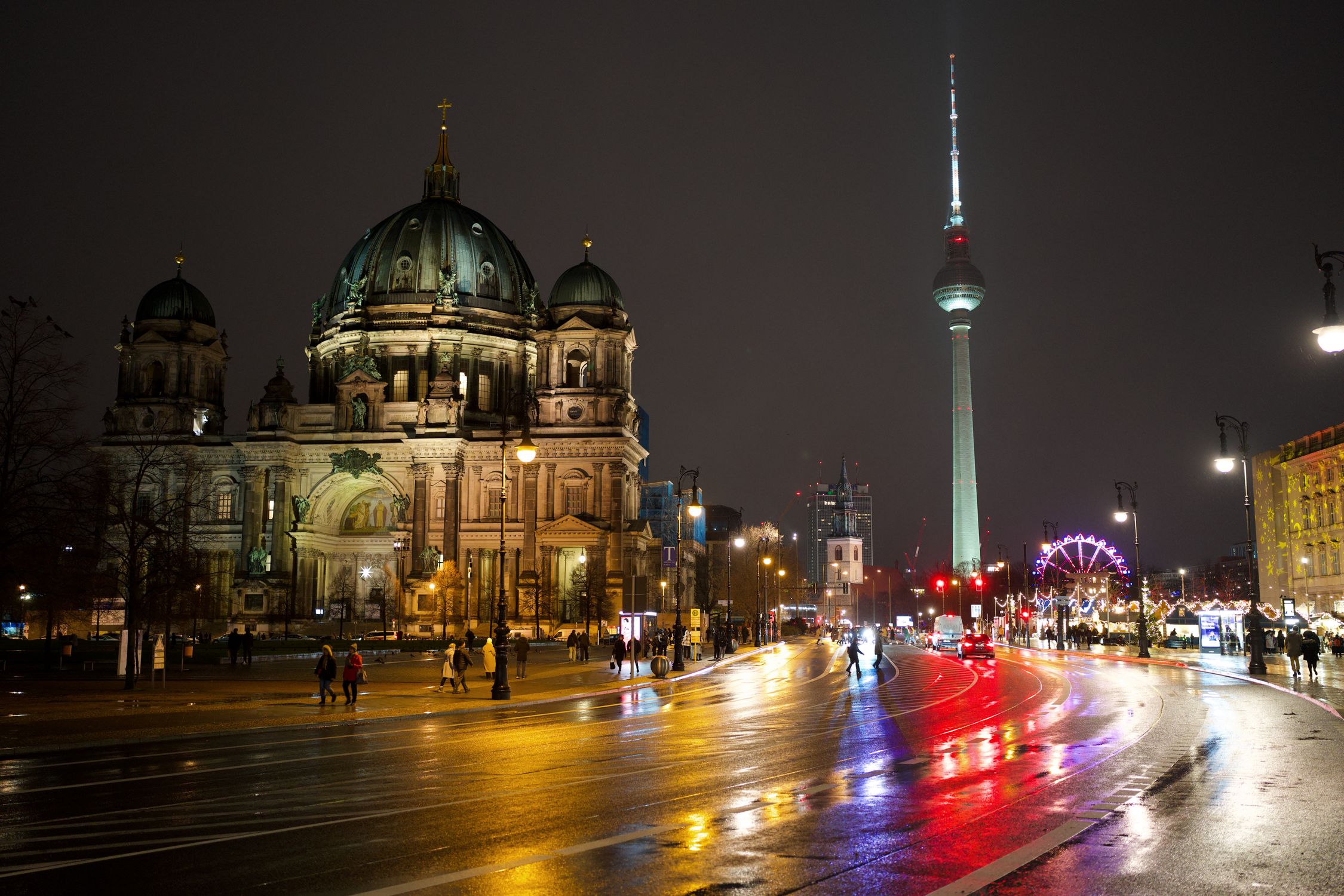
After dinner, a stroll past the illuminated Berlin Cathedral and Fernsehturm pictured above is a free, completely walkable way to close out the evening—both sit close enough to Mitte’s main dining strips that you can fold the detour into your route back to your hotel rather than planning a separate outing for it. Eating solo doesn’t have to mean eating quietly at a corner table, either: the market-hall format at Markthalle Neun is built around shared long tables, which makes it one of the easiest places in the city to strike up a conversation with fellow travelers over a plate of currywurst.
What to Pack

Travel light, travel smart. An anti-theft backpack like the Pacsafe Citysafe CX 17L Anti-Theft Backpack offers interlocking zippers and RFID blocking, perfect for city strolling beneath landmarks like the TV Tower pictured above. Pair it with the Peak Design Packing Cube Medium to keep clean and dirty clothes separate without adding bulk. If you’re a minimalist, the Eagle Creek Pack-It Specter Packing Cube Set (XS/S/M) provides ultra-light organization that slides into any carry-on. Bring a reusable water bottle (Berlin’s tap water is safe), a compact rain jacket (the weather can change quickly), and a pair of comfortable sneakers for the city’s many bike lanes and cobblestone streets.
Since so much of Berlin is genuinely walkable, prioritize footwear you’ve already broken in over anything new—a blister on day one of a week-long trip is the kind of small mistake that colors every day after it. A crossbody version of your daypack, rather than a bag you carry by the handles, also keeps your hands free for maps, coffee, or a pretzel.
If your stay includes one of the apartment-style options like Nena Apartments or Aparthotel Adagio, it’s worth packing a few pantry basics—tea bags, instant oatmeal, a favorite hot sauce—so the in-room kitchen earns its keep from the first morning rather than the third.
Common Mistakes to Avoid
- Assuming all neighborhoods are the same - While Berlin is overall safe, some quieter blocks in Mitte feel different after dark than the lively streets of Kreuzberg. Stick to well-lit main avenues and use the BVG night service if you’re returning late.
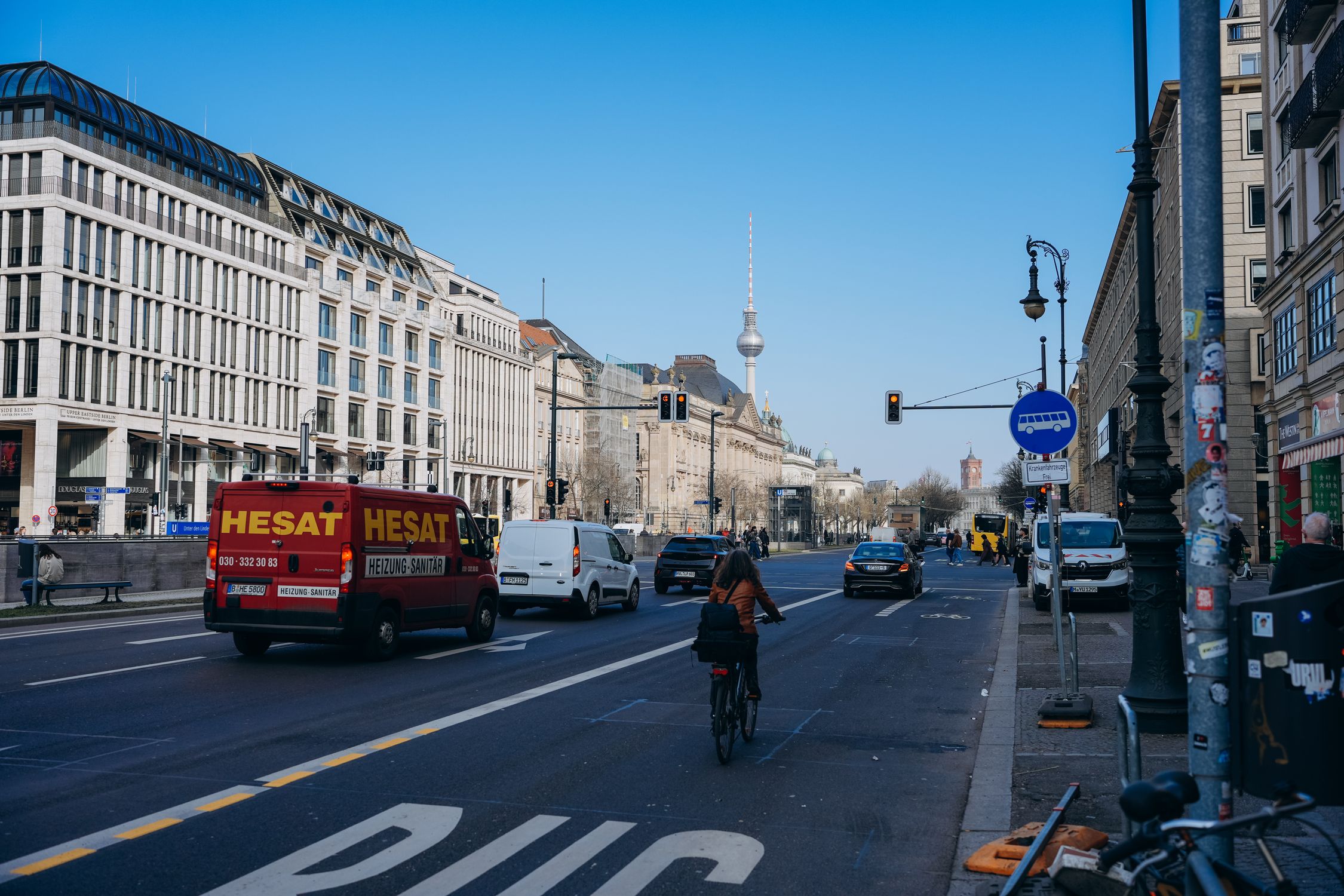
- Skipping the bike-share option - Berlin is bike-friendly; hotels like Aparthotel Adagio Berlin Kurfürstendamm offer bike-hire service on site. Ignoring this can mean missing out on a cheap, healthy way to explore hidden courtyards, much like the cyclist pictured above cruising past the TV Tower.
- Over-packing - With compact packing cubes and a 17 L anti-theft backpack, you can travel lighter than you think. Heavy luggage makes navigating the U-bahn stairs more stressful.
- Relying solely on cash - While small vendors love euros, most restaurants and transport accept contactless cards. Keep a modest amount of cash for street food, but carry a card for larger purchases.
The Best Places to Stay
Every property below has been chosen with a solo woman’s priorities in mind: a central, well-lit location, a genuine sense of privacy, and at least one feature—a garden, a kitchen, a social front desk—that makes traveling alone feel easier rather than harder. Prices and amenities can shift, so treat the price bands as a general guide and confirm specifics before you book.
Art Apartments — Mitte
A small boutique hotel just 400 m from the Natural History Museum and 1 km from the Berlin Wall Memorial, Art Apartments offers a quiet retreat in the heart of the city. Free Wi-Fi in all rooms keeps you connected, and the central location means you can walk to most major sights. Pros: central location, free Wi-Fi. Cons: no on-site restaurant or bar. Ideal for solo women who want a peaceful, centrally-located boutique stay. Check rates
GLS Studio Hotel Berlin — Mitte
Nestled near the Berlin Wall Memorial, this hotel features a garden terrace and a 24-hour multilingual front desk. The common spaces encourage meeting other travelers, and safety reviews are consistently high. Pros: social garden vibe, helpful staff. Cons: older building may lack some modern luxuries. Perfect for those who enjoy a relaxed garden atmosphere and easy assistance. Check rates
Hotel Grenzfall — Mitte
Steps from the Berlin Wall Documentation Centre, Hotel Grenzfall boasts a spacious garden with a pavilion, tea house, and goldfish pond. It’s an integration hotel that supports employment of disabled staff, and a breakfast buffet is included. Pros: tranquil garden, socially responsible, breakfast included. Cons: nightlife options are a short walk away. Best for solo guests seeking a peaceful, socially-responsible stay in the heart of Berlin. Price band: $116-$150. Check rates
Nena Apartments Moritzplatz — Kreuzberg
Located near Moritzplatz, these apartment-style rooms come with fully equipped kitchens, allergy-free units, and lift access. The proximity to Alexanderplatz U-station makes city travel a breeze. Pros: self-catering flexibility, kitchen facilities. Cons: fewer hotel-style services, no on-site restaurant. Ideal for travelers who prefer a home-like setup with kitchen amenities. Check rates
COSMO Hotel Berlin Mitte — Mitte
Set in Spittelmarkt, COSMO offers floor-to-ceiling windows with city views, an on-site sauna, and a stylish bar. The design-focused interiors and highly praised breakfast make it a standout. Pros: chic design, great breakfast, sauna. Cons: higher price point compared to budget options. Best for design-savvy solo travelers who value style and central location. Price band: $91-$137. Check rates
Aparthotel Adagio Berlin Kurfürstendamm — Charlottenburg
Each unit features a fully equipped kitchen, on-site bike-hire, and a 24-hour front desk. Steps from the famous shopping boulevard Kurfürstendamm, it’s perfect for solo shoppers who want apartment comfort near premium retail. Pros: kitchen in every unit, bike-hire, great value for longer stays. Cons: farther from historic Mitte attractions. Ideal for solo shoppers seeking convenience and home-like amenities. Check rates
Hotel AMO by AMANO Friedrichstraße — Mitte
Boutique design meets technology with a garden terrace and an in-room iPad for service requests. Its location near Friedrichstraße station offers excellent transport links, and the air-conditioned rooms keep you comfortable year-round. Pros: superb transport connections, boutique atmosphere. Cons: limited dining options on-site. Perfect for travelers who want immediate access to the main train hub while staying in a stylish boutique hotel. Check rates
Between these seven, you’ve got a real spread: social garden energy at GLS Studio, boutique quiet at Art Apartments, a peaceful retreat at Hotel Grenzfall, self-catering flexibility at Nena Apartments, design-forward comfort at COSMO, longer-stay practicality at Aparthotel Adagio, and transit-first convenience at Hotel AMO. Matching the pick to your travel style matters more than chasing the lowest nightly rate.
FAQ
Is Berlin safe for solo female travelers? Yes. Family Travel Path reports that Berlin consistently ranks among Europe’s safest large cities, with low violent-crime rates and a strong sense of security in central districts like Mitte and Kreuzberg.
Do I need to learn German to get around? Not at all. Signage on the BVG network is bilingual, and most staff at hotels and tourist information centers speak English. The 24-hour multilingual front desk at GLS Studio Hotel is a good example of the city’s hospitality.
What’s the best way to pay for transport? A contactless debit or credit card works on all BVG services. You can also purchase a day ticket for €8.80, which offers unlimited rides on U-bahn, S-bahn, trams, and buses.
Are there any hidden fees at the hotels? Confirmed amenities vary by property: Art Apartments includes free Wi-Fi in all rooms, and both Hotel Grenzfall and COSMO Hotel Berlin Mitte include breakfast. Aparthotel Adagio offers on-site bike-hire. Always check the current listing when you book, since specific inclusions can shift over time.
Which neighborhood should a first-time solo visitor pick? Mitte is the easiest first base—most of the hotels on this list sit there, within walking distance of major sights, with well-lit main streets and dense foot traffic well into the evening. Kreuzberg is a great second stop once you’re oriented, especially if you want a more residential, artsy pace with easy transit back to the center.
Is it normal to eat out alone in Berlin? Completely. Solo diners are common at everything from currywurst stalls to sit-down restaurants, and nobody will bat an eye at a table for one. If you’d rather ease into it, market halls like Markthalle Neun make solo eating feel social by default.
Related Reading
Get price-drop alerts and new guides from HerTripGuide
One email a week: price drops on the gear we recommend, new guides, and what changed. No spam, unsubscribe anytime.