Travel Guide to Copenhagen, Denmark
A beacon of gender equality and progressive values, Copenhagen is a safe, bikeable, design-forward city where solo women feel completely at home.

Copenhagen, Denmark

About Copenhagen
Copenhagen is the capital and most populous city of Denmark, with an urban population of 1.4 million. The city is situated mainly on the island of Zealand (Sjælland), with a smaller part on the island of Amager.
Read more on WikipediaQuick Facts
Safety score derived from the U.S. State Department Travel Advisory for Denmark: Level 2 (Exercise Increased Caution), as of 2026-07-08. Country-level guidance; check local conditions before you go.
Why Copenhagen Is Great for Solo Women
 Photo: Nyhavn (177239953).jpeg by Raphael Andres (CC BY 3.0), via Wikimedia Commons
Denmark consistently ranks among the top countries in the world for gender equality, and Copenhagen embodies that ranking in daily life. This is a city where cycling alone at night is normal, where the culture of trust means most people leave their bikes unlocked, and where solo women are such a common sight that no one gives you a second glance.
The city is compact, beautiful, and meticulously designed for human-scale living. The food scene punches absurdly above its weight (this is the city of Noma). The design aesthetic is everywhere — from the architecture to the coffee shops to the way the bike lanes are built. And Danes, once you crack through their reserved exterior, are thoughtful and genuinely helpful.
Neighborhoods to Know
Indre By (City Center)
 Photo: Strøget CPH (15289680874).jpg by Tony Webster from Portland, Oregon, United States (CC BY 2.0), via Wikimedia Commons
Copenhagen’s historic city center is built for walking, anchored by Strøget, one of Europe’s longest pedestrian shopping streets. It’s dense with cafés, churches, and landmark squares like Kongens Nytorv, and it stays busy with locals and visitors well into the evening — an easy, comfortable base for a first-time solo visit.
Vesterbro
 Photo: Istedgade 2.JPG by Leif Jørgensen (CC BY-SA 3.0), via Wikimedia Commons
Once the city’s red-light district, Vesterbro has transformed into one of Copenhagen’s trendiest neighborhoods, centered on Istedgade and the old Meatpacking District (Kødbyen), now packed with galleries, bars, and restaurants. It’s a great pick if you want a more local, less touristy feel while staying close to Central Station.
Nørrebro
 Photo: Superkilen - Russian pavilion.JPG by Ramblersen (CC BY-SA 3.0), via Wikimedia Commons
Multicultural and creative, Nørrebro is home to Superkilen — a striking public park mixing objects and design from more than 50 nationalities — plus the tranquil Assistens Cemetery, where Hans Christian Andersen is buried. It has a younger, artsier energy and some of the city’s best casual food.
Christianshavn
 Photo: Kopenhagen (DK), Christianshaven — 2017 — 1526.jpg by Dietmar Rabich (CC BY-SA 4.0), via Wikimedia Commons
Built on reclaimed land in the 17th century, this canal district feels like a quieter, houseboat-lined version of the city center. It’s also home to Freetown Christiania, the self-governing commune worth a daytime visit for its unusual history and street art — just skip photographing Pusher Street.
Top Things to Do in Copenhagen
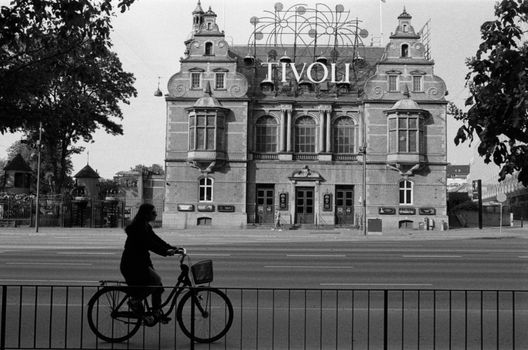
- Tivoli Gardens — the world’s second-oldest amusement park, opened in 1843, is charming solo, especially in the evening when the lights come on.
- Nyhavn — this 17th-century canal and entertainment district, lined with brightly colored townhouses, is Copenhagen’s most photographed spot and a natural, well-populated place for a solo waterside drink or meal.
- The Little Mermaid (statue) — the small bronze statue on the Langelinie promenade, unveiled in 1913 and inspired by Hans Christian Andersen’s fairy tale, is a quick, easy stop on a solo harbor walk or bike ride.
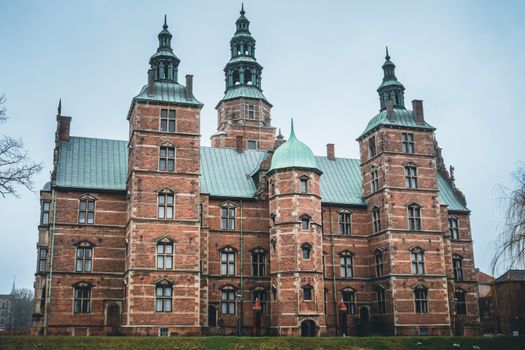
- Rosenborg Castle — this early-17th-century Dutch Renaissance castle houses the Danish Crown Jewels and sits inside the King’s Garden, one of the oldest and most-visited gardens in the city.
- Amalienborg — the winter home of the Danish royal family, this four-palace complex around an octagonal courtyard hosts a daily changing of the guard that’s easy to catch solo.
- Freetown Christiania — this self-proclaimed autonomous neighborhood, established in 1971 in former military barracks, is worth a daytime visit for its car-free streets and street art; go with a friend or group after dark rather than alone.
- Louisiana Museum of Modern Art — about 35 minutes north of the city by train in Humlebæk, this museum’s sculpture garden overlooking the Øresund strait makes for a peaceful solo day trip.
Book tickets & skip-the-line tours: Browse Copenhagen experiences
Getting Around
 Photo: Copenhagen Style Bike Lane 2.jpg by Barrylb (Public domain), via Wikimedia Commons
Copenhagen is one of the world’s best cycling cities, and renting a bike is the best way to experience it. The city’s bike lanes are separated from traffic, well-lit, and extend throughout the metropolitan area. Donkey Republic and Swapfiets offer affordable monthly or daily rentals. The Metro is modern and runs 24/7 on weekends. Walking is also excellent — most major attractions are within a 30-minute walk of each other.
Safety Overview
The U.S. State Department rates Denmark Level 2 (Exercise Increased Caution) (as of 2026-07-08), mainly because of terrorism risk in public places. That advisory does not change the day-to-day reality that Denmark consistently ranks among the safest, most gender-equal countries in the world, and Copenhagen has no neighborhoods that solo women need to avoid entirely. Violent crime is very rare. Petty theft exists (particularly around Nyhavn and Tivoli, where tourists concentrate), but at lower rates than most European capitals. Freetown Christiania has its own rules — cannabis is sold openly on Pusher Street, and photography isn’t allowed there — it’s generally fine to visit during the day but can feel unpredictable at night.
Emergency number: 112. English is spoken fluently by nearly everyone.
Safety Tips Specific to Women
- Cycling is safe at all hours — bike lanes are well-lit and separated from cars; just learn the hand signals and bike etiquette (stay right, signal turns)
- Christiania is worth visiting during the day, but skip the “Pusher Street” area and do not take photographs there — it can provoke confrontation
- Danes are reserved, not unfriendly — do not interpret quietness as hostility; conversation opens up naturally in social settings like bars and hostels
- Weather is the main challenge — pack layers and a good rain jacket; the wind off the harbor is persistent
- Budget carefully — Copenhagen is expensive; a beer costs $8-10, and a sit-down meal starts at $20-25. Supermarkets and food markets are much more affordable
- Nyhavn bar area on weekend nights can get rowdy with stag parties — give it a pass after midnight if that is not your scene
Best Time to Visit
 Photo: Copenhagen København Denmark 2023 10.jpg by Ciara Ní Riain (CC BY 4.0), via Wikimedia Commons
May through September is the sweet spot: long daylight hours, outdoor cafés and harbor baths in full swing, and Tivoli Gardens at its liveliest. July and August are peak season and the most crowded and expensive; late May, June, and early September give you the same good weather with a bit more breathing room. Winter is dark and cold, but Tivoli’s Christmas market and the city’s cozy, candlelit (“hygge”) café culture have their own charm if you don’t mind bundling up.
Where to Stay
 Photo: Havneholmen housing - seier+seier+seier.jpg by seier+seier (CC BY 2.0), via Wikimedia Commons
Budget: Copenhagen Downtown Hostel and Steel House Copenhagen are modern, social hostels with female-only dorms and excellent common areas ($35-55/night).
Mid-range: The Annex and Hotel Bethel are well-located, comfortable options in the city center. Consider Nørrebro or Vesterbro neighborhoods for a more local feel ($120-170/night).
Splurge: Hotel Sanders or Nobis Hotel Copenhagen for Scandinavian luxury ($300+/night).
Frequently Asked Questions
Do I need a visa to visit Copenhagen as a U.S. citizen?
No. U.S. passport holders can enter Denmark visa-free for up to 90 days within a 180-day period under the Schengen Area rules.
Is Copenhagen safe to walk or cycle alone at night?
Yes. Denmark consistently ranks among the safest and most gender-equal countries in the world, and cycling or walking alone after dark is normal here -- bike lanes are separated from traffic and well-lit throughout the city.
What's a realistic daily budget in Copenhagen?
Plan on $100-180 per day. Copenhagen is one of the more expensive European capitals -- a beer runs $8-10 and a sit-down meal starts at $20-25 -- but supermarkets and food halls like Torvehallerne make it easy to eat well for less.
How do I get around Copenhagen without a car?
Rent a bike -- it's the way locals get everywhere, with dedicated, well-lit lanes citywide. The Metro also runs 24/7 on weekends, and most central attractions are within a 30-minute walk of each other.
Upcoming Holidays
Denmark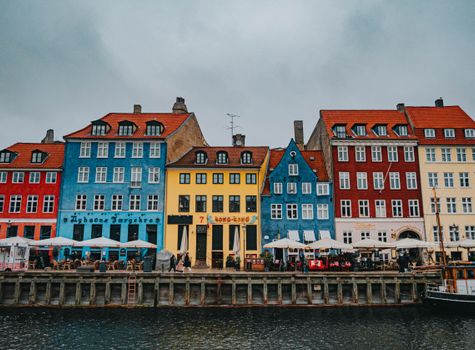

Get price-drop alerts and new guides from HerTripGuide
One email a week: price drops on the gear we recommend, new guides, and what changed. No spam, unsubscribe anytime.