Solo Female Motorcycle Travel: Complete Beginner Guide
Your complete guide to solo motorcycle travel as a woman in 2026. Bike selection, safety gear, route planning, licensing, and real advice from women riders.
This post may contain affiliate links. Disclosure
Updated for 2026 — Accurate as of February 2026.
Two years ago, I could not ride a motorcycle. Today, I have covered over 15,000 miles across three continents on two wheels, solo. The journey from “I have never even sat on a motorcycle” to “I just rode through the Atlas Mountains alone” was one of the most transformative experiences of my life, and it started with a single decision: I was tired of being a passenger in my own adventures.
Solo female motorcycle travel is growing rapidly. Women now represent 19% of all motorcycle owners in the US, with female Millennials making up 26% of that generation’s riders — making women one of the fastest-growing segments in the motorcycle industry. Over 30% of women riders use their motorcycles for long-distance travel, and women-only motorcycle touring groups have seen extraordinary growth since 2020. The infrastructure, community, and resources for women riders have never been better.
The honest answer to “is motorcycle travel safe for solo women?” is: it is manageable. Not reckless, not impossible, but something you train for and build toward progressively. This guide is specifically for beginners — women who are curious about motorcycle travel but have no idea where to start. I will walk you through everything from getting your license to planning your first overnight trip.
Getting Started: License and Training
The MSF Course Is Non-Negotiable
The Motorcycle Safety Foundation (MSF) Basic RiderCourse is the single best investment you will make in motorcycle travel. This two-day course teaches you to ride from absolute zero and, in most US states, completion waives the riding portion of your motorcycle license test.
What the course includes:
- Classroom instruction on motorcycle controls, road strategy, and risk management
- Hands-on riding on a closed course with provided motorcycles
- Progressive skill building from basic balance to cornering and emergency stops
- Written and riding evaluations
Cost: $200-$400 depending on your state Duration: One weekend (typically Saturday and Sunday) What to wear: Long pants, over-the-ankle boots, long sleeves, full-finger gloves, eye protection. The course provides the motorcycle and helmet.
I took my MSF course on a sweltering July weekend in Texas. I was the only woman in a class of 12. By Sunday afternoon, I was making tight figure-eights and emergency stops, and the instructor told me I had some of the smoothest throttle control in the class. The confidence that course gave me was foundational.
Notably, 60% of women riders have completed a formal safety course — a higher rate than male riders — which correlates with women’s strong safety record on the road.
Beyond the MSF: Continued Training
The MSF course teaches you to ride. It does not teach you to travel. After getting my license, I invested in additional training:
| Training Type | Cost | What You Learn |
|---|---|---|
| MSF Advanced RiderCourse | $200-$300 | Advanced braking, cornering, swerving |
| Off-road training course | $300-$600 | Dirt, gravel, mud, uneven terrain riding |
| Moto camping clinic | $150-$400 | Loading a bike, campsite riding, slow-speed with weight |
| Track day (beginner) | $150-$300 | Cornering confidence, body position, speed management |
The off-road course was particularly valuable. On my first long trip through Portugal, I encountered multiple stretches of unpaved road that would have terrified me without dirt riding experience. With it, I rolled through confidently.
Choosing Your First Motorcycle
What Matters for Women Travelers
The motorcycle industry has historically been designed for average-sized men, which means seat heights, handlebar reach, and control lever spacing often do not work for shorter or smaller-framed riders. This is changing, but you still need to choose carefully.
Key factors for your first travel bike:
Seat height: This is the single most important measurement. If you cannot put at least the balls of both feet on the ground, the bike is too tall for you. Period. Confidence at stops and in parking lots is essential for solo travel. Most women 5’2” to 5’6” need a seat height of 30 inches or less.
Weight: You need to be able to pick the bike up if it falls over, which it will, eventually. A fully loaded touring bike can weigh 500-600 pounds. For your first bike, stay under 450 pounds wet (with fluids).
Power: You do not need a 1200cc adventure bike for your first trip. A 300-650cc bike will handle highways comfortably and be far more forgiving in learning situations.
Best Beginner Bikes for Women Travelers
| Bike | Engine | Seat Height | Wet Weight | Best For |
|---|---|---|---|---|
| Honda Rebel 500 | 471cc twin | 27.2” | 408 lbs | Road touring, lower seat height |
| Kawasaki Versys-X 300 | 296cc twin | 32.1” (lowerable) | 386 lbs | Light adventure touring |
| Royal Enfield Himalayan | 411cc single | 31.5” | 434 lbs | Adventure touring on a budget |
| Suzuki V-Strom 650 | 645cc V-twin | 31.5” (lowerable) | 470 lbs | Versatile all-road touring |
| BMW G 310 GS | 313cc single | 33.1” (lowerable) | 375 lbs | Adventure touring, BMW quality |
| Yamaha MT-07 | 689cc twin | 31.7” | 403 lbs | Sport touring, excellent handling |
I started on a Honda Rebel 500 and it was the perfect beginner travel bike. Low seat, manageable weight, enough power for highways, and an incredibly forgiving ride character. I put 8,000 miles on it before upgrading to a Suzuki V-Strom 650.
Buying Tips
- Buy used for your first bike. You will drop it. You will scratch it. A $3,000-$5,000 used bike teaches you the same lessons as a $10,000 new one without the financial pain.
- Have a mechanic inspect any used bike before purchase. Budget $100-$150 for a pre-purchase inspection.
- Test ride multiple bikes. Flat-foot the bike at a standstill, practice slow-speed turns in a parking lot, and take it on a highway if possible.
- Join women’s motorcycle forums (Women ADV Riders, The Litas) for specific bike recommendations from riders with your body type.
Essential Gear
Safety Gear: The Non-Negotiables
All The Gear, All The Time (ATGATT) is the universal mantra of motorcycle safety, and it exists because road rash at even 25 mph can remove skin down to the bone. As a solo female traveler on a motorcycle, you have zero margin for complacency because there is no one else to call for help if you go down in a remote area.
Helmet: Full-face only. A three-quarter or half helmet leaves your jaw and face exposed, which are the most common impact zones. The Shoei RF-1400 Full Face Helmet and AGV K6 S are popular choices for women due to their lighter weight and oval head shape options. In 2026, look for helmets with MIPS (Multi-directional Impact Protection System) technology for additional rotational impact protection.
Jacket: Armored motorcycle jacket with CE-rated back, shoulder, and elbow protectors. Mesh versions work for hot climates. I use a Rev’It jacket that has a waterproof liner, an insulating liner, and can be worn as a mesh jacket — three jackets in one.
Pants: Armored riding pants with knee and hip protectors. Riding jeans with Kevlar lining (like those from Pando Moto or Ugly Bros) are a comfortable compromise for days when full textile pants feel like too much.
Boots: Over-the-ankle boots with ankle armor, oil-resistant sole, and toe protection. TCX and Alpinestars Stella boots are women-specific options that actually fit women’s calves and feet.
Gloves: Full-finger gloves with knuckle protection. Your hands hit the ground first in most falls.
Where to Buy Women’s Motorcycle Gear
Finding properly fitting gear has historically been a challenge. Resources that have improved significantly:
- Revzilla.com — large selection, excellent fit guides, easy returns
- Fortnine.ca — Canada-based but ships to US, great video reviews
- Aerostich.com — custom sizing options for riders with non-standard proportions
- Women ADV Riders community — crowdsourced gear reviews from real women riders
Packing for Motorcycle Travel
Space is your most limited resource on a motorcycle. You cannot bring a full suitcase — you bring what fits in your luggage system, and not a gram more. This constraint is actually liberating.
Luggage system options:
| System | Capacity | Best For | Price Range |
|---|---|---|---|
| Soft panniers (saddlebags) | 30-50L per side | Budget-friendly, flexible | $100-$400 |
| Hard panniers | 25-40L per side | Weatherproof, lockable, secure | $400-$1,500 |
| Tail bag/roll bag | 20-60L | Versatile, removable | $50-$200 |
| Tank bag | 5-15L | Quick-access items, maps, snacks | $50-$200 |
My complete packing list for a 2-week motorcycle trip:
- 3 changes of base layers (merino wool — odor resistant, quick drying)
- 1 pair of off-bike shoes (lightweight trail runners)
- Basic toiletries in travel sizes
- Rain gear (if not built into riding gear)
- First aid kit with road rash supplies
- Tool roll with basic motorcycle tools
- Slime tire repair kit and small air compressor
- RAM X-Grip Motorcycle Phone Mount with Handlebar U-Bolt Base — the standard choice for reliable navigation on the road
- Camping gear if camping (ultralight tent, sleeping bag, pad)
Everything I own for two weeks on the road fits in two soft panniers and a tail bag. Total weight: about 35 pounds including camping gear.
Planning Your First Trip
Start Short and Build
Do not plan a 3,000-mile cross-country trip as your first motorcycle journey. Build your skills and confidence progressively:
Month 1-2: Ride your local area. Practice in parking lots, ride to nearby towns, build seat time. Month 3-4: Take day trips. 100-200 miles round trip on roads you know, then roads you do not. Month 5-6: Plan an overnight trip. 150-200 miles to a destination, stay one night, ride back. Month 7+: Plan a multi-day trip. 3-5 days, 150-250 miles per day, with planned stops.
My first overnight motorcycle trip was 180 miles from Austin to Fredericksburg, Texas. I stayed in a motel, ate barbecue, and rode back the next day. It was not epic. It was not Instagram-worthy. But it taught me that I could do this, and that lesson was worth more than any scenic mountain pass.
Route Planning
For motorcycle travel, route planning is different from car travel:
- Avoid interstates when possible. Highways and back roads are more enjoyable, have better scenery, and are generally safer for motorcycles than high-speed interstates with semi-trucks.
- Plan for 200-300 miles per day maximum. Motorcycle travel is physically demanding. You will be exhausted after 300 miles in a way that does not happen in a car.
- Fuel stops every 100-150 miles. Know your bike’s range and never let it drop below a quarter tank in rural areas.
- Weather monitoring is critical. Rain on a motorcycle is not just uncomfortable — it is dangerous. I check weather every morning and every two hours during riding.
- Apps I use: Calimoto (motorcycle-specific route planning), Furkot (multi-day trip planning), Gas Buddy (fuel stops).
Great First Solo Motorcycle Routes
Skyline Drive, Virginia (105 miles): Runs the length of Shenandoah National Park, mostly speed-limited at 35 mph with frequent overlooks. Perfect for a beginner’s first solo overnight ride. Abundant accommodation along the route.
Texas Hill Country Loop (Austin-based, 300-400 miles over 2 days): Limestone canyons, wildflower meadows, and excellent barbecue stops. Light traffic, good roads, and easy navigation. The Fredericksburg to Kerrville to Bandera loop is ideal.
Blue Ridge Parkway, NC/VA (469 miles): One of the most iconic motorcycle routes in the country. Plan 3-4 days and ride it in segments. Speed limit is 45 mph the entire length — challenging corners but manageable for intermediates.
Safety on the Road
Riding Safety
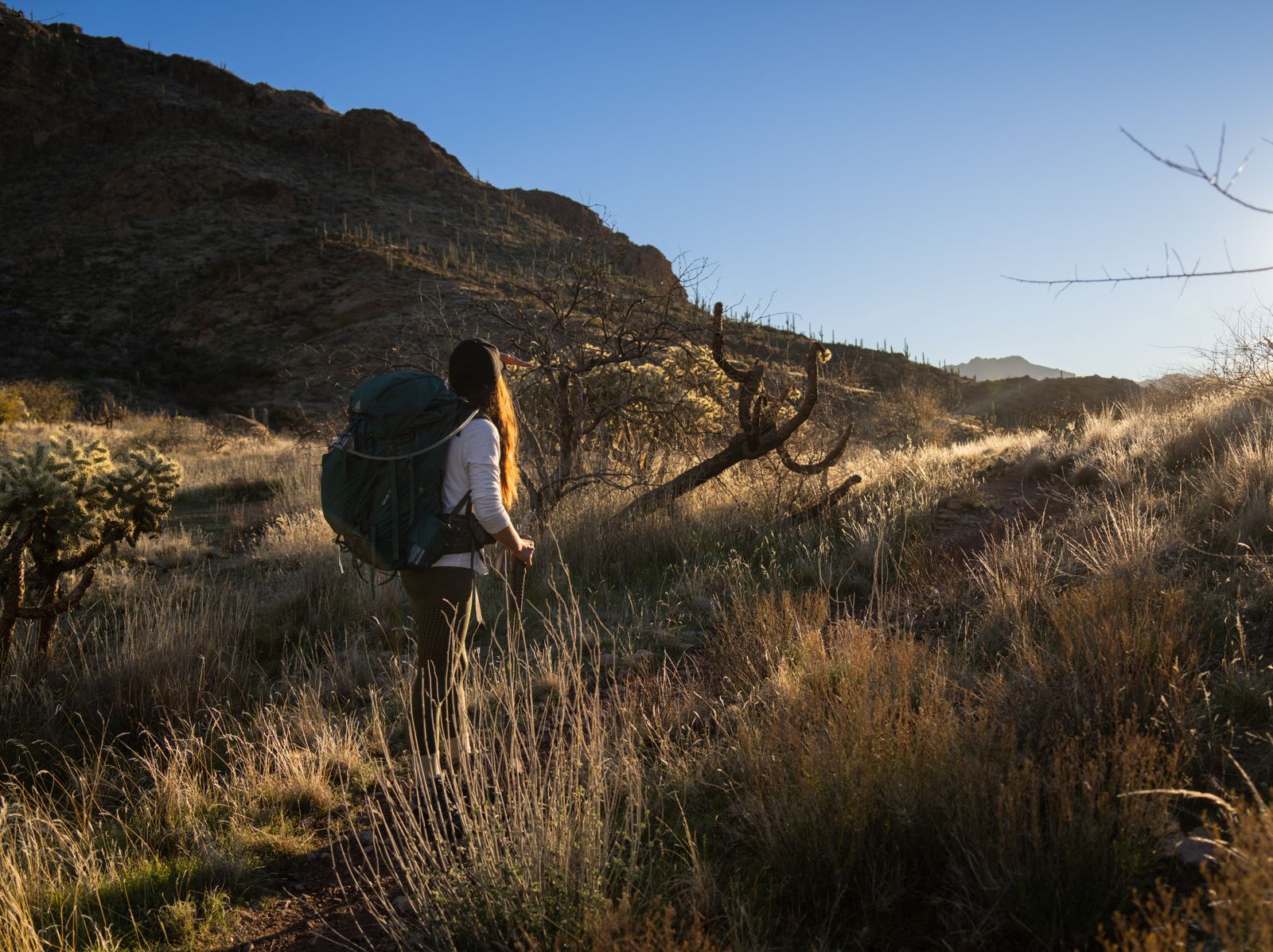
Solo motorcycle travel as a woman means you are your own safety net. There is no riding partner to flag down help, no support vehicle following behind.
My solo riding rules:
- Tell someone your route and expected arrival time every day. I text my sister a screenshot of my planned route each morning.
- Carry a satellite communicator (Garmin inReach Mini 2 or ZOLEO) for areas without cell service. The SOS function contacts search and rescue globally.
- Ride within your skill level. The mountain pass can wait until you are ready for it.
- Never ride tired, hungry, or dehydrated. On a motorcycle, diminished alertness can be fatal.
- Make yourself visible. High-viz gear, reflective elements on your bike, and always riding with your headlight on.
Personal Safety
As a woman traveling solo on a motorcycle, you occupy an unusual space: you are highly visible (people notice a woman on a motorcycle) but also perceived as tough and self-sufficient. This works in your favor.
In my experience, the motorcycle community is overwhelmingly welcoming and protective of solo women riders. At gas stations, rest stops, and campgrounds, other riders (male and female) have gone out of their way to help me with directions, recommend routes, and share tips. I have had more positive interactions with strangers on motorcycle trips than in any other form of travel.
That said, standard solo female travel safety applies:
- Be selective about who you share your accommodation details with
- Choose well-lit campgrounds and populated stopping points
- Trust your instincts about people and situations
- Keep your phone charged and your satellite communicator accessible
For a comprehensive approach to personal safety on the road, see our guide on self-defense tips for women travelers.
The Motorcycle Travel Community for Women
Groups and Organizations
The women’s motorcycle travel community is one of the most supportive and inspiring groups I have ever been part of. Key organizations:
- Women ADV Riders: Online community and annual events for adventure-riding women. Over 30,000 members worldwide.
- The Litas: City-based women’s motorcycle collectives in 100+ cities globally. Great for finding riding partners and local knowledge.
- Babes Ride Out: Annual women’s motorcycle camping event. 3,000+ women, multiple locations, incredible community.
- Women’s International Motorcycle Association (WIMA): International touring club with chapters in 30+ countries.
- Moto Femmes: Online community focused on women’s motorcycle gear reviews and travel stories.
Finding Riding Partners
Even though this guide is about solo motorcycle travel, having the option to join other riders for portions of your trip adds both safety and enjoyment. I use:
- Women ADV Riders forum: Post your planned route and timeline — someone is often riding a similar path
- The Litas local chapters: Reach out when riding through their city for a guided local ride
- Instagram moto community: The hashtags #womenriders and #ladyriders connect you with riders globally
- ADVRider.com ride reports: Post your own ride report and connect with the community
Maintenance and Breakdowns
Basic Skills Every Woman Rider Needs
You do not need to be a mechanic, but you need to handle the basics:
- Chain adjustment and lubrication (if your bike has a chain)
- Tire pressure check and inflation
- Tire plug for punctures (practice this at home before you need it on the road)
- Oil level check
- Coolant level check
- Battery jump-start procedure
- Changing a fuse
YouTube channels like FortNine and RevZilla have excellent tutorials. Practice every skill at home in your garage before you attempt it on the side of a road.
When You Cannot Fix It Yourself
Breakdowns happen. On my Portugal trip, a clutch cable snapped 50 kilometers from the nearest town. Here is what I did:
- Got the bike to a safe location off the road
- Activated my satellite communicator to notify my emergency contact
- Used Google Maps to find the nearest motorcycle shop
- Called the shop (Google Translate helped with Portuguese)
- Arranged a flat-bed tow through the shop’s recommendation
The clutch cable was replaced in two hours, cost 35 euros including labor, and the mechanic and his wife insisted on feeding me lunch while I waited. This is what motorcycle travel is: unexpected problems followed by unexpected kindness.
Carry these for breakdowns:
- Roadside assistance membership (AAA covers motorcycles, as does AMA)
- Satellite communicator with SOS
- Local emergency numbers
- Cash for towing or parts
Budgeting for Motorcycle Travel
Motorcycle travel is one of the most cost-efficient forms of adventure travel once you have the initial gear investment covered.
Typical daily costs (US domestic travel):
| Category | Budget Range | Notes |
|---|---|---|
| Fuel | $10-$25/day | Depends on fuel economy and distances |
| Accommodation | $30-$120/day | Camping $10-30, motel $60-120 |
| Food | $20-$50/day | Most riders eat at diners and local spots |
| Incidentals | $10-$20/day | Tolls, entry fees, snacks |
| Daily total | $70-$215/day | Solo, US domestic |
A 10-day domestic motorcycle trip typically costs $700-$2,150 all in, not counting gear amortized. Compare that to a flight-based trip of equivalent duration and the economics become obvious.
The Transformation
I want to end with something honest: solo motorcycle travel changed who I am. Not in a vague, inspirational-poster way, but in a concrete, measurable way.
Before motorcycles, I was afraid of mechanical things, uncomfortable with risk, and convinced that adventure travel was for other, braver women. After 15,000 miles, I can fix a flat tire on a desert road, navigate mountain switchbacks in fog, and ride into any town on earth knowing I can handle whatever happens.
The motorcycle strips away the buffer zone that cars, planes, and tour buses provide. You feel the road, the weather, the air, and the landscape in a way that no other form of travel offers. And doing it solo, as a woman, in a space that was not designed for you, is a quiet but powerful act of claiming your place in the world.
You do not need to be fearless to start. You just need to be willing to start.
You Might Also Like
Get the best HerTripGuide tips in your inbox
Weekly guides, deals, and insider tips. No spam, unsubscribe anytime.