Travel Anxiety Toolkit for First-Time Solo Women
Conquer travel anxiety with this complete toolkit for first-time solo female travelers. Pre-trip preparation, in-flight strategies, and arrival-day tips.

This post may contain affiliate links. Disclosure
Updated for 2026 — Accurate as of March 2026.
Your hands are shaking as you pack your bag. You have checked your passport four times in the last hour. You are googling “is it too late to cancel my flight” even though you know you are going. Your stomach feels like it contains a small tornado, and your brain is producing worst-case scenarios with the efficiency of a factory assembly line.
This is travel anxiety, and if you are a first-time solo female traveler, it is almost certainly visiting you right now.
Here is what nobody tells you: the anxiety is normal. Not just common — universal. Every experienced solo female traveler you admire, every travel blogger who makes it look effortless, every woman who posts confident selfies from exotic locations — every single one of them felt exactly what you are feeling before their first solo trip. The difference between them and you is not the absence of anxiety. It is the presence of tools to manage it.
According to Mental Health Parity Partners, travel anxiety affects approximately 60 percent of first-time solo travelers, with women reporting higher rates than men due to legitimate safety concerns layered on top of general travel uncertainty. The Anxiety and Depression Association of America classifies travel anxiety as a situational anxiety that responds well to preparation, cognitive strategies, and gradual exposure.
This toolkit gives you everything you need to manage travel anxiety before, during, and after your first solo trip — not by eliminating the anxiety (impossible and unnecessary) but by giving you practical tools to function effectively alongside it.
Understanding Your Anxiety
Before you can manage anxiety, you need to understand what it actually is. Anxiety is not a character flaw or a sign that you should not travel. It is your brain’s threat detection system doing its job — scanning for potential dangers in an unfamiliar situation and preparing your body to respond.
The problem is that your threat detection system cannot distinguish between genuine dangers (a dark alley at midnight) and imagined ones (what if I cannot find my hotel). It fires the same alarm for both, flooding your body with adrenaline and cortisol regardless of whether the threat is real.
This means that anxiety lies to you. It tells you that everything is dangerous when most things are not. It magnifies tiny risks into catastrophic certainties. It presents worst-case scenarios as likely outcomes when they are statistically improbable.
Understanding this distinction — between the feeling of danger and the reality of danger — is the foundation of every anxiety management strategy that follows.
The Pre-Trip Toolkit (Weeks Before Departure)
Strategy 1: Write Down Your Fears
Take a piece of paper and write down every single thing you are afraid of. Do not filter, do not judge, do not edit. Just list them all:
- What if I get lost?
- What if I get robbed?
- What if I cannot communicate?
- What if I get sick?
- What if I am lonely?
- What if something happens and nobody knows?
Now go through each fear and ask two questions: Is this likely? And if it happens, what will I do?
Most fears dissolve under this examination. Getting lost? You have a phone with GPS. Getting robbed? You have copies of documents, backup cash, and travel insurance. Cannot communicate? Translation apps work everywhere. Getting sick? You have a first aid kit and insurance. Being lonely? You have connection strategies.
The fears that remain after this exercise are the ones worth preparing for. Our emergency preparedness kit guide covers the practical preparations that address legitimate safety concerns.
Strategy 2: Over-Prepare the First 24 Hours
Anxiety thrives on uncertainty. Kill the uncertainty for your first day by planning every detail:
- Airport to accommodation: Know exactly how you are getting from the airport to your hotel or hostel. Research the route, download the offline map, save the address in your phone in the local language, and have a backup plan (taxi, ride-share) if your first option fails.
- First meal: Identify a restaurant or café near your accommodation. Knowing where your first meal is coming from eliminates one source of anxiety upon arrival.
- First activity: Plan one simple activity for your first evening — a walk through a nearby neighborhood, a visit to a market, or simply exploring the block around your accommodation.
- Connectivity: Activate your eSIM 24 hours before departure so you have a working phone the moment you land. Our eSIM guide covers the best options. Having a working map the second you arrive is what one travel anxiety expert calls “the ultimate anxiety-killer.”
Strategy 3: Visualization
Your brain cannot distinguish clearly between a vividly imagined experience and a real one. Use this to your advantage. Spend ten minutes each day visualizing your trip going well — arriving at the airport, finding your gate, landing safely, navigating to your hotel, exploring your neighborhood, eating dinner, lying in bed feeling proud of yourself.
Visualize specific sensory details: the sound of the airport announcements, the feel of your bag on your shoulder, the taste of your first local meal. The more vivid the visualization, the more your brain treats the experience as familiar rather than threatening, which reduces the anxiety response when the real experience arrives.
Strategy 4: Start Small
If a two-week international solo trip feels overwhelming, scale down. There is no rule that says your first solo trip needs to be epic. A weekend in a city two hours from home is a legitimate first solo trip that builds the same skills and confidence as a longer journey — just in a lower-stakes environment.
Start with a destination where you speak the language, know the culture, and can easily get home if you need to. Once you have one solo trip under your belt — even a short one — the anxiety for subsequent trips drops dramatically.
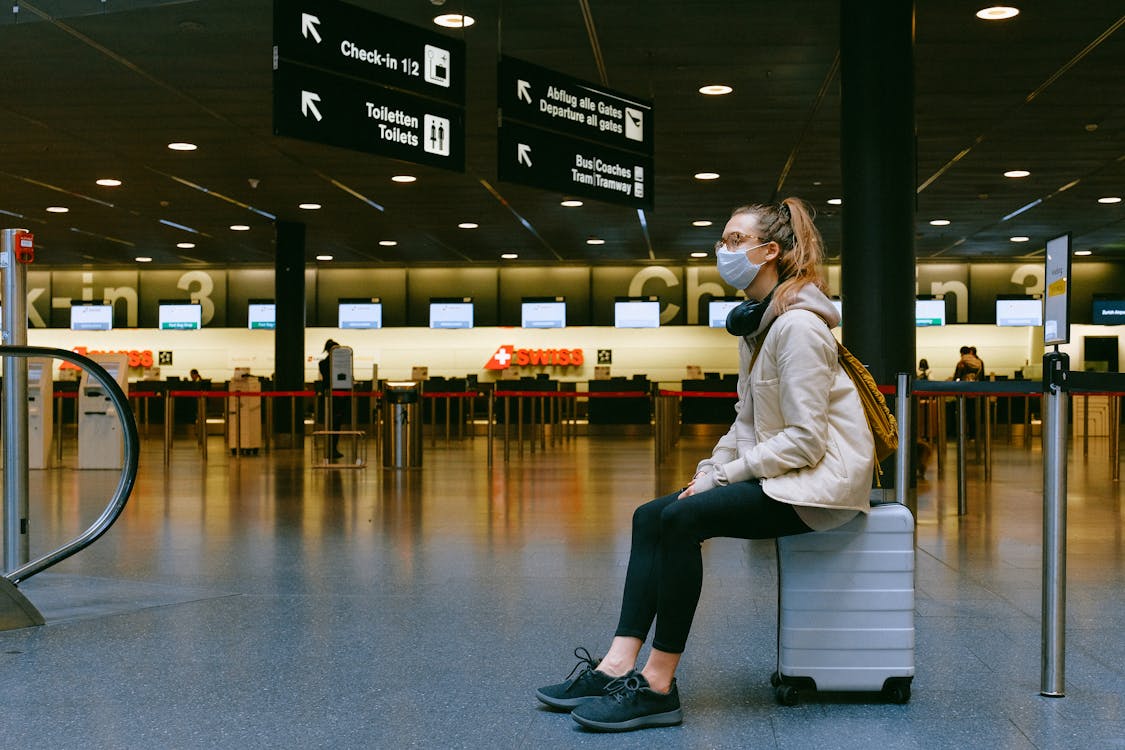
For more on building solo travel confidence gradually, our first solo trip anxiety guide provides a step-by-step framework.
The Travel Day Toolkit (Airport and Flight)
Travel day is typically the peak of anxiety. Here are strategies for each phase:
At the Airport
Arrive ridiculously early. Give yourself more time than you need. Rushing through an airport amplifies anxiety exponentially. Arriving two to three hours early for international flights gives you buffer time for unexpected delays and the psychological comfort of not being pressured by the clock.
Follow a checklist. Create a simple checklist for the airport process: check in, drop bag, go through security, find gate, buy water, eat something, charge phone. Checking items off a list gives you a sense of control and progress that counteracts the chaos of airports.
Use the lounge. If your budget allows, airport lounges offer a calm, quiet environment with food, drinks, and comfortable seating. Many credit cards include lounge access — check yours. The cost of a day pass (typically $30-50) is often worth it for the anxiety reduction alone.
Call someone. Before boarding, call a friend or family member. Hearing a familiar voice grounds you and reminds you that your support system exists even when you are far from home.
On the Flight
Control your inputs. Avoid watching the news, reading anxiety-provoking content, or scrolling social media. Instead, queue up a comforting playlist, a familiar TV show, or a travel podcast that makes you feel excited rather than anxious. Our best solo female travel podcasts guide has specific recommendations.
Use breathing techniques. The 4-7-8 breathing technique is the most effective rapid anxiety intervention: breathe in for 4 counts, hold for 7 counts, exhale for 8 counts. Repeat four times. This activates your parasympathetic nervous system and physically reduces anxiety within minutes.
Stay hydrated and fed. Dehydration and low blood sugar both amplify anxiety. Drink water consistently throughout the flight and eat regular meals or snacks.
Write in your journal. If anxiety is spiraling, write about it. Externalizing anxious thoughts — putting them on paper rather than letting them loop in your head — reduces their intensity. For journal recommendations, see our travel journals and apps guide.
The Arrival Day Toolkit
The first few hours after landing are critical. Here is how to navigate them:
Immediate Actions
Activate your phone. If you did not pre-activate an eSIM, connect to airport Wi-Fi immediately. Having a working phone with maps, translation, and communication is the single most effective anxiety reducer upon arrival.
Withdraw local currency. Use an airport ATM to get enough local currency for your first day. Having cash in your wallet provides security and eliminates the anxiety of figuring out payment systems.
Get to your accommodation. Follow your pre-planned route. Do not improvise on arrival day — stick to the plan you made when you were calm and thinking clearly.
At Your Accommodation
Unpack partially. Unpack your toiletries, charge your devices, and organize your day bag. These small acts of settling in signal to your brain that you are safe and establishing a base.
Take a shower. After hours of travel, a shower is physically refreshing and psychologically grounding. It marks the transition from “traveler in transit” to “person arrived at destination.”
Go outside within one hour. The temptation to stay in your room is strong, but isolation feeds anxiety. Force yourself to step outside, even if it is just a fifteen-minute walk around the block. The act of moving through your new environment proves to your brain that it is safe and navigable.
Eat something familiar. Your first meal does not need to be an adventurous local specialty. If a familiar sandwich or pasta dish from a recognizable chain restaurant makes you feel comfortable, eat that. There will be plenty of time for culinary exploration once you have settled in.
Go to bed early. Arrival day is not the day for nightlife or ambitious sightseeing. Eat dinner, take a walk, and go to bed. You will feel dramatically better after a night of sleep, and everything that felt overwhelming today will feel manageable tomorrow.
The Ongoing Anxiety Management Toolkit
If anxiety persists beyond the first few days, these strategies help:
Grounding Techniques
When anxiety spikes, use the 5-4-3-2-1 grounding technique: identify five things you can see, four you can hear, three you can touch, two you can smell, and one you can taste. This forces your brain out of anxious future-projection and into present-moment awareness.
Daily Check-Ins
Schedule a daily check-in with yourself — a five-minute journaling session where you assess your anxiety level on a scale of one to ten and identify the specific triggers. Tracking your anxiety helps you recognize patterns and celebrate progress as the number decreases over time.
Movement
Daily physical activity is one of the most effective anxiety interventions available. Walk for thirty minutes, practice yoga, swim, hike — any movement that elevates your heart rate and engages your body. Exercise metabolizes the stress hormones that fuel anxiety.
Social Connection
Anxiety is intensified by isolation. Even brief social interactions — ordering coffee, asking for directions, chatting with another traveler — reduce anxiety by reminding your brain that you are part of a social world, not alone in a threatening environment.
For making deeper connections, our apps for making friends guide covers tools specifically designed for solo travelers.
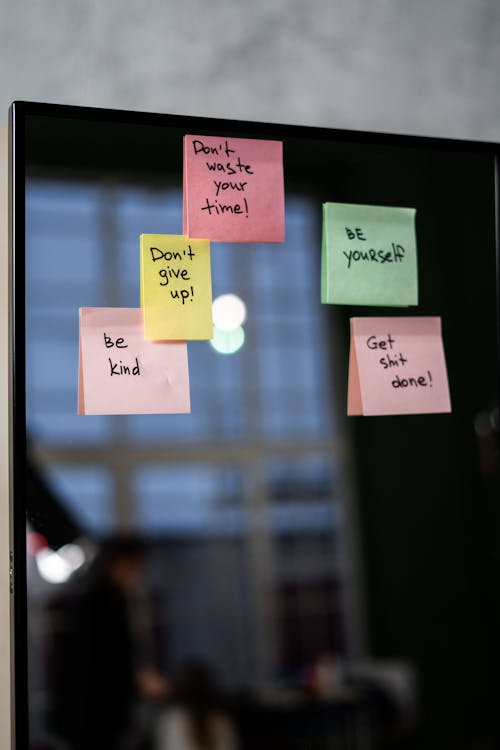
Professional Support
If travel anxiety is severe enough to interfere with your ability to function or enjoy your trip, online therapy platforms like BetterHelp and Talkspace allow you to access professional support from anywhere with an internet connection. There is no shame in getting help — managing anxiety effectively is a skill, and therapists are the best teachers of that skill.
For comprehensive mental health resources while traveling, see our solo travel mental health guide.
The Anxiety-to-Confidence Pipeline
Here is what every first-time solo female traveler needs to hear: the anxiety you are feeling right now is temporary. It is intense, it is real, and it feels permanent — but it is not. The vast majority of first-time solo travelers report that their anxiety peaked before departure and on arrival day, then decreased steadily throughout their trip.
By day three or four, most women feel a noticeable shift. By the end of their first week, many wonder why they were so anxious. By the end of their trip, most feel more confident than they have ever felt in their lives.
This transformation — from anxiety to confidence — is one of the most powerful gifts of solo travel. You do not earn confidence by avoiding the things that scare you. You earn it by doing them anyway, with shaking hands and a racing heart, and discovering that you are capable of far more than your anxiety told you.
Your Toolkit Checklist
Print this or save it to your phone:
Pre-trip:
- Write down and examine each fear
- Plan first 24 hours in detail
- Practice visualization daily for one week
- Activate eSIM before departure
- Download offline maps
- Pack emergency kit (guide here)
- Share itinerary with trusted contact
- Set up safety apps (guide here)
Travel day:
- Arrive early at airport
- Follow airport checklist
- Use 4-7-8 breathing on the flight
- Stay hydrated and fed
- Listen to calming or inspiring content
Arrival day:
- Activate phone and connectivity
- Follow pre-planned route to accommodation
- Unpack, shower, go outside within one hour
- Eat something comfortable
- Go to bed early
Ongoing:
- Daily grounding exercises
- Daily movement
- Daily journaling
- Regular social interaction
- Professional support if needed
Packing essentials: Follow our packing checklist for solo women for a complete gear list.
You Are Ready
The anxiety is telling you that you are not ready. The anxiety is wrong. You are prepared, you are capable, and you are about to do something that will change how you see yourself for the rest of your life.
Pack your bag. Board the plane. Feel the anxiety. And go anyway.
The woman who returns from this trip will be someone your current self barely recognizes — braver, calmer, more confident, and already planning the next one.
Get the best HerTripGuide tips in your inbox
Weekly guides, deals, and insider tips. No spam, unsubscribe anytime.