Paris Solo Female Travel Guide
Everything solo women need to know about Paris: safest neighborhoods, getting around, budgets, and where to stay.

Paris, France

About Paris
Paris is the capital and largest city of France, with an estimated city population of 2.04 million in an area of 105.4 km2 (40.7 sq mi), as of January 2026, and a metropolitan population of 13.3 million (2023).
Read more on WikipediaQuick Facts
Safety score derived from the U.S. State Department Travel Advisory for France: Level 2 (Exercise Increased Caution), as of 2026-07-08. Country-level guidance; check local conditions before you go.
A Warm Welcome to Paris
 Photo: 01 vue Paris depuis Notre-Dame.jpg by Myrabella (CC BY-SA 3.0), via Wikimedia Commons
Hey there, wander‑woman! If you’re dreaming of strolling along the Seine, sipping espresso at a sidewalk café, and feeling the pulse of a city that’s been inspiring artists for centuries, Paris is calling your name. The City of Light sits at 48.8566° N, 2.3522° E, and its rhythm is set by the Europe/Paris time zone (UTC+1, with daylight‑saving shifts) — perfect for syncing your jet‑lagged body clock.
What makes Paris especially inviting for solo female travelers is the blend of world‑class public transport, a welcoming café culture, and a visible police presence around major sights and transit hubs. Whether you’re a first‑time visitor or a returning explorer, you’ll find the city’s layout intuitive, its locals courteous once you offer a friendly “Bonjour,” and its streets alive with possibilities. Let’s dive into the details that will help you feel confident, safe, and utterly enchanted.
Neighborhoods to Know
Le Marais
 Photo: Plaza de los Vosgos, París, Francia, 2022-10-30, DD 58.jpg by Diego Delso (CC BY-SA 4.0), via Wikimedia Commons
One of the oldest and most walkable districts in Paris, Le Marais mixes medieval lanes with trendy boutiques, art galleries, and the elegant Place des Vosges. It’s flat, well‑lit, and busy with cafés late into the evening, making it a favorite base for solo travelers who want to wander without a map.
Montmartre
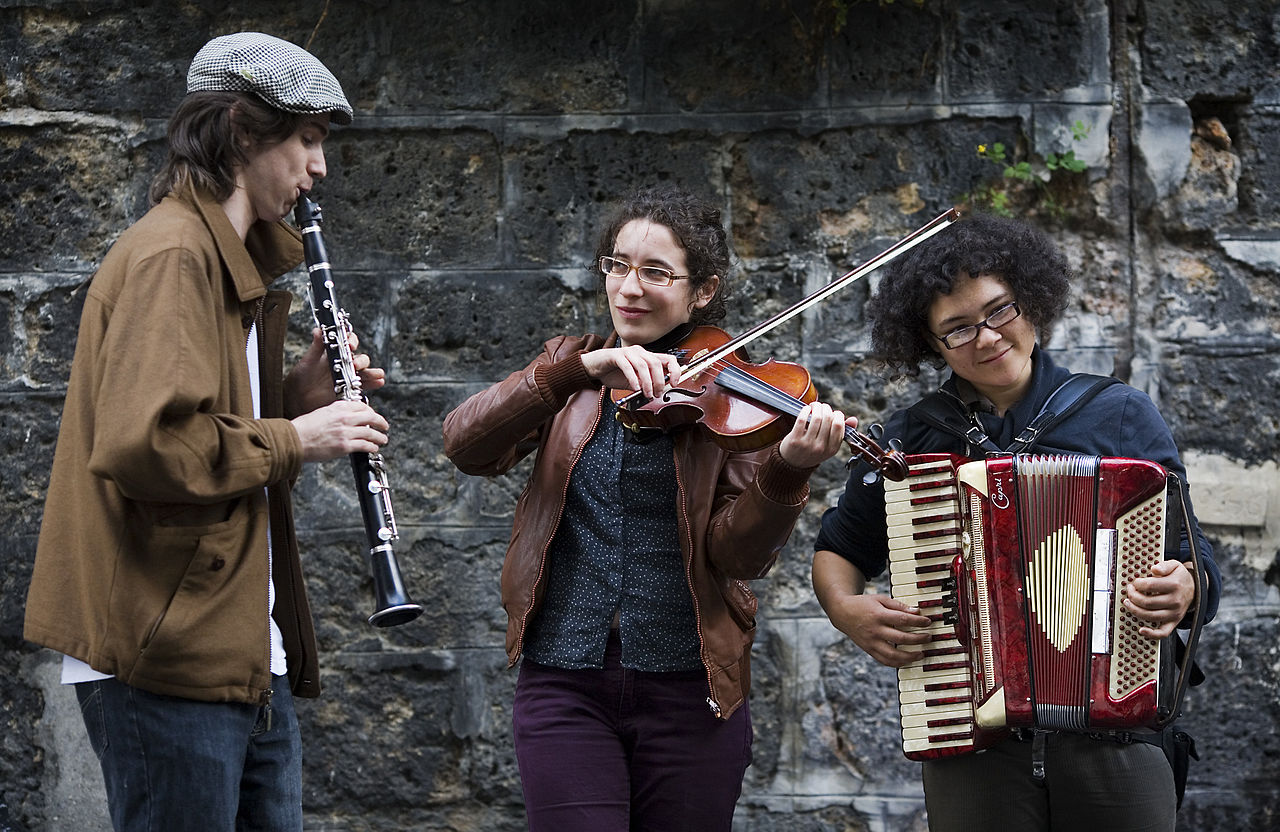 Photo: Paris - Street musicians in Montmartre - 3930.jpg by Jorge Royan (CC BY-SA 3.0), via Wikimedia Commons
Perched on Paris’s highest hill and crowned by the Sacré‑Cœur Basilica, Montmartre has a village‑like feel with cobblestone streets, street artists, and sweeping city views. It’s touristy around the main square, so keep an eye on your bag, but the surrounding residential lanes are quiet and charming for an evening stroll.
Saint‑Germain‑des‑Prés
 Photo: Abadía de Saint-Germain-des-Prés, París, Francia, 2022-11-01, DD 20-22 HDR.jpg by Diego Delso (CC BY-SA 4.0), via Wikimedia Commons
Home to the historic Saint‑Germain‑des‑Prés abbey, this Left Bank neighborhood is known for literary cafés, upscale shopping, and the leafy Jardin du Luxembourg nearby. It’s an elegant, safe base with easy metro access to the rest of the city.
Top Things to Do in Paris
Sister, once you’ve settled into a neighborhood, here’s where to actually spend your days. These are the sights that keep Paris at the top of every traveler’s list, and every one is easy to reach solo.
1. Eiffel Tower
Named after engineer Gustave Eiffel, whose company built it between 1887 and 1889 as the centerpiece of that year’s World’s Fair, the tower is Paris’s defining landmark. Go at dusk to see it sparkle on the hour — the surrounding Champ de Mars lawns are a lovely, well‑populated spot to sit solo and watch the show.
2. Louvre
Housed in the former Louvre Palace on the Right Bank, this is the world’s most‑visited art museum and home to the Mona Lisa, the Venus de Milo, and the Winged Victory. Book a timed ticket in advance so you can walk straight in rather than queue alone in the plaza.
3. Notre-Dame de Paris
This medieval Gothic cathedral on the Île de la Cité is one of France’s most iconic buildings and reopened to visitors in December 2024 after the 2019 fire and subsequent restoration. It sits in the middle of the Seine, an easy, scenic walk from either bank.
4. Musée d’Orsay
Housed in the former Gare d’Orsay, a Beaux‑Arts railway station built around 1900, this Left Bank museum holds the world’s largest collection of Impressionist and Post‑Impressionist masterpieces. It’s smaller and calmer than the Louvre, making it a relaxed solo afternoon.
5. Sacré-Cœur, Paris
Sitting atop the butte of Montmartre, this Romano‑Byzantine basilica offers one of the best free panoramic views over the city from its dome and front steps. Climb up in daylight when the square and funicular are busy with other visitors.
6. Arc de Triomphe
Standing at the center of Place Charles de Gaulle where twelve avenues converge, this triumphal arch honors those who fought for France. Use the pedestrian underpass to reach it safely — never cross the roundabout traffic on foot.
7. Palace of Versailles
A short train ride from central Paris, this former royal residence of Louis XIV, Louis XV, and Louis XVI is famed for its Hall of Mirrors and vast gardens. It’s an easy, well‑trodden day trip via RER, popular with solo travelers joining the crowds heading out each morning.
Book tickets & skip-the-line tours: Browse Paris experiences
Getting Around
 Photo: Metro de Paris - Ligne 13 - Miromesnil 02.jpg by Clicsouris (CC BY-SA 3.0), via Wikimedia Commons
Paris’s transport network is a marvel of efficiency, and it’s a solo traveler’s best friend. The Métro, RER commuter trains, buses, and trams are all integrated under a single ticketing system, meaning you can hop from a bustling underground station to a scenic riverbank ride without juggling multiple passes.
Metro magic – With 16 lines criss‑crossing the city, the Métro gets you within a stone’s throw of most attractions. Trains run every 2–5 minutes during peak hours and every 5–10 minutes off‑peak. Stations are clearly marked in both French and English, and most have elevators or escalators for easy access.
RER and regional reach – If you’re planning a day trip to Versailles or Disneyland Paris, the RER lines connect the city center to the suburbs with speed and comfort.
Buses and trams – For a more surface‑level view, hop on a bus or tram. They’re especially handy for reaching neighborhoods that sit just beyond the Métro’s reach.
Ticket tips – Purchase a “carnet” of ten single‑ride tickets for a small discount, or consider a weekly “Navigo” pass if you’ll be moving around a lot. All tickets are validated in the turnstiles before you board.
Biking and walking – Paris is remarkably walkable, and the city’s bike‑share program, Vélib’, offers a fun, eco‑friendly way to zip between nearby sights. Just remember to lock the bike securely to a designated rack.
Safety & Practical Notes
The U.S. State Department rates France Level 2 (Exercise Increased Caution) (as of 2026-07-08) — a country‑wide baseline that mainly reflects petty crime risk in tourist areas, not a warning against visiting. Here’s how to stay comfortable and aware:
- Stay visible – Stick to well‑lit, busy streets, especially after dark. The central boulevards and café‑filled lanes are generally bustling until late.
- Keep your belongings secure – Pickpocketing can happen in crowded metros and around major tourist sights. Use a cross‑body bag with a zip, and keep your wallet in a front pocket.
- Know the emergency number – Dial 112 for any emergency; the line works from any phone, even without a SIM card.
- Tap water – Paris’s tap water is safe to drink, so feel free to refill your bottle at cafés or public fountains.
- Plug type – France uses Type C/E plugs at 230V. Bring a universal adapter to keep your devices charged.
The city’s café culture also doubles as a safety net. Sitting at a table, you’re automatically in a public, well‑observed space where staff and fellow patrons can offer a friendly eye. If you ever feel uneasy, a quick chat with a barista can provide local insight or a sense of reassurance.
Best Time to Visit
 Photo: Jardins du Luxembourg 4.JPG by Alvesgaspar (CC BY-SA 3.0), via Wikimedia Commons
Paris shines all year long. Spring (April–June) brings blossoms to the Jardin du Luxembourg and the Tuileries, with mild temperatures ideal for long walks. Early autumn (September–October) offers similar weather with thinner crowds. Summer fills the streets with festivals and long daylight hours but draws the biggest crowds and warmest temperatures, while winter wraps the city in a quieter, festive glow around the holiday markets and lights.
Where to Stay
When it comes to lodging, think about proximity to a Métro station and a lively café street. That way, you’ll have easy transit options and a friendly spot to unwind after a day of exploring. For curated recommendations that cater specifically to solo female travelers, check out our full hotel guide.
Paris is a city that invites you to write your own story, one café table at a time. With reliable transport, walkable neighborhoods, and a culture that celebrates the simple pleasure of people‑watching, you have everything you need to explore confidently and joyfully. Pack your favorite pair of comfortable shoes, a reusable water bottle, and an adventurous spirit—Paris is ready to become your next unforgettable solo chapter. Safe travels, sister!
Frequently Asked Questions
How long can I stay in France on a U.S. passport?
US citizens can stay visa-free for up to 90 days in any 180-day period under the Schengen Area rules. Bring a passport valid for at least three months beyond your departure date.
Is Paris safe for solo female travelers at night?
The U.S. State Department rates France Level 2 (Exercise Increased Caution), as of 2026-07-08 -- mainly a reminder to watch for petty crime like pickpocketing rather than a warning against visiting. Central boulevards and café-lined streets stay busy and well-lit well into the evening, and many solo women feel comfortable walking in those areas after dark.
What's a realistic daily budget for Paris?
Solo female travelers typically spend $100-160 per day, covering a mid-range hotel or well-located Airbnb, museum entries, and a mix of café meals and the occasional splurge dinner. Budget travelers using hostels and picnicking in parks can get by on less.
How easy is it to use public transport if I don't speak French?
Very easy. Metro and bus signage is bilingual, ticket machines offer English instructions, and station staff are used to helping international travelers.
Related Guides
Upcoming Holidays
FranceGet price-drop alerts and new guides from HerTripGuide
One email a week: price drops on the gear we recommend, new guides, and what changed. No spam, unsubscribe anytime.