Travel Guide to Kyoto, Japan
Serene, spiritual, and steeped in tradition, Kyoto offers solo women a contemplative travel experience of temples, tea ceremonies, and timeless beauty -- with Japan's legendary safety.

Kyoto, Japan

About Kyoto
Kyoto, officially Kyoto City , is the capital city of Kyoto Prefecture in the Kansai region of Japan's largest and most populous island of Honshu. As of 2020, the city had a population of 1.46 million, making it the ninth-most populous city in Japan.
Read more on WikipediaQuick Facts
Safety score derived from the U.S. State Department Travel Advisory for Japan: Level 1 (Exercise Normal Precautions), as of 2026-07-08. Country-level guidance; check local conditions before you go.
Why Kyoto Is Great for Solo Women
 Photo: Four ladies wearing a yukata in front of the North Gate of Kiyomizu-dera temple Kyoto Japan.jpg by Basile Morin (CC BY-SA 4.0), via Wikimedia Commons
If Tokyo is Japan’s future, Kyoto is its soul. This former imperial capital is home to over 2,000 temples and shrines, a living geisha culture, and some of the most refined cuisine in the world. For solo female travelers, Kyoto offers something rare: a chance to slow down. The city rewards contemplation — sitting quietly in a rock garden, walking mindfully through a bamboo forest, or sipping matcha in a centuries-old tea house.
Kyoto shares Japan’s legendary safety record. Crime is extremely low, public transportation is reliable, and the Japanese culture of respect and consideration for others creates an environment where solo women can move freely and comfortably. The city is also more compact and quieter than Tokyo, making it particularly suited to solo exploration at a contemplative pace.
Neighborhoods to Know
Higashiyama
 Photo: Yasaka-dori early morning with street lanterns and the Tower of Yasaka (Hokan-ji Temple), Kyoto, Japan.jpg by Basile Morin (CC BY-SA 4.0), via Wikimedia Commons
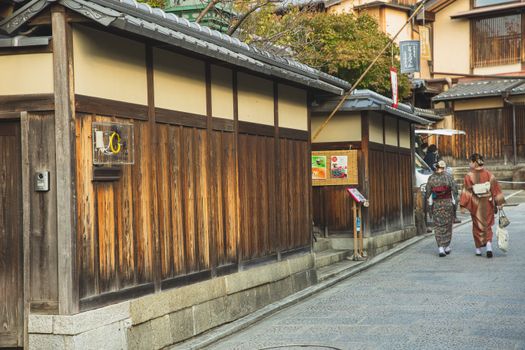
Kyoto’s best-preserved old town, all sloping lanes, wooden machiya houses, and the Yasaka Pagoda rising over the rooftops. It connects Kiyomizu-dera to Gion on foot, so you can spend a full morning temple-hopping without ever needing transport. Guesthouses here are plentiful and walkable, which is exactly why so many solo women base themselves in Higashiyama.
Gion
 Photo: A view of Gion corner in Geisha district, Kyoto, Japan.jpg by Joli Rumi (CC BY-SA 4.0), via Wikimedia Commons
Kyoto’s famous geisha district, known for its preserved teahouses and narrow lanes like Hanami-koji. It’s touristy and crowded at peak hours but genuinely safe to wander, day or night. If you spot a geiko or maiko on her way to an appointment, admire from a distance — don’t block her path or shove a camera in her face.
Arashiyama
 Photo: Arashiyama-Bamboo-Grove-Sunset.jpg by Bjørn Christian Tørrissen (CC BY-SA 4.0), via Wikimedia Commons
A quieter, riverside district on Kyoto’s western edge, best known for its bamboo grove and the Togetsukyo Bridge over the Katsura River. It’s a bit of a trek from the city center, so most solo travelers visit as a half-day outing rather than a home base — come early, before the tour buses do.
Kyoto Station area
 Photo: Kyoto Station building in Kyoto, Japan (2019) - 007.jpg by Another Believer (CC BY-SA 4.0), via Wikimedia Commons
Modern, well-lit, and endlessly convenient — this is Kyoto’s transit hub, with the bus terminal, subway, and JR and shinkansen lines all under one roof. It lacks the old-town charm of Higashiyama, but budget hotels and hostels near the station are some of the easiest bases for a first-time solo visit, with everything a short bus or walk away.
Top Things to Do in Kyoto
Sister, here’s where to actually spend your days. These are the sights that keep Kyoto on every traveler’s list, and every one of them is easy to reach and enjoy solo.
1. Fushimi Inari-taisha
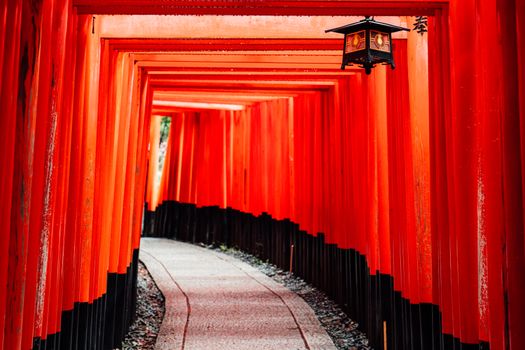
This is the head shrine dedicated to Inari, the Shinto deity of rice, and it’s famous for the thousands of vermilion torii gates that wind up the wooded slopes of Mount Inari behind the main hall. Go early morning or at dusk — the crowds thin out near the top and the light through the gates is unforgettable.
2. Bamboo Forest (Kyoto)
Better known as the Arashiyama Bamboo Grove, this towering, sound-muffling stand of bamboo is one of Kyoto’s most photographed sights. Arrive before 7 AM if you want the empty, otherworldly version everyone posts about — by mid-morning it’s shoulder to shoulder.
3. Kinkaku-ji
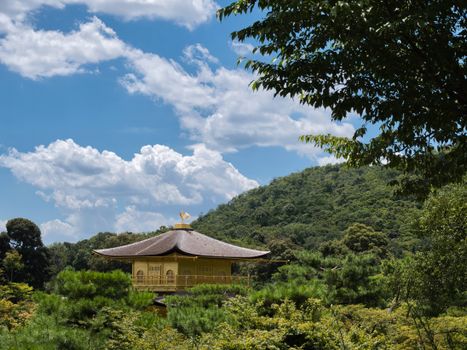
Formally Rokuon-ji, this Zen Buddhist temple’s top two floors are covered entirely in gold leaf, and its reflection in the still pond in front of it is one of Japan’s most iconic images. It’s a compact, contained visit — easy to fit into a solo half-day alongside Ryoan-ji’s rock garden nearby.
4. Kiyomizu-dera
An UNESCO World Heritage temple built on a hillside, famous for its large wooden veranda that juts out over the slope on a lattice of supporting pillars, with sweeping views over Kyoto. The approach up Higashiyama’s sloped, shop-lined lanes is half the fun and completely walkable on your own.
5. Philosopher’s Walk
A stone path following a cherry-tree-lined canal between Ginkaku-ji and Nanzen-ji, named for a Kyoto University philosopher who reportedly used it for his daily meditative walk. It’s flat, well-marked, and dotted with small cafes — a genuinely relaxing solo stroll any time of year, and spectacular when the cherry trees bloom.
6. Nishiki Market
A narrow, roofed shopping street lined with more than a hundred shops and stalls selling fresh seafood, pickles, knives, and street food, earning it the nickname “Kyoto’s Kitchen.” Solo grazing is completely normal here — wander, point, and try whatever looks interesting.
Book tickets & skip-the-line tours: Browse Kyoto experiences
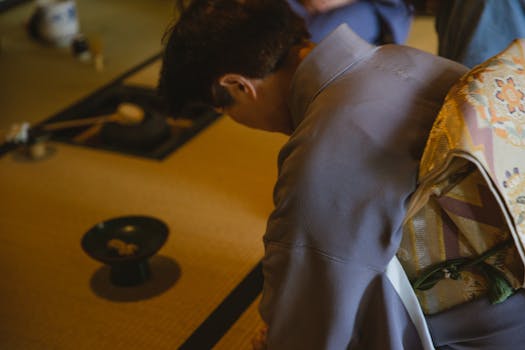
If you want something slower between sightseeing days, a traditional matcha tea ceremony at a spot like Camellia Garden or En is a quiet, meditative add-on that’s genuinely welcoming to solo visitors.
Getting Around
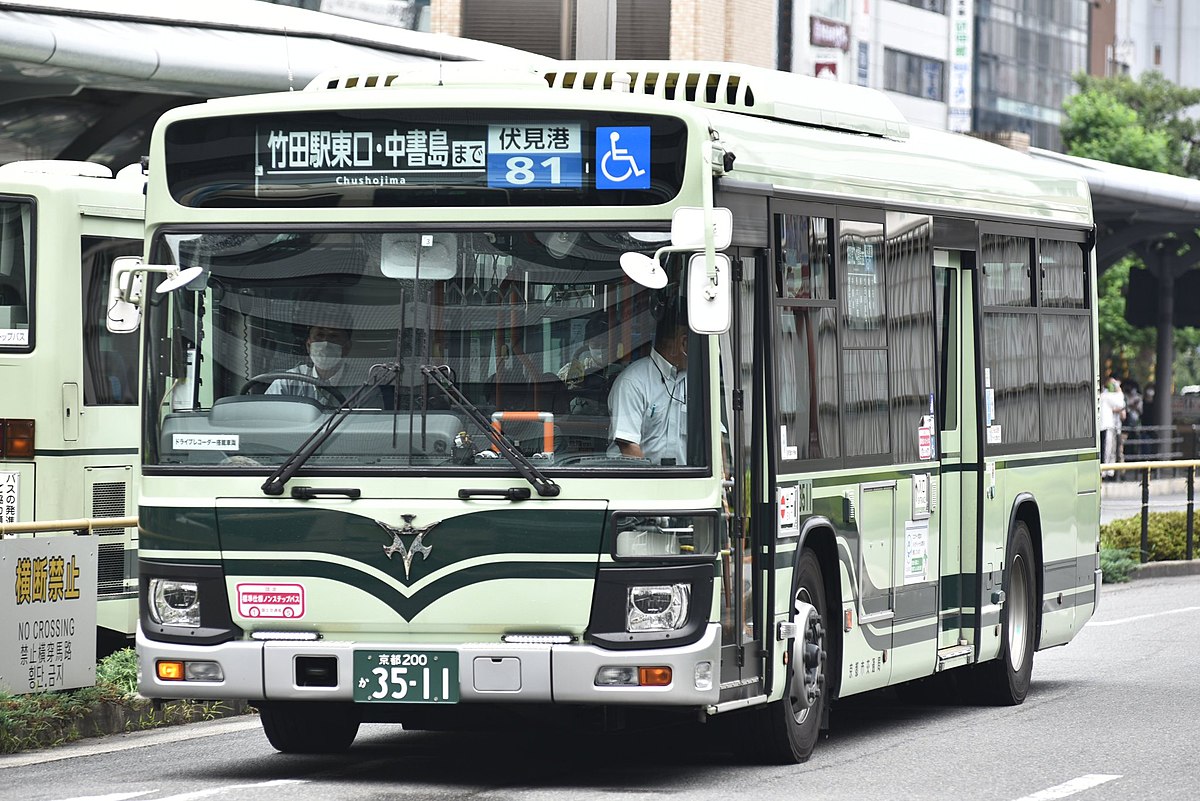 Photo: Kyoto City Bus 3511.jpg by ドルフィン大佐 (CC BY-SA 4.0), via Wikimedia Commons
Kyoto’s bus system is the primary way to reach most temples and shrines — a one-day bus pass is essential and costs just 700 yen (~$5). The subway has two lines that cover the city center. JR trains connect to Arashiyama and Fushimi Inari. Renting a bicycle is one of the best ways to explore Kyoto — the city is relatively flat, and cycling between temples is a joy. Walking is wonderful in the Higashiyama district and along the Philosopher’s Walk.
Safety Overview
 Photo: Tetsugaku-no-michi - Philosopher’s Walk - Kyoto.jpg by Gzzz (CC BY 4.0), via Wikimedia Commons
The U.S. State Department rates Japan Level 1 (Exercise Normal Precautions) (as of 2026-07-08). Kyoto is extremely safe for solo women — violent crime is almost unheard of, and petty theft is rare. The main challenges are practical, not criminal: the city’s sprawling temple districts can feel isolated once the sun goes down, and Kyoto sits in a basin, which makes summer noticeably hotter and more humid than coastal cities like Osaka. The tourist heart of Gion is safe but very crowded during peak hours.
Emergency number: 110 (police) or 119 (ambulance). English is spoken at major tourist sites but less so in local neighborhoods.
Best Time to Visit
 Photo: Tofukuji-bridge-autumn-2017-Luka-Peternel.jpg by Luka Peternel (CC BY-SA 4.0), via Wikimedia Commons
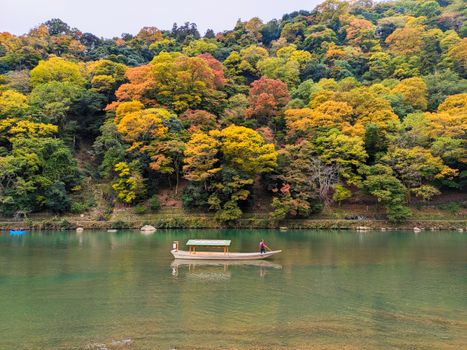
Kyoto has two unmissable windows. Cherry blossom season runs roughly March through May, peaking in early April, when the Philosopher’s Walk and Maruyama Park turn pink and the whole city seems to slow down to look up. Autumn foliage season, October into November, is arguably even more dramatic, with the maples at temples like Tofuku-ji and Eikan-do turning deep red against dark wood and stone. Both seasons draw heavy crowds and higher hotel prices, so book well ahead if you’re traveling solo during either. Summer (June through August) is hot, humid, and best avoided if you can help it.
Where to Stay (Solo-Friendly)
 Photo: Tawaraya Ryokan, Kyoto 02.jpg by Braveheart (CC BY-SA 4.0), via Wikimedia Commons
Budget: Guesthouses and hostels near Kyoto Station or in the Higashiyama district are excellent for solo travelers. Piece Hostel Sanjo and Len Kyoto are stylish, social, and well-reviewed by solo women ($25-40/night).
Mid-range: Traditional ryokan (Japanese inns) offer a deeply cultural experience — sleeping on futons, soaking in onsen baths, and eating kaiseki meals. Budget ryokan start at $60-100/night. Hotel Kanra Kyoto blends modern design with traditional aesthetics.
Splurge: The Ritz-Carlton Kyoto or Hoshinoya Kyoto (accessible only by boat) for unparalleled luxury in a historic setting ($400+/night).
For curated, solo-vetted picks across every budget, see our full Kyoto hotel guide.
Safety Tips Specific to Women
- Temple districts are safe but can be dark and isolated after sunset — plan temple visits during daylight hours, especially for more remote sites like Fushimi Inari
- Gion (geisha district) — be respectful of geiko and maiko (geisha and apprentices); do not block their path or take photos without permission; the narrow lanes are safe to explore
- Kyoto’s summers are brutally hot and humid — carry water, use a parasol or fan, and take breaks in air-conditioned spaces; heat exhaustion is a real risk
- Bicycle rental is liberating — Kyoto is flat and bike-friendly; rent from your hotel or a shop near Kyoto Station ($8-10/day)
- Onsen etiquette — public baths are gender-separated; if you have tattoos, some onsen may restrict entry (look for “tattoo-friendly” options, which are increasingly common)
- Carry cash — many temples, small restaurants, and shops in Kyoto are cash-only; ATMs at 7-Eleven accept international cards
Frequently Asked Questions
How long can I stay in Japan on a U.S. passport?
U.S. passport holders can enter Japan visa-free for up to 90 days under the short-term stay waiver. Your passport should be valid for the length of your planned stay, and you'll fill out a landing card on arrival.
Is it safe to walk around Kyoto's temple districts at night?
Kyoto is very safe overall -- the U.S. State Department rates Japan Level 1 (Exercise Normal Precautions), as of 2026-07-08 -- but the sprawling temple districts like Fushimi Inari's back trails and the hills above Higashiyama go dark and empty once the sun sets. Save the far-flung shrine visits for daylight and stick to the lit, populated streets of Gion, Kawaramachi, or Kyoto Station after dark.
What's a realistic daily budget for Kyoto?
Solo women typically spend $70-130 a day, which covers a hostel or budget ryokan, temple entry fees, a bus pass, and meals at casual restaurants or Nishiki Market stalls. Splurge on one traditional ryokan night with a kaiseki dinner and onsen bath, and keep the rest of the trip lean.
What's the best way to get around Kyoto without a car?
A one-day city bus pass (around 700 yen) covers most temples and shrines, the subway's two lines handle the city center fast, and JR trains connect out to Arashiyama and Fushimi Inari. Kyoto is also flat and bike-friendly, so renting a bicycle for the day is a popular, liberating way to string together sights on your own schedule.
Related Guides
Upcoming Holidays
Japan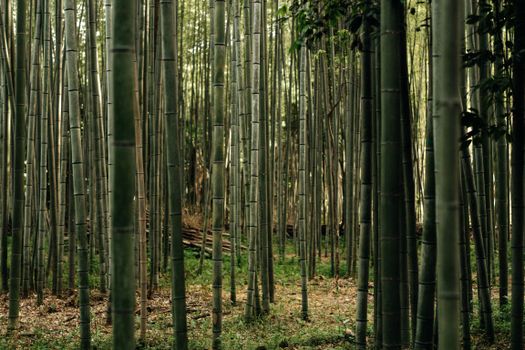
Get price-drop alerts and new guides from HerTripGuide
One email a week: price drops on the gear we recommend, new guides, and what changed. No spam, unsubscribe anytime.