Renting a Car in Namibia: A Solo Woman's Guide for 2026
Practical, safety-first advice for solo female travelers renting a car in Namibia - age rules, insurance, 4x4 tips, fuel planning and common pitfalls.

This post may contain affiliate links. Disclosure
Traveling alone in Namibia feels like stepping into a living postcard: endless horizons, towering red dunes, and wildlife that watches you from the roadside. The freedom of a self-drive safari is intoxicating, but it also means you’re the one steering, refueling, and handling every hiccup across thousands of kilometers of gravel. This guide gathers everything a solo woman needs to rent a car in 2026 - legal requirements, realistic cost breakdowns, insurance basics, road realities, budgeting, and the safety habits that keep the adventure smooth. Think of it as the older-sister checklist you wish you’d had before you hit the desert highway.
What do you need to rent a car in Namibia as a solo woman? Namibia’s legal driving age is 18, but most rental firms require 21 and many prefer 23-25; under-25 drivers pay a $10-$20 daily surcharge. You need a licence held at least a year, an International Driving Permit for foreign licences, a passport and a credit card in your name.
Who Can Rent? Age, Licence & Documentation
Namibia’s legal driving age is 18, yet most rental firms set their own minimum at 21 years, and many prefer renters to be 23-25 years old. If you’re under 25 you’ll likely see a young-driver surcharge of $10-$20 USD per day. A valid driver’s licence held for at least one year is mandatory, and foreign licences must be accompanied by an International Driving Permit (IDP). You’ll also need a passport or government ID for age verification and a credit card in your name for the security deposit; debit cards are generally rejected.
All of this is spelled out on the World Law Digest page, which confirms the age bands and the IDP requirement. It’s worth double-checking your specific operator’s policy before you book, since the 21-25 range isn’t standardized across the industry the way the 18-year legal minimum is.
Choosing the Right Vehicle & Pricing
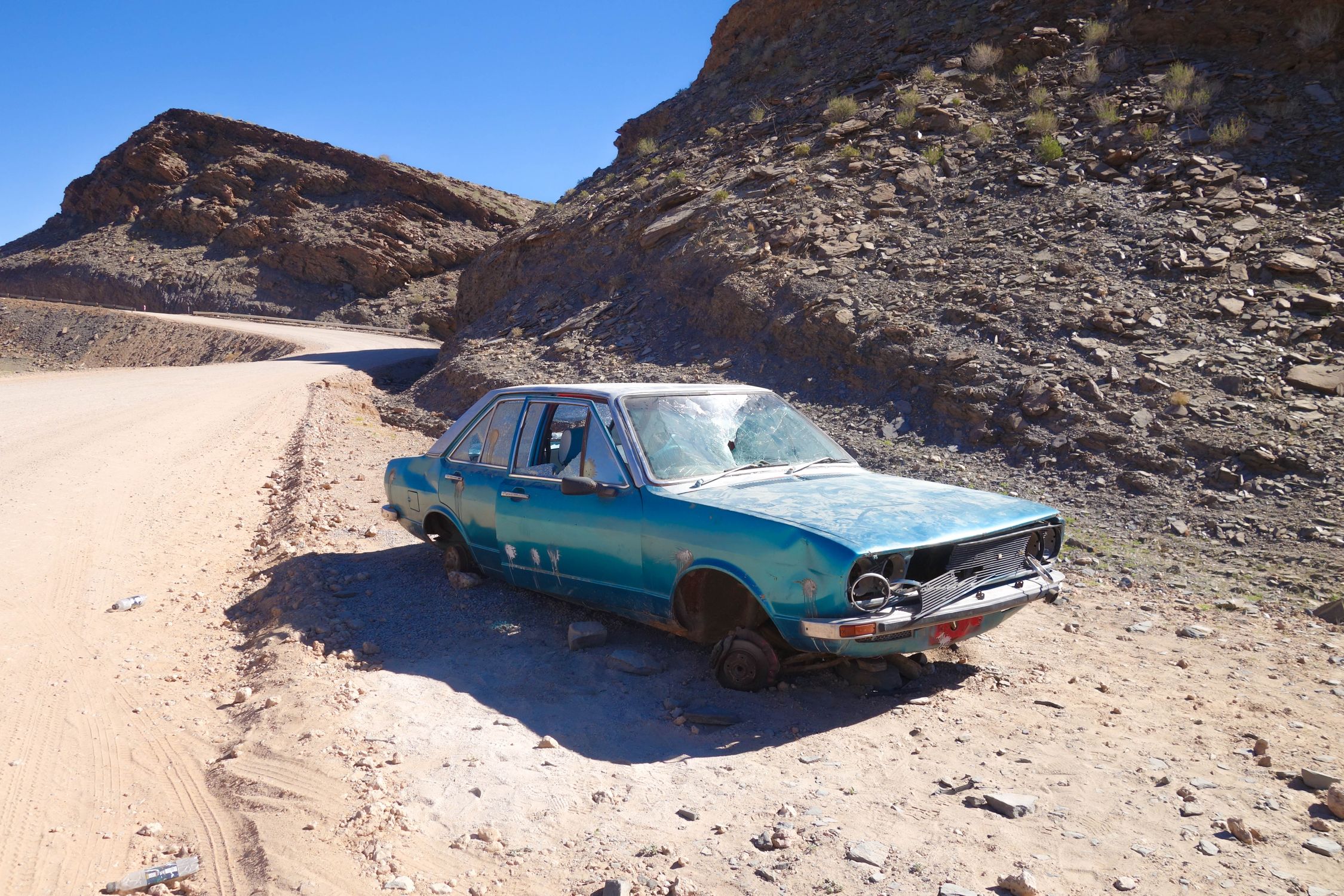
Your vehicle choice hinges on where you plan to go. The main highways - B1, B2, and B3 - are paved and easy to navigate in a compact sedan, but the gravel tracks that lead into Etosha’s interior, Damaraland’s cliffs, or the Skeleton Coast demand a 4x4 with higher ground clearance.
Price bands (USD per day)
- Economy (Toyota Yaris): $23-$24 - ideal for Windhoek, Swakopmund, and short park hops.
- Compact (Toyota Corolla): $32-$37 - a bit more room for luggage, still fine on paved roads.
- SUV/People-carrier: $80-$200 - useful for groups or extra gear, but many are still two-wheel-drive.
- 4x4 (Toyota Hilux, Land Cruiser): $100-$250 - essential for interior tracks, steep passes, and occasional water crossings.
Local operators such as AfriCar Car Hire, Hornbill Car Hire, GW Car Rentals, Drive Namibia, and Namibia Car Rental all list similar ranges. Independent firms often match the international chains (Hertz, Thrifty, Sixt) on price, especially if you book early. If those don’t have availability for your dates, Namibia’s independent-rental scene is deep enough to have real backups: Africa on Wheels, ASCO Car Hire, Bushlore, Caprivi Car Hire, and Savanna Car Rental are all established local operators worth a comparison quote before you settle on one.
To compare rates across all providers in one place, try the DiscoverCars platform - enter your dates, select “4x4” if you need it, and filter by age surcharge.
By region, here’s the honest answer on what you need:
- Windhoek, Swakopmund, Walvis Bay, and the paved B-roads between them - an economy or compact car is genuinely enough. You’ll save real money without sacrificing anything, since the surface is tar the whole way.
- Etosha’s main tourist loop - most of the park’s core roads are graded gravel that a compact SUV can usually handle in dry conditions, though a 4x4 gives you more margin if rain has softened the tracks.
- Damaraland, the Skeleton Coast, and Etosha’s more remote interior routes - this is where a proper 4x4 stops being a luxury and becomes the only sensible choice, given the steep passes, loose sand, and occasional water crossings.
If your itinerary mixes both - say, a few nights in Swakopmund followed by a push into Damaraland - book the 4x4 for the whole trip rather than trying to swap vehicles mid-way. Namibia’s rental depots are concentrated in Windhoek, and a mid-trip vehicle exchange eats a full day you’d rather spend on the road.

Insurance Essentials
Namibian law mandates basic third-party liability insurance, which is automatically included in every rental price. This covers damage you might cause to other vehicles or property, but it does not protect the rental car itself.
Most companies offer optional Collision Damage Waiver (CDW) or Loss Damage Waiver (LDW). A “Zero Excess” upgrade removes any out-of-pocket deductible, but it adds a daily fee. Theft Protection (TP) is strongly advised, especially for 4x4s that sit in remote campsites; many firms require it for those vehicles. Personal Accident Insurance (PAI) is optional and may be useful if you travel alone.
The Sixt Namibia terms page explains the credit-card deposit process and outlines the optional coverages, making it a good reference when you’re weighing extra protection versus budget. As a solo traveler, it’s worth treating the Zero Excess upgrade as part of your baseline budget rather than an optional extra - you won’t have a co-driver to split the cost of an unexpected repair bill, and remote gravel roads are exactly where minor dings tend to happen.
Before you drive off the lot, walk around the vehicle with the rental agent and photograph every existing scratch, chip, and windscreen crack from all four corners, plus the odometer and fuel gauge. Namibia’s gravel roads are notoriously good at producing small stone chips that look identical to pre-existing damage, and a timestamped photo set is the simplest way to avoid a dispute over something you didn’t cause. Keep the same habit at drop-off, before the agent has a chance to inspect the car out of your sight.
Road Realities & Fuel Planning
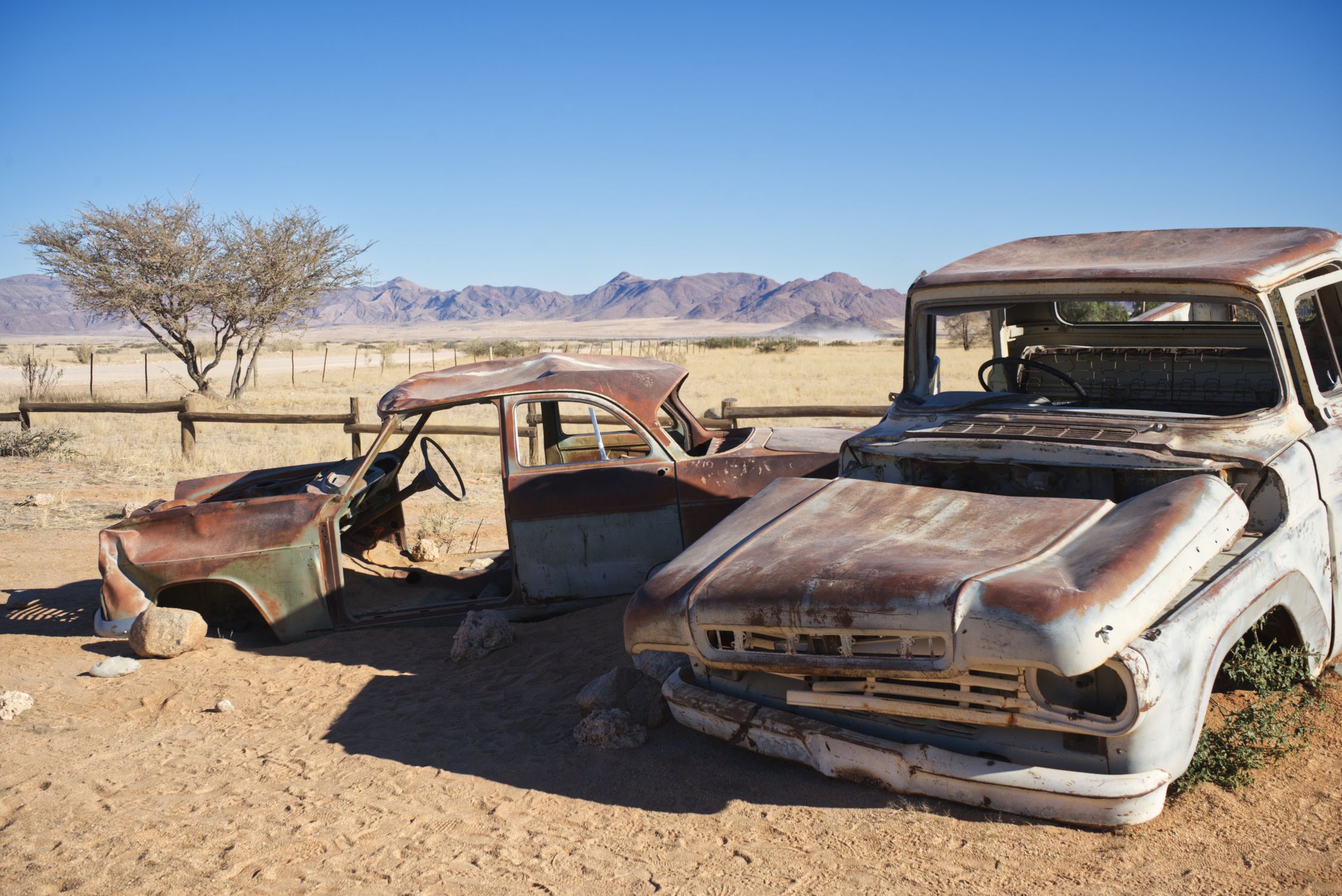
The backbone of Namibia’s self-drive circuit is the well-maintained B-road network. Paved highways have low traffic and clear signage, but once you leave the main arteries, expect gravel, dust, and occasional corrugations. Water crossings can appear after rains; a 4x4 with good ground clearance and a snorkel (if you plan for deep fords) is safest.
Fuel stations are sparse outside the major towns of Windhoek, Swakopmund, and Walvis Bay, and near park gates. A practical rule is to never let the gauge drop below 150 km of range and to top up whenever you’re in a town. Most stations accept credit cards, but it’s wise to carry a small amount of cash for remote pumps.
Parking in towns is generally free in designated lots; at popular sites like Etosha’s main gate a modest fee may apply.
The Coitraveler self-drive guide provides a detailed map of fuel points and highlights the most challenging gravel sections, so bookmark it before you set off.
If something does go wrong between towns - a flat tire, a dead battery, a car that won’t restart after a water crossing - Namibia’s low population density outside the towns means you may wait a while before another vehicle passes. That’s exactly why the roadside-assistance number below matters more here than it would on a busier road network, and why it’s worth telling someone your rough daily route before you set out each morning.
Staying Safe on Namibia’s Roads
Safety: The U.S. State Department rates Namibia Level 2 - Exercise Increased Caution. The UK Foreign Office notes that muggers often target tourists in Windhoek, and that attacks may be violent and can take place at any time of day, including in busy city-centre locations (US advisory - UK FCDO, updated 2025-12-10).
That guidance is mostly about cities rather than the open road, but it’s a good reminder to keep your street smarts on even in a country that feels remarkably calm compared to its neighbors. Here’s how to stay safe once you’re behind the wheel:
- Drive on the left - Namibia follows the British system; most rental cars have the steering wheel on the right, which many European drivers find intuitive.
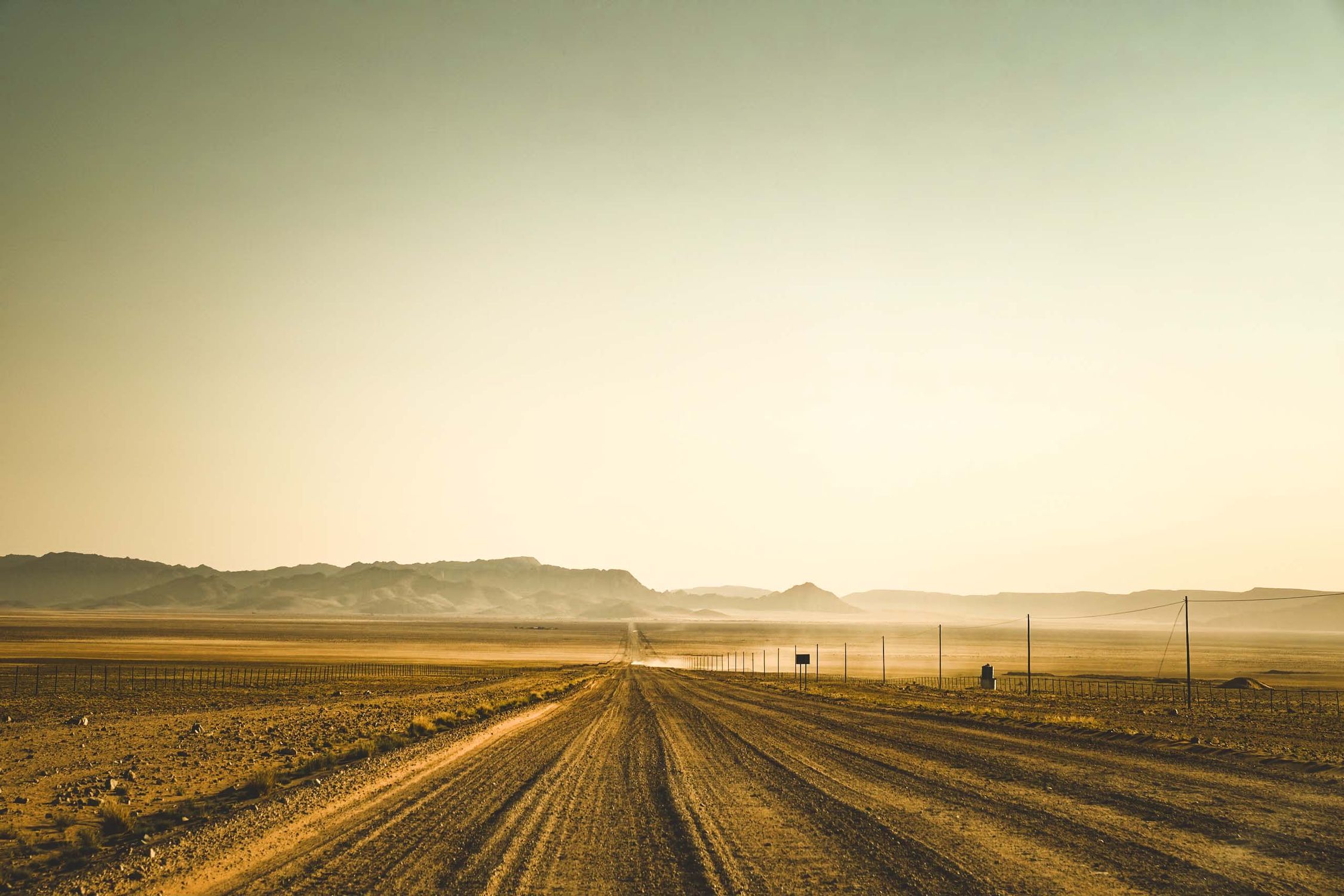
- Avoid night driving on remote gravel - wildlife is most active after dark, and road lighting is minimal. If you must travel after sunset, keep speed low and use high beams.
- Keep a 24/7 roadside assistance number handy - most agencies (including Drive Namibia) provide emergency support along the tourist corridor. Store the number in your phone and write it on a piece of paper as a backup.
- Secure your belongings - lock doors when you stop, store valuables out of sight, and use a portable safe for passports and cash, particularly in Windhoek where the FCDO warning above applies most directly.
- Stay connected - purchase a local SIM card (e.g., MTC or TN Mobile) for reliable coverage; many remote lodges have satellite Wi-Fi but it can be spotty.
- Know the toll situation - as of 2026, Namibia has no active toll roads; the government shelved the plan, so you won’t encounter unexpected fees. The official statement is on the Road Fund Administration site, and The Namibian has additional reporting on the decision.
Budgeting Your Self-Drive Trip
Namibia’s self-drive circuit rewards planners. Beyond the daily USD price bands above, it’s worth knowing that low-season pricing can run meaningfully cheaper: one comparison source, Road Trip Car, lists low-season economy cars from around EUR27.57 per day (roughly $30), compacts around EUR33-40 per day, and 4x4s from EUR70 per day - all broadly consistent with the higher-season USD figures already covered, but a useful data point if your travel dates are flexible.
Because Namibia’s rental market is relatively small, popular vehicle classes - especially well-equipped 4x4s - can sell out during the July-August dry season when wildlife viewing is best. Booking two to three months ahead gives you the widest choice of both vehicle and operator, and lets you compare the international chains against the local independents listed above rather than settling for whatever’s left.
Running the numbers for a typical two-week loop helps put those price bands in perspective. A 4x4 at the lower end of its range ($100/day) works out to roughly $1,400 for fourteen days before insurance upgrades or fuel; at the upper end ($250/day) the same trip climbs toward $3,500. Add the young-driver surcharge if you’re under 25, and factor in Zero Excess coverage on top of whichever base rate you land on - it’s a meaningful line item, but a far smaller number than an uninsured repair bill on a remote gravel road.
This kind of trip suits travelers who are comfortable with long stretches behind the wheel, self-sufficient with basic vehicle checks, and happy with sparse mobile coverage between towns. If several hours of solo gravel driving a day sounds more stressful than freeing, a guided small-group self-drive convoy or an escorted safari may be a better fit than going fully independent.
What to Pack
- Travel-size first-aid kit - essential for minor cuts, blisters, and insect bites, especially if you’re hiking short stretches away from the car at scenic stops.
- Portable tire repair kit - a compact sealant and inflator can save you from a flat on a gravel stretch, and buy you enough time to reach the next town instead of waiting for roadside assistance.
- Reusable water bottles (2 L or more each) - water sources are far apart; staying hydrated is critical in the desert heat, and refilling in towns is far cheaper than buying bottled water at every stop.
- Solar charger or power bank - keeps phones and GPS devices alive when you’re off the grid, which matters more here than almost anywhere else given how thin mobile coverage gets between towns.
Common Mistakes to Avoid
- Skipping the “Zero Excess” upgrade - if you decline it and the car incurs damage, you could be liable for several hundred dollars, especially on a 4x4.
- Under-estimating fuel range - running out of fuel on a gravel road can leave you stranded for hours; always keep the 150 km reserve.
- Ignoring the Road Traffic and Transport Act - basic third-party liability is compulsory, but some renters assume it covers the vehicle itself. The Act clarifies the distinction, and you can read it on the LAC PDF.
- Driving at night in remote areas - wildlife collisions are a leading cause of accidents after dark; plan your itinerary to reach lodges before sunset.
- Relying on debit cards for deposits - most firms block the deposit amount on a credit card; using a debit card can lead to a failed reservation or additional paperwork.
- Booking a 4x4 too late - the interior tracks fill up fast in dry season, and a sedan simply won’t get you into Damaraland or the Skeleton Coast if that’s still on your itinerary.
Related Reading
Get price-drop alerts and new guides from HerTripGuide
One email a week: price drops on the gear we recommend, new guides, and what changed. No spam, unsubscribe anytime.